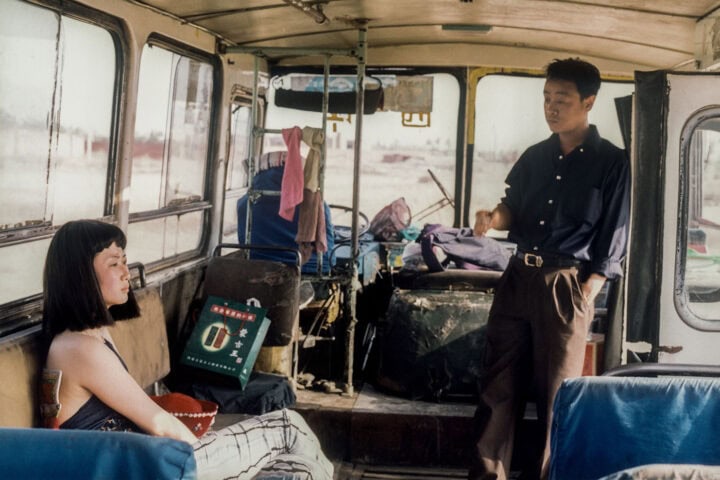
In the realm of Chinese independent cinema, the weight of influence can be felt as heavily as the often capricious and inscrutable government censorship system. Unique among the most significant new waves across the cinematic world, mainland China possesses both a definable new wave in the form of the vaunted Fifth Generation, whose luminaries included Zhang Yimou and Chen Kaige, and an equally clear countermovement in the form of the Sixth Generation, which comprised Jia Zhang-ke and Wang Xiaoshuai, among others.
Broadly speaking, the Sixth Generation filmmakers responded to the Fifth Generation’s fondness for florid aesthetic style, period pieces, and melodramatic narratives by embracing more rough-hewn, neorealist productions shot on the fly in contemporary China. While Chinese cinema has perhaps not reached the same level of (relatively) mainstream ubiquity as it possessed during the Fifth Generation’s reign in the late 1980s and early ’90s, it’s arguably the Sixth Generation that’s remained more directly influential in the 21st century.
Li Ruijun has worked steadily since his 2007 debut, The Summer Solstice, but he remains fairly unknown in the West. It’s not too much to say that, because only one or two mainland Chinese films are selected for the prestigious competition slates of Berlin, Cannes, and Venice every year, Return to Dust, which premiered at last year’s Berlinale, is situated in a curious place as the sole high-profile representative of a certain emerging strain of Chinese filmmaking.
It’s a strain that tends to be overlooked amid the commercial action extravaganzas and star-studded comedies on one hand, the stalwart auteurs on the other, that typify the West’s general understanding of the filmmaking of the world’s largest nation. These are expectations too great for any film to shoulder, but Return to Dust does so with incredible grace, in the process almost coming across as a hybrid of Fifth and Sixth Generation filmmaking approaches.
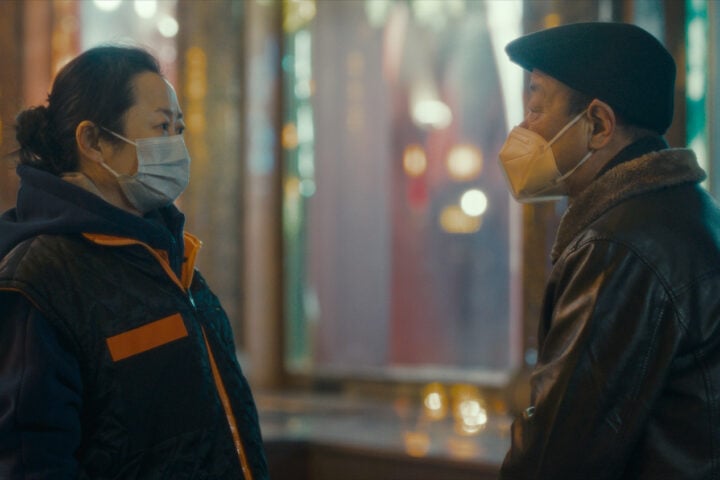
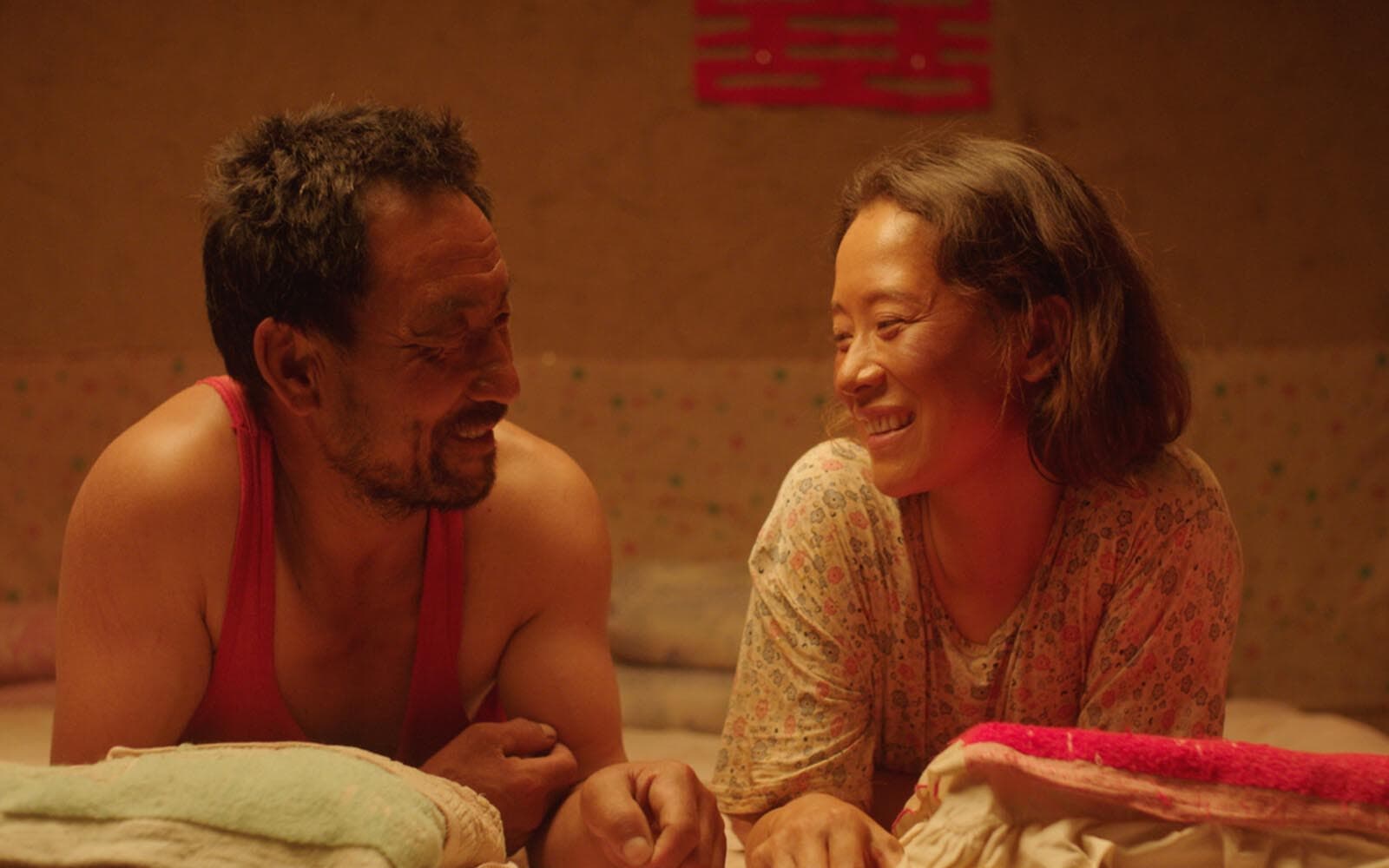
The film focuses on two individuals living in a rural village in Gaotai, Li’s native county in Northwestern China. Ma (Wu Renlin), a humble farmer, and Cao (Hai Qing), a meek woman suffering from chronic incontinence, are thrust together in an arranged marriage to make way for further arrangements that the film pointedly abandons thereafter. Aside from a few running strands—including a wealthy landowner who, due to his rare blood type, requires regular transfusions from Ma to stay alive and be able to buy the village’s crops—the rest of the film concerns itself with the arc of this tender relationship formed by greedy exterior forces, focusing more on steady daily progress than on significant landmark moments.

Amid these tasks, Return to Dust’s characters don’t so much develop as they deepen, becoming more acclimated to the possibilities that this union may provide for them and their new freedom from past abusive families. Through the course of the film, Ma remains consistently caring to a fault for his wife, always insistent on helping others and repaying his debts despite other’s assurances that he doesn’t owe anything. Cao’s appreciation, as is typical in this fairly taciturn film, is only verbalized in a few moments, leaving the viewer to observe the wonder in her eyes.
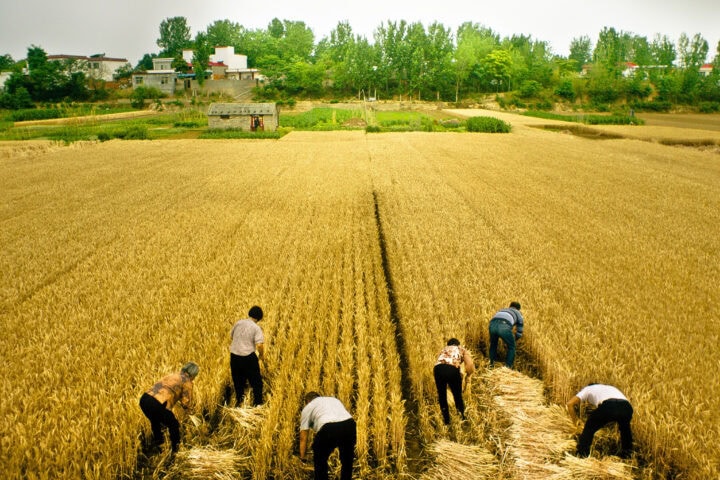
This approach to narrative, perhaps closer to the quotidian concerns of Sixth Generation films, is deftly counterbalanced by Li’s visual style. Taking full advantage of both the wide-open arid landscapes and the dark interiors, and frequently using a distinctive piece of clothing—particularly the bright blue headscarf that Cao often wears—as a focal point, the meticulous, eye-catching frames hew closer to the sumptuous images of Fifth Generation films. This really comes to the fore in Return to Dust’s centerpiece: Ma’s construction of his and Cao’s mud house, which slowly comes together over the course of the film, and includes a memorable passage where they scramble in the night to prevent the mud bricks from being ruined by the rain.
Return to Dust can verge on being too simple in its concerns, especially in the blunt dichotomy it sets up between this lovingly crafted house and the anonymous city apartment that Ma’s brother wants Ma and Cao to move to. But it’s best in these moments when the bond between two outcasts is made corporeal and fully present. An especially shockingly unsentimental plot development around the three-quarter mark emphasizes the value of Li’s quasi-hybrid approach, where the dedication to the rhythms of life must carry on in the face of the unexpected. That Return to Dust has become tacitly banned in China after a few successful weeks in theaters and on streaming is only too fitting: As the ending makes clear, no matter how strong people and structures may appear, they’re as fragile as the earth they come from.
Since 2001, we've brought you uncompromising, candid takes on the world of film, music, television, video games, theater, and more. Independently owned and operated publications like Slant have been hit hard in recent years, but we’re committed to keeping our content free and accessible—meaning no paywalls or fees.
If you like what we do, please consider subscribing to our Patreon or making a donation.