Produced in 2008 as his student thesis at Tokyo University of Arts, Passion abounds in the qualities that have come to distinguish writer-director Hamaguchi Ryūsuke’s work. Namely, his fascination with carving out liminal spaces, as Hamaguchi stretches sequences beyond conventional durations to emphasize emotional experience. Instead of utilizing, say, a dinner scene as a springboard for exposition, Hamaguchi may allow it to unfold over 30 minutes or longer, as the dinner—or a massage, or a rehearsal—is the story for him.
Hamaguchi understands that we live the majority of our lives predominantly in rituals that we marginalize in retrospect while awaiting the “important” events. Each scene in a Hamaguchi film suggests a universe onto itself, with emotions that shift in real time, and a scene’s relationship to other sequences in one of his films is often intuitive. Passion isn’t as accomplished as subsequent Hamaguchi films, but it finds this gift in a chrysalis stage.
A scene occurring at Passion’s midpoint, though, is the equal of the best sequences in Happy Hour and Drive My Car. A middle school teacher, Kaho (Kawai Aoba), has recently lost one of her students to suicide. We assume that Kaho will speak to her children in “thoughts and prayers”-style bromides, but she leads a conversation about “internal” and “external” violence that rates as one of the most persuasive endorsements of pacifism in cinema. Kaho, and Hamaguchi, are doing their respective audiences the courtesy of speaking as adults. Kaho emphasizes the importance, and controllability, of our reaction to violence; it’s this controllability that affords us the opportunity for grace in the midst of a world of chaos.
In an astonishing moment, Kaho winds her hand back, seemingly about to strike a student. Kaho is illustrating that the student doesn’t know what she might be do. The student only believes that Kaho may not strike, due to established demarcations of power and social position, but violence obliterates the illusion of control that such rules and governances offer. All the student has in recourse is his own reaction to what may or may not unfold.
Kaho’s deliberate words, and Hamaguchi’s unexpected emphasis of this scene, allow the audience to feel the weight of the teacher’s hand as it coils for that strike. This threat is more violent, and more moving, than many filmmakers’ gunfights. Besides the dialectal power of the scene, there’s the power of Kaho’s fragility. We know things about her that the children do not—namely, that she’s a passive young woman who has a way of blending into the woodwork even at her 29th birthday party, an event which kicks Passion into motion. We know that she’s transcending her nature here, rising to lead her students in the midst of catastrophe. This is a transcendence that eludes the film’s other characters, who struggle with moral responsibility.
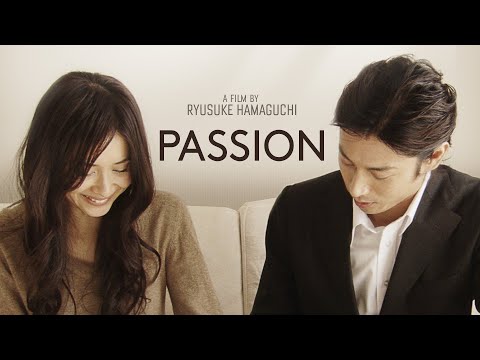
This sequence, which runs just over 10 minutes, would be remarkable in any context, but it’s flabbergasting for the fact that Passion isn’t, in a literal sense, even chiefly about Kaho. The film is mostly concerned with Kaho’s fiancé, Tomoya (Okamoto Ryuta), and his friends Takeshi (Shibukawa Kiyohiko) and Kenichiro (Okabe Nao), who’re all working through self-pitying thirtysomething dude shit, wrestling with whether they can settle on monogamy as well as with the baggage accrued by years of friendship with one another.
Most male filmmakers would stick with the guys, but Hamaguchi emphasizes in the classroom sequence Kaho’s inner world, namely her strength, which Tomoya takes for granted. Tomoya sees his lover so often that he doesn’t see her. Hamaguchi, though, very much does, and he imparts to us an understanding of the beauty that Tomoya is missing in his lover due to his self-absorbed shenanigans. The seemingly diversionary classroom scene opens Passion up for the audience, just as a prolonged dinner sequence expands the emotional range of Drive My Car.
Already evident in Passion is Hamaguchi’s peerless sense of how people perform for friends and lovers alike. Tomoya, Takeshi, and Kenichiro self-consciously play recognizable male types. Tomoya, sleek and good-looking, suggests the ladies’ man that’s cool to a fault, to the point of valuing nothing else. At first glance, Takeshi is more earnest, more working class and down-to-earth, awaiting the birth of his first child. Kenichiro, who’s hopelessly hung up on Kaho, is harder to pin down, as he initially plays the nerdy foil for his friends. These identities shift and evolve and even collapse over the course of long interludes at an apartment inhabited by the men’s mutual friend, Takako (Urabe Fusako), who has been sexually involved with all of them.
Passion already finds Hamaguchi to be a superb orchestrator of moods and tones. Here, the filmmaker has a particularly shrewd grasp of when to nip long confessional scenes in the bud, allowing for seemingly spontaneous grace notes and segues that hauntingly imbue characters with irresolvable, conflicting textures. Before he reveals himself to be far bitterer and more aggressive than he initially appears to be, there’s something gentle and poignant about Takeshi and his matter-of-fact smoke out on a stoop with one of Takako’s friends, and he proves masterful at massaging frayed nerves over a dead cat. This gentleness isn’t a ruse, as it’s part of Takeshi’s nature, but so is the startling violence of another confrontation, in which he pushes Takako into her bathroom with a threat of sexual force that turns her on, culminating in a lacerating, erotic close-up of their wet faces smashed together kissing.
Hamaguchi has been compared to John Cassavetes, who has a similar flair for extended passages that reveal the essence of characters’ souls, and that similarity is evident in Passion during the interludes at Takako’s apartment. The general setup, though, mirrors a sequence from Elaine May’s Mikey and Nicky (which co-stars Cassavetes and is very much in conversation with his own work as director), where the protagonists use a woman as a battleground for their own resentments. Passion isn’t nearly as brutal as that film, but it’s concerned with the same splits—between want and need and the past and the present—that can drive middle-aged, middle-class people bonkers with panic and longing.
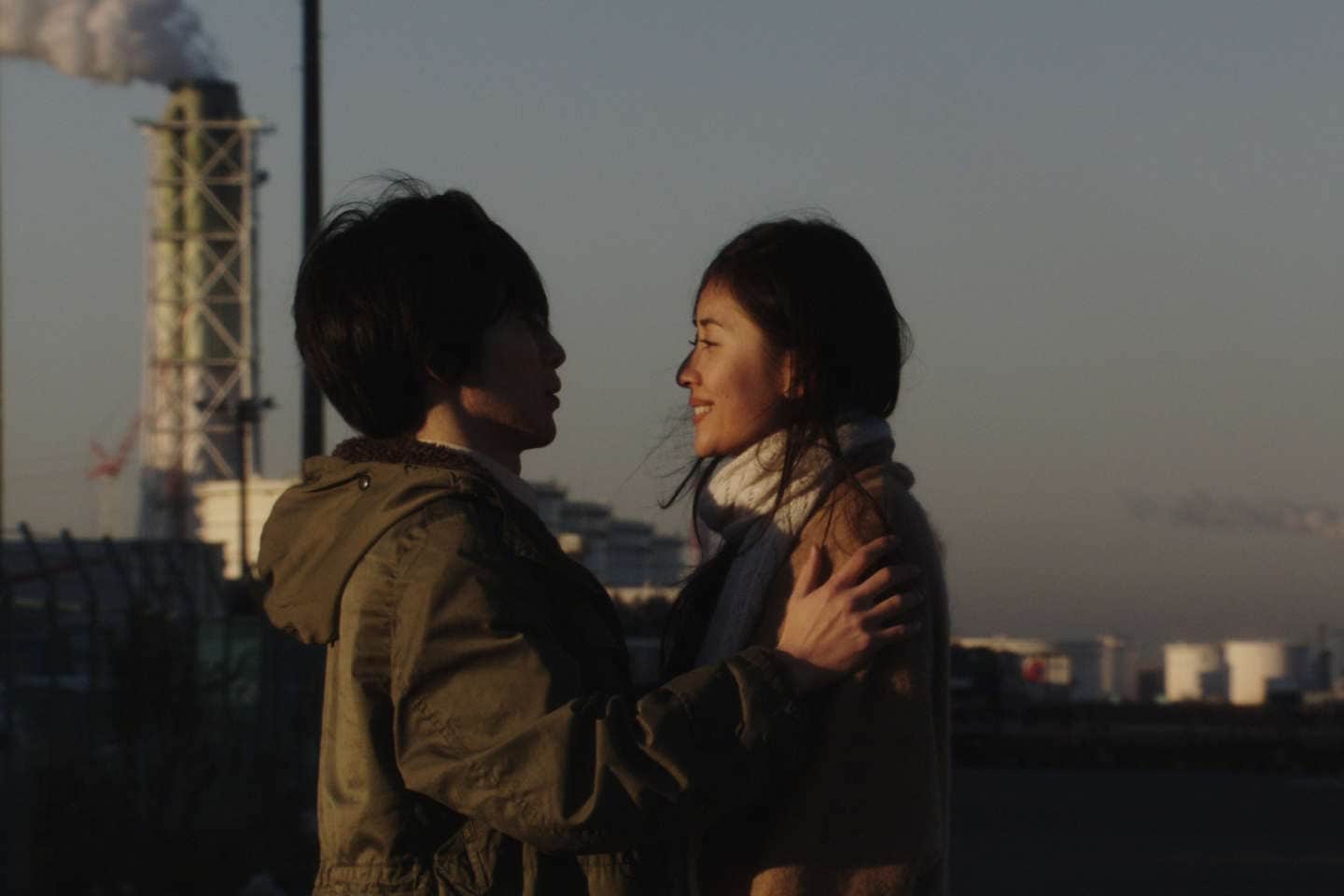
That said, Hamaguchi’s preoccupation with close-ups here, which he would carry forward in future films, brings to mind the frayed, wrenching compositions of Ingmar Bergman’s productions. From the close-up of Takeshi and Takako kissing while soaked, to the one of Kaho leaning into Tomoya’s back as he makes dinner, in agony over the moment in the classroom, to the one of Tomoya and Kaho drawing into one another in a climactic moment of truth, bathed in heavenly sunlight, these sequences inform realistic confrontations with an element of the uncanny. Several images here could be religious paintings, which are what Bergman’s close-ups often suggest, yet they have the specificity of docudrama. The resulting ecstasy is, even at this early stage in his career, quite singular—pure Hamaguchi.
Since 2001, we've brought you uncompromising, candid takes on the world of film, music, television, video games, theater, and more. Independently owned and operated publications like Slant have been hit hard in recent years, but we’re committed to keeping our content free and accessible—meaning no paywalls or fees.
If you like what we do, please consider subscribing to our Patreon or making a donation.