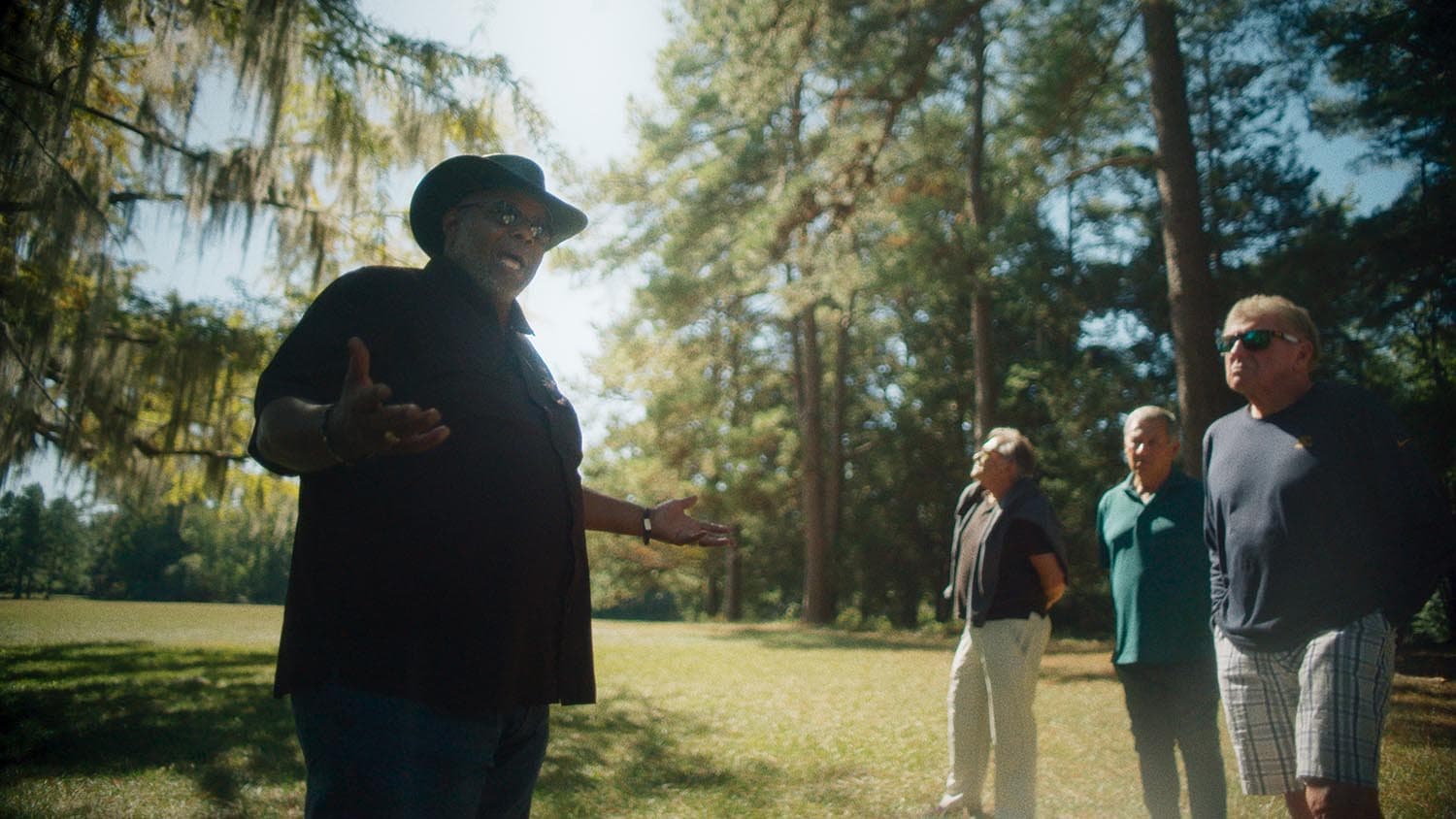
Even by the standards of Mississippi, Natchez has a complicated history. In the mid-19th century, it housed more millionaires than any other city in the U.S. The ornate mansions they left behind have been carefully preserved, turning Natchez into a major antebellum tourist attraction, while the story of the slaves who built them has been just as carefully elided.
On the one hand, Natchez is an old-money, proudly progressive city, the home of America’s first Black senator and numerous other notable civil rights figures. On the other, the city is a monument to the plantation era, a place where nostalgic visitors get their pictures taken beside men in Confederate uniforms. To tell the story of Natchez is to reckon with all these contradictions, and that’s exactly what Suzannah Herbert’s documentary Natchez does.
The film slowly constructs a picture of the city’s past and present by interviewing a wide range of locals, focusing primarily on Natchez’s charismatic collection of tour guides. David Garner owns one of the city’s most storied townhouses and conducts visitors through it himself, fawning over the wealth and taste of the original owners, to whom he loves to be compared. Slaves are seldom mentioned in Natchez’s house tours, and when they are it’s usually to talk about how kind the plantation owners were to their “servants,” but the city tours provided by Tracy “Rev” Collins tell a very different story. He’s as brimming with Southern charm as any of the other guides and banters with his customers just as playfully, but he makes sure that everyone walks away with a full understanding of the cruelty and suffering that paid for all those pretty homes.
David and his cohorts are working to preserve the romantic self-image that Natchez has built itself around while outsiders like Rev are trying to restore the bits of history that have been swept aside. Putting its story together piece by piece, Natchez feels like a mosaic that’s being assembled from the center and the edges at the very same time.
With so many engaging voices on offer, Herbert wisely chooses to let the locals tell the story rather than providing any explicit narration of her own. But the filmmaker’s voice can still be clearly heard in certain moments of sly juxtaposition. When members of the Natchez Garden Club—a longstanding preservation society composed almost entirely of rich white women—tell the story of how the organization once saved Natchez from financial ruin by staging elaborate garden tours, they cheerfully explain how “all of the ladies worked for months and months and months, preparing their gardens, planting and cleaning.” As the individuals speak, the images on screen quietly emphasize who that labor was actually carried out by.
The longer the film continues, the more nuanced our picture of Natchez grows. David and other house owners will spend the day acting out antebellum fantasizes and then head to a drag event to raise money for LGBTQ+ charities—fighting for a freer future while dreaming of a shackled past. Some of the city’s guides actually have begun talking about slavery during their tours, adding solemn interludes to their cheerful reminiscences over hoop skirts and terrapin forks.
Confronting the uglier parts of history in this way seems like the right thing to do, and yet there’s still something discomforting about these performances. They’re reminiscent of the kids in Eddington giving agonized speeches about white guilt, public displays of penance which seem designed more to show what a good person the speaker is than to offer any kind of reparation.
As comfortable as Natchez is with its subject’s complexities, it never becomes so both-sided as to lose its own perspective. By the end of the film, there are some definite heroes and some very clear villains, with one interviewee eventually dropping their friendly façade to reveal a level of racism that’s genuinely shocking, even for someone who’s spent the preceding hour and a half pining for the plantation era. Sometimes, it really is the ones you most suspect.
Since 2001, we've brought you uncompromising, candid takes on the world of film, music, television, video games, theater, and more. Independently owned and operated publications like Slant have been hit hard in recent years, but we’re committed to keeping our content free and accessible—meaning no paywalls or fees.
If you like what we do, please consider subscribing to our Patreon or making a donation.