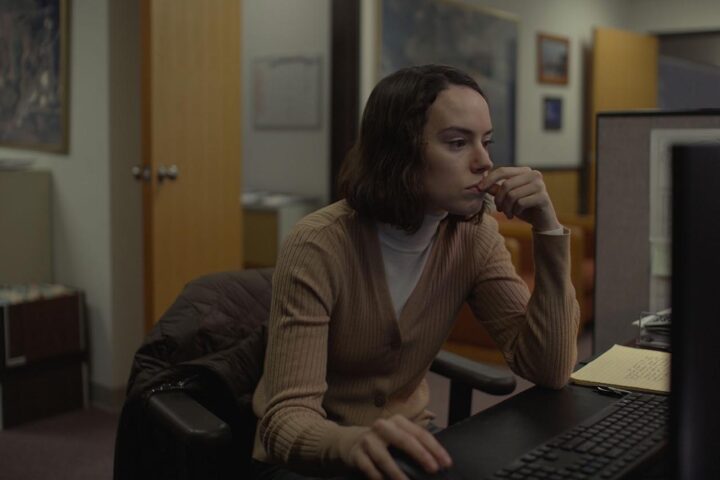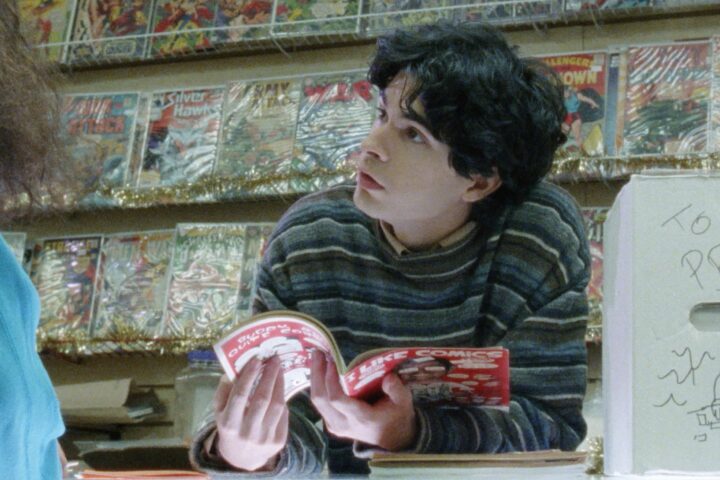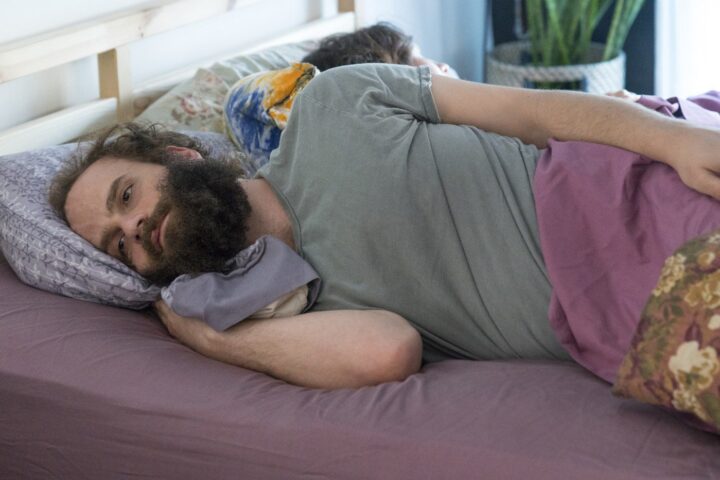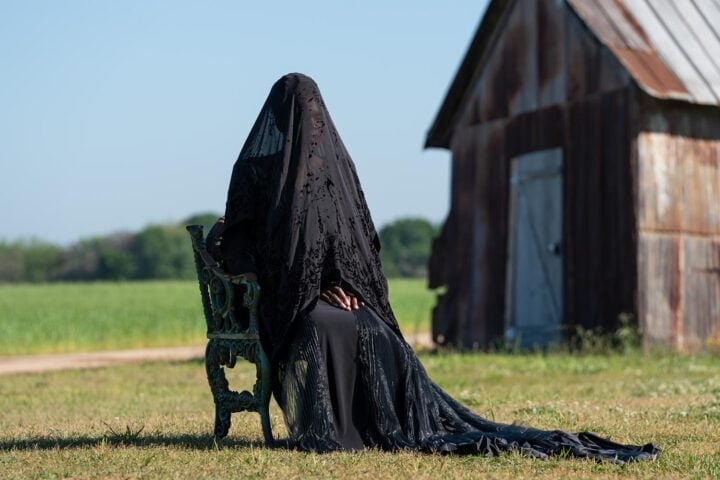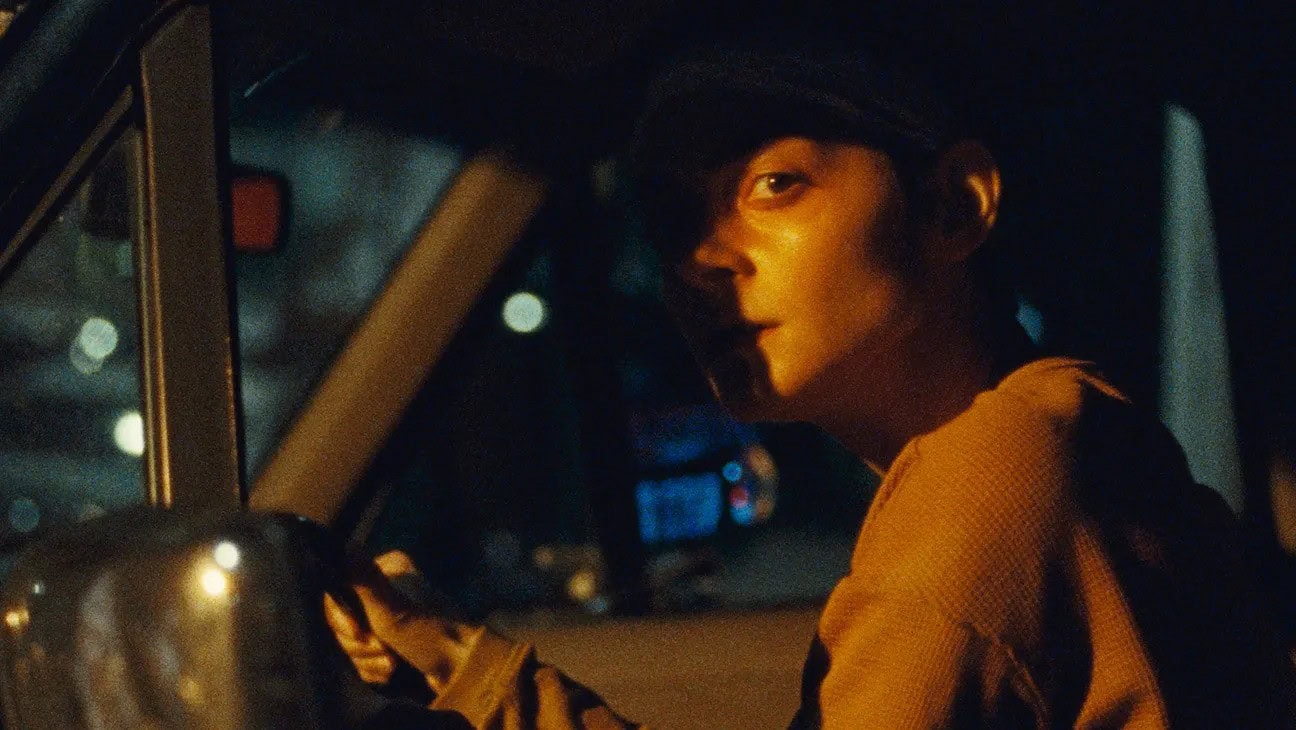
Frankie (Ariella Mastroianni) spends much of Ryan J. Sloan’s Gazer staring at strangers so she can maintain some grip on reality. Barely hanging on to a poverty-wracked existence, she finds a sense of meaning in creating backstories for those she surveils. After believing she has seen a woman, Paige (Renee Gagner), being threatened in an apartment building that she watches, the sylph-like Frankie gets sucked into an increasingly baffling mystery that threatens to completely upend her life, while also illuminating aspects of her past for viewers.
Located somewhere near the intersection of The Conversation and Memento, Sloan’s feature-length directorial debut marries the former’s obsession with watching to the latter’s meditations on the nature of perception. Like both films, it jolts the wandering, obsessive nature of its main characters with an interruption of violence and sews confusion throughout.
The stated reason for Frankie’s behavior is that she has a rare neurological condition called dyschronometria, or “lost time syndrome,” which fogs her senses so much that she often can’t measure the passage of time. Sloan is clearly sensitive to how Frankie is detached from her surroundings and shocked into awareness that hours have passed and that she has no recollection of what happened during the time. And yet, Frankie’s condition consistently feels like a dramatically dubious attempt to shroud the somewhat spindly nature of the film’s plot.
Gazer sidles up to its story cautiously, mirroring Frankie’s questioning nature. When she and Paige finally talk at a therapy group for survivors of suicide, Frankie treats the offer of $3,000 for driving Paige’s car to a “remote” place with appropriate skepticism. But Frankie accepts, as she’s desperate to escape her impoverished existence. Nothing is that simple though. In short order, Paige disappears and the police start sniffing around, as does the emotionally disturbed brother, Henry (Jack Alberts), who Frankie thought she saw beating Paige.
Sloan takes the slim mystery around what Frankie has gotten involved in and wraps it in a richly resonant ghostliness. Matheus Bastos’s grainy 16mm cinematography creates a luminously dark atmosphere, while Steven Matthew Carter’s scratchy, yowling score spikes the tension. Much of the film’s dialogue doesn’t consist of conversations between characters but of Frankie listening to her voice on a Walkman. “What do you see?” she asks herself, the camera holding on her searching eyes as she tries to keep time from drifting away. “If you feel yourself zoning out, rewind tape.” The repetition of Frankie’s recorded monologues acts like a metronome, casting a hypnotic aura over her search for anything that can anchor her to the present.
Some of the recordings are also messages to her daughter, Cynthia, who’s being raised by Frankie’s mother-in-law, Diane (Marianne Goodell). Flickers of a dream featuring a gun, blood, and a dead body suggest a reason for Diane’s disapproval of Frankie and why Frankie lives alone in a bleak Newark apartment that might as well be a prison cell. Those dream sequences are among the film’s more off-key moments, introducing some Videodrome-esque body horror that feels out of place, like they’ve been dropped in from a V/H/S anthology.
Gazer ultimately holds a less firm grip on the imagination as what looks like a criminal conspiracy starts lacing itself around Frankie. While Sloan’s film is mostly impressive, the more familiar it becomes and the further it gets from the curious particulars of Frankie’s unusual condition, the less urgency it communicates about getting to the bottom of anything.
Since 2001, we've brought you uncompromising, candid takes on the world of film, music, television, video games, theater, and more. Independently owned and operated publications like Slant have been hit hard in recent years, but we’re committed to keeping our content free and accessible—meaning no paywalls or fees.
If you like what we do, please consider subscribing to our Patreon or making a donation.