Frederick Wiseman’s A Couple is many things, but most importantly, it’s not the master documentarian’s first narrative feature, nor is it even his first epistolary work. Although these projects are an inarguable rarity amid his steady output of totemic documentaries, A Couple is the product of a sturdy knowledge in classical drama, as previously made apparent in 2002’s The Last Letter, whose material was carved out from Vasily Grossman’s Life and Fate.
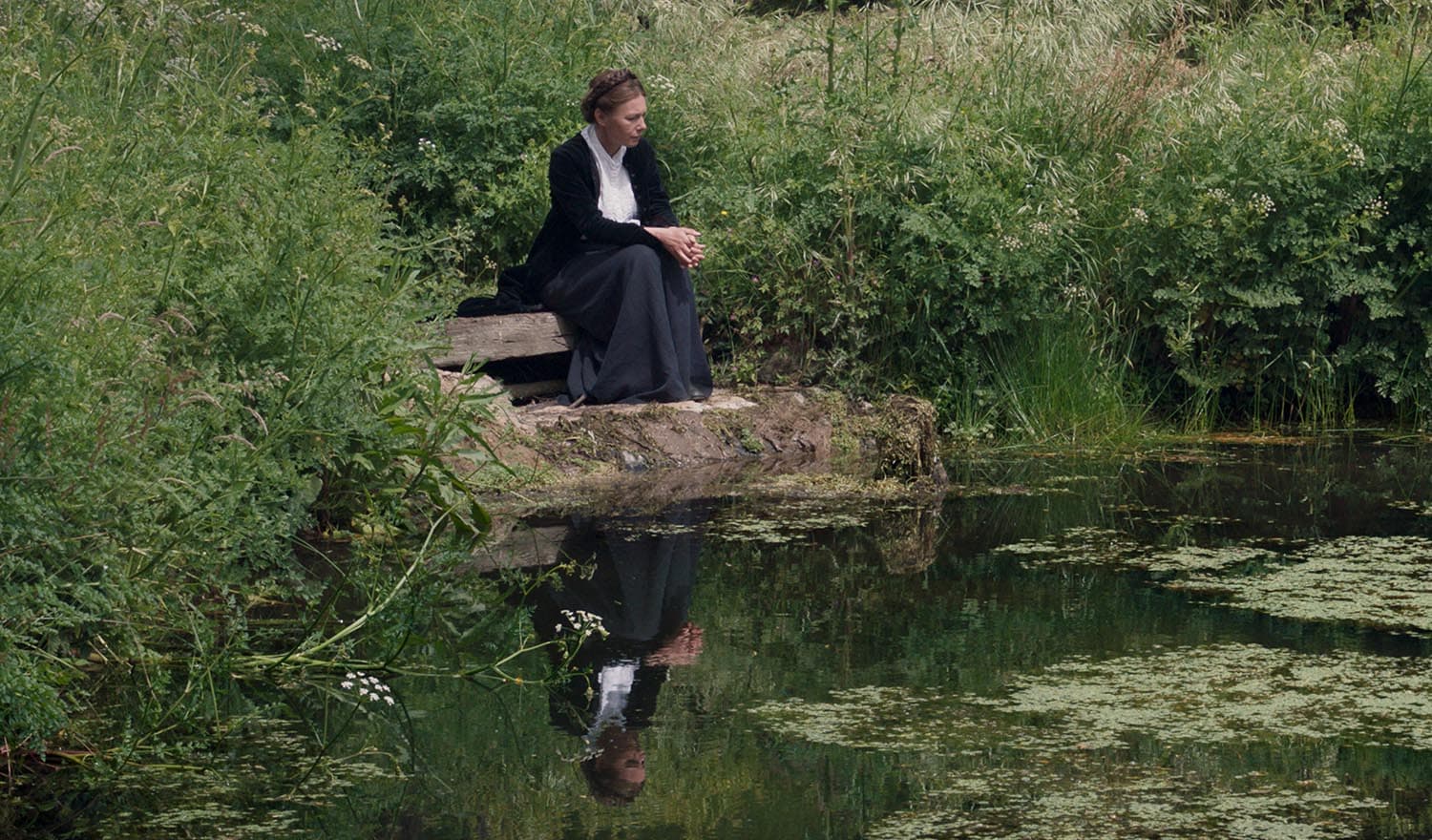
A Couple similarly germinated from literature, playing as a roundelay of Sophia Tolstoy’s diaries and letters. Stymied by her husband Leo’s indifference, while also pining for their once shared creative and love life, Sophia (Nathalie Boutefeu) narrates a romantic relationship that bounces across time and space, while she herself stays physically rooted in the film’s plein-air setting.
Prior to A Couple’s theatrical release, I spoke with Wiseman about the shooting of the film, his working relationship with Boutefeu, his future projects, and more.
There are a few moments in the film where the wind is particularly whipping at the camera and Nathalie Boutefeu, creating this very immediate and visceral effect. Was this something you set out to capture in choosing the location? Did it cause any issues while shooting?
I just picked a location, and it happened to be very windy. There was nothing to do but just go with it. Because we were working as a very small crew, we had no choice but to wing it.
Does that also apply to all the animal life in the film?
Some of those shots I did set out to find, like the bees pollinating. That was something I’d wanted before shooting, so there was no coincidence in that. Others were more of the moment. One day while hanging around the pond I noticed the ducks diving and swimming around. I can’t say I planned this, obviously, because we weren’t working with trained ducks, but the use of animals, in a general sense, was anticipated.
How much of an authority are you in directing performances?
I’m a very strong presence. Natalie and I wrote the script together, so we both knew the material very well, and I was quite clear with her from the beginning what performance I wanted. For each sequence, there was a good number of takes, maybe four to six. That way, I could also incorporate the ideas she may have had. I was very open to her suggestions, especially if I liked them. The scene where she’s snapping twigs and branches from that pile, that was her idea.
What was the process for which letters and journal entries to use?
Sophia Tolstoy wrote a lot—multiple books over 300 pages long. We read the books and diaries and initially came out with about 90 to 100 pages, which would have made a three- or four-hour film. Then I made my own final selection, which is what you see in the film, with improvisations and changes throughout. We also had to change some of the translations, those which were in archaic French, and after that we converted these texts to the present tense for our use.
Did this lend an arc to the film, or did you more so have to impose one yourself?
We ourselves tried to make a dramatic arc, but at the same time, I wasn’t paying too much attention to that. Basically, we were treating the books and diaries as if they were rushes. In creating the structure of the screenplay, we tried to order the material in a way that suited the needs of the film, without necessarily giving exact dates for when something would have been written. It would have been cliché otherwise.
So with each passage selected, was the idea to dedicate one shot or sequence to it, or was it rather broken up across the film?
It depends on the length of the sequence, but many of them were shot in several parts out of order. Visually, that helped us keep things interesting, alternating between medium and close up, changing the angles.
I really enjoyed the topographical continuity of the garden. How were you able to keep track of what was shot where?
I already knew the garden very well, because it belongs to a friend of mine. All the shots were mostly figured out in advance. I will say that I didn’t think of the garden right away, but the specific idea occurred to me about six months before shooting. The garden itself isn’t cinematic, so the life of the garden had to be intertwined with the themes of the film.
Are the two interior shots also on those same grounds?
The first of them is shot in a guest house that that friend has, and, in fact, that’s also where we all stayed during the making of the film. That’s the living room of the guesthouse. We moved all our friends and the furniture as much out of the way as we could, and put Nathalie in the corner with the table that you see.
The Last Letter, another quasi-epistolary film, is much more expressionistic, whereas this is a little more muted, visually. And, of course, it’s much more naturalistic, taking place almost entirely outdoors.
Compared to the interior soundstage of The Last Letter, the garden in A Couple is very literal. So, hopefully, the cumulative effect of the shots and their arrangement takes it beyond the literal. The expressionism of The Last Letter is easier to identify symbolically. The shadows in that film are the other people in the village, which is not naturalistic at all.
I’m sure people are always asking you what subject you want to dedicate a documentary to next, but I was wondering if you had any plans to continue with these epistolary narratives?
I really do enjoy doing fiction, or non-documentary films. Nathalie and I have spoken about a few possible projects, but we haven’t decided on anything yet. At this moment, I’m actually involved in color grading a lot of my older films that were shot on film, those that unfortunately can’t be shown in most theaters nowadays. Those films can’t even stream properly without proper DCPs, so that’s going to be at least a six-month project, restoring these movies in 4K.
Since 2001, we've brought you uncompromising, candid takes on the world of film, music, television, video games, theater, and more. Independently owned and operated publications like Slant have been hit hard in recent years, but we’re committed to keeping our content free and accessible—meaning no paywalls or fees.
If you like what we do, please consider subscribing to our Patreon or making a donation.