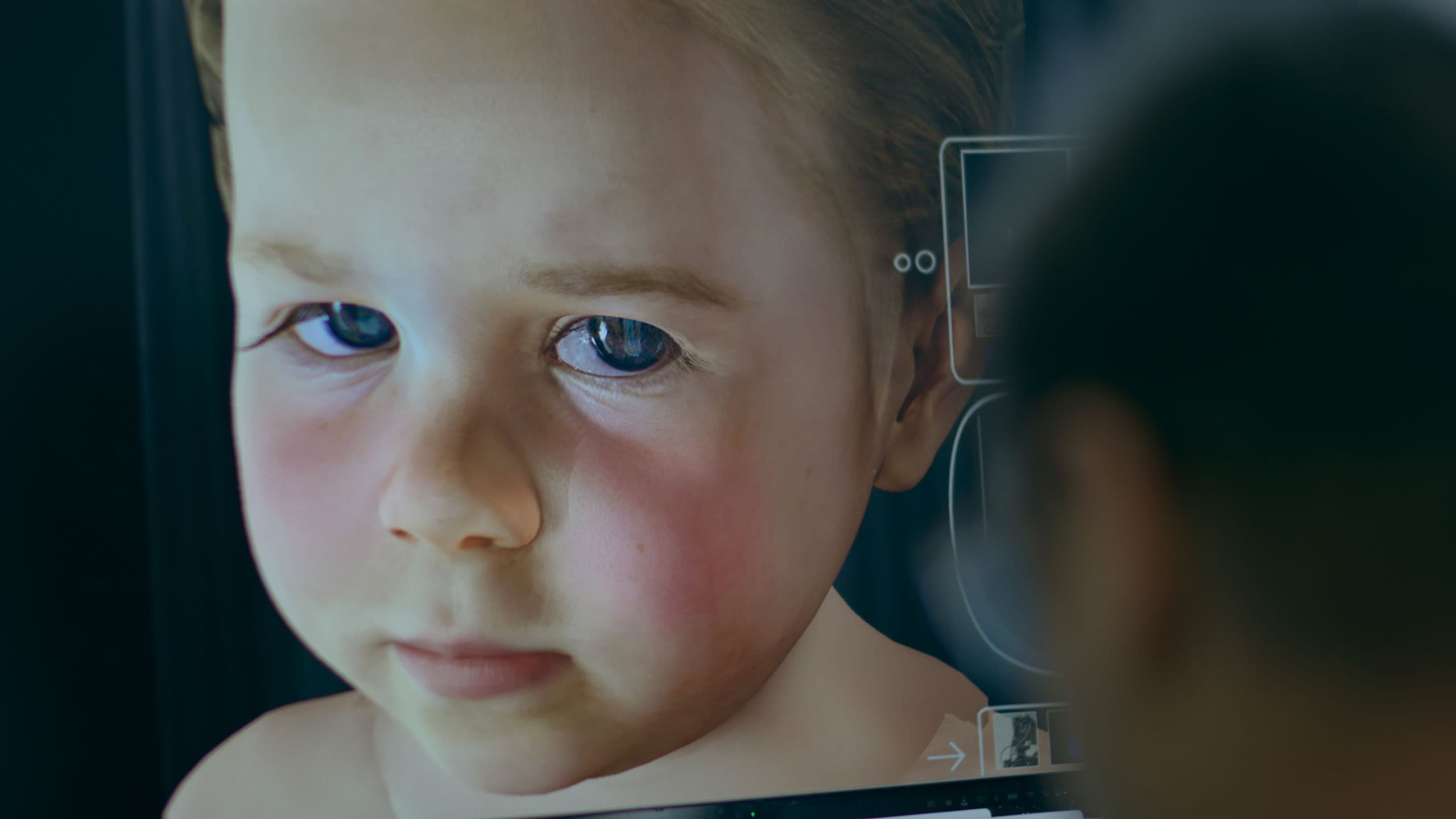
One of the stranger developments to emerge since the debut of ChatGPT and other large language models (LLMs) is the sudden rise of the digital afterlife industry, which promises consumers the opportunity to talk and interact with A.I.-rendered avatars of their deceased loved ones via text, audio, or VR. At the start of Eternal You, it seems as if the documentary may be all in on the utopian vision of the numerous tech bros currently marketing this technology. Directors Hans Block and Moritz Riesewieck, though, soon peer beneath the sunny surface of good intentions claimed by the A.I. industry to reveal the moral, emotional, and psychological effects that have emerged and are still emerging from products like these.
Eternal You presents a nuanced portrait of how generative A.I. technology is being employed and how it’s already begun to impact the mental health of people who’ve used it, for better and worse. While it gives voice to C.E.O.s who are only too happy to tout their corporate missions, the film also captures several customers’ disparate experiences with various programs, exhibiting just how unpredictable and uncontrollable these models are at present.
Among the film’s subjects is a woman who commissions a company to create an A.I. simulation of her father so that her children can better understand the grandfather they only briefly knew, as well as a man who uses a different program to text with a virtual avatar of his dead fiancée. One of these uses may seem healthier than the other, but Eternal You allows the users and their experiences to speak for themselves rather than presenting us with any sort of preset agenda.
In one of the film’s most wrenching and knotty sections, we see a Korean woman preparing for an appearance on a television documentary, Meeting You, where she will go into a fully immersive virtual reality to visit an avatar of her recently deceased young daughter. She speaks about how she still has nightmares about her daughter, whom she scolded in their last conversation together, and after her interaction in VR admits that the nightmares have stopped.
Yet, in witnessing these interactions, both from within the VR headset and from outside on a stage with a lot of green screen, it’s impossible not to wonder what adverse long-term effects this could have on human psychology. Indeed, when another woman’s A.I. of her dead boyfriend tells her that he’s in hell, the lasting scars these programs can cause is made crystal clear.
Although several A.I. ethicists delve into the philosophical implications of this tech and the dangers of allowing companies to essentially vet their own product before releasing it, Eternal You could have benefitted from more interrogation in that regard. As one expert remarks, the ultimate goal of the digital afterlife industry should be “how to lose [dead loved ones] better, not how to pretend they’re still here.” And given the complete lack of predictability with how the models they use will behave and the less than noble motives of investors funding much of the research in this field it’s impossible to know yet just how dangerous the industry’s products are, let alone the impact they will have in how humanity deals with grief.
Block and Riesewieck’s film does, though, undeniably comprehend that we’re on the edge of a new technological frontier with massive, wide-reaching effects on our collective emotional health. Yet rather than opting for a screed either scolding or revering the technology, Eternal You approaches it with a refreshingly objective, albeit responsibly apprehensive, eye.
Since 2001, we've brought you uncompromising, candid takes on the world of film, music, television, video games, theater, and more. Independently owned and operated publications like Slant have been hit hard in recent years, but we’re committed to keeping our content free and accessible—meaning no paywalls or fees.
If you like what we do, please consider subscribing to our Patreon or making a donation.