A man of great skill in his field suddenly begins to lose control of his image as people co-opt his likeness and rip it out of context. The icon begins to outstrip the individual, complicating his ability to gain recognition for the work he wants to be known. That’s the tragedy of Paul Matthews in Dream Scenario, and it resounds all the more because it contains echoes of the journey undergone by the actor who brings him to life: Nicolas Cage.
The phenomenon of Cage as meme is but one of many contemporary cultural forces bottled up by writer-director Kristoffer Borgli in his genre-bending new film. Dream Scenario follows fast on the heels of the Norwegian filmmaker’s international breakout, Sick of Myself, another examination of how online pressures guide real-world behaviors. Borgli has a knack for realizing his observations through extended displays of emotional humiliation and bodily mortification, so it’s no wonder that filmmaker Ari Aster came on board to produce the project.
Borgli’s physical and psychological extremities only grow larger here as Cage’s Paul Matthews, a timid professor and family man who inexplicably begins appearing in the dreams of total strangers. This overexposure leads him to follow the now-ritualized life cycle of the “milkshake duck,” going from revered to reviled in breathless speed. His fall from grace reveals as much about the society compelling the journey toward ostracization as they do Paul’s own anxieties.
I spoke with Borgli prior to Dream Scenario’s release. Our conversation covered why he often targets the advertising industry, how he married a high-concept idea to a satirical exploration of contemporary culture, and what challenges working with Cage’s iconography presented.
Your satire of the ad industry as able to commoditize everything is devastatingly accurate. What is it about this industry that attracts such ire from you?
From personal experience with advertising. As a director in my 20s, I couldn’t get any budgets together. There was no way for me to make anything other than music videos and advertisements for a while. I had to sort of accept that. As the son of a social anthropologist, I just absorbed the culture and haven’t been able to completely shut up about it ever since. As a filmmaker from a country where they have a film institute that funds movies and who’s coming to work in America where there’s no such system, there’s only the business model. I’m always aware and fearful of how market incentives can corrupt anything good, original, or sacred. It’s something that I want to talk about because there are ways that we don’t even see that advertising and marketing are slowly paving the road to hell.
Is your concern as much from a perspective as a consumer receiving the ads than as someone who’s made them?
I think it’s getting confused on a mass-culture level. True, good intentions and corrupt intentions, [as well as] art and commerce are blending way too much. I think it causes despair when we can’t distinguish true, good intentions and intentions to do commodify something.
Was that part of the project behind your advertising satire Drib? I know you have conflicting feelings about how it turned out, and I’m curious if that informed your idea of the limits to which you can use the form to undermine it.
No, I think my disappointment with that project is purely with my own capabilities. I had somewhat of an abstract feeling of an idea in my head, which is always what happens, and then you work slowly to solidify that into something that other people can see. The gap between your taste and your capabilities is very big at the beginning of learning a new craft, and I think that it was a learning curve for me. It just didn’t look or feel like what I had in my head. So, in that way, it was a disappointment. But that film is more about, and fully takes place in, marketing. The story of the film is a re-enactment of a real marketing campaign that failed. In Dream Scenario, it’s just one of many cultural artifacts that the main character has to endure.
The origin of the film’s premise came from fired professors talking about cancel culture. At what point did you realize that you could fold in a more widely shared experience of meme culture into the story?
Every time I write a movie, it feels like it’s not a fully formed idea until four different ideas are mushed together. It’s true that one of the early seeds for this movie was inspired by observing some professors. There was one in particular that felt inspiring because he had gotten fired, and he went on a podcast to vent about how he was actually a genius, misunderstood, and that he was robbed of a Nobel Prize for work that he hadn’t even written. I thought that was really funny, so I started thinking about that as a character. I wanted to make a story about a character that shares those sensibilities, but I didn’t have a story yet. I didn’t know where to take it. And, on the other end, I was thinking about wanting to make a movie that was about dreams. I was reading Carl Jung and the theory of the collective unconscious and thinking about high-concept ideas like H.P. Lovecraft, or Twilight Zone, or specifically A Nightmare on Elm Street as a version of the Jungian idea. I thought, “Why don’t I rip the high-concept horror idea out of its genre and give it to this professor that I’m already interested in and see what happens?”
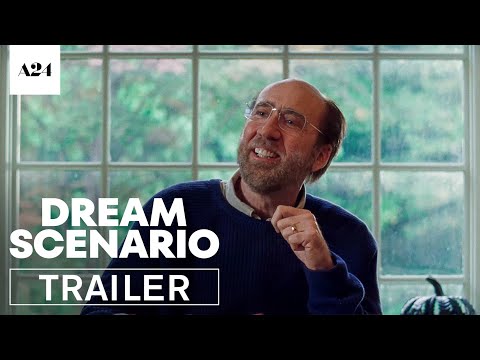
During a lecture, Paul contextualizes his virality in terms of the academic study of mimetics. But how many of the forces in the film like memes and cancelation are unique to this era of the technology that we have?
What I wanted to do with the movie was make it feel like a snapshot of a very specific moment in history. I was looking at people who had stumbled upon fame, or new phenomena like the blue/yellow dress, and what happens to these 24-hour celebrities. I was just following what seemed like a pattern of the culture: It’s sort of beloved and cherished, then turned into a big conversation, then how marketing and advertising come in to piggyback on that conversation, and then people feel like they want to have a hot take on it, like “Here’s actually why this concept is bad” or “These are the ways that the concept is hurting us.” Suddenly, it turns into a culture war. You have people who are piggybacking off of the culture war and trying to commodify the perspective on the other side. It all felt like we have this one-size-fits-all conversation style with any big phenomenon that enters the public psyche. I thought that would be interesting to take such a high-concept, mysterious movie idea and let it play out in our culture.
Obviously, Paul is a character of your own creation, but I can imagine most people who see Dream Scenario are familiar with Nicolas Cage as both an actor and a meme. What were the challenges of playing with his existing iconography knowing what people were going to bring to the character?
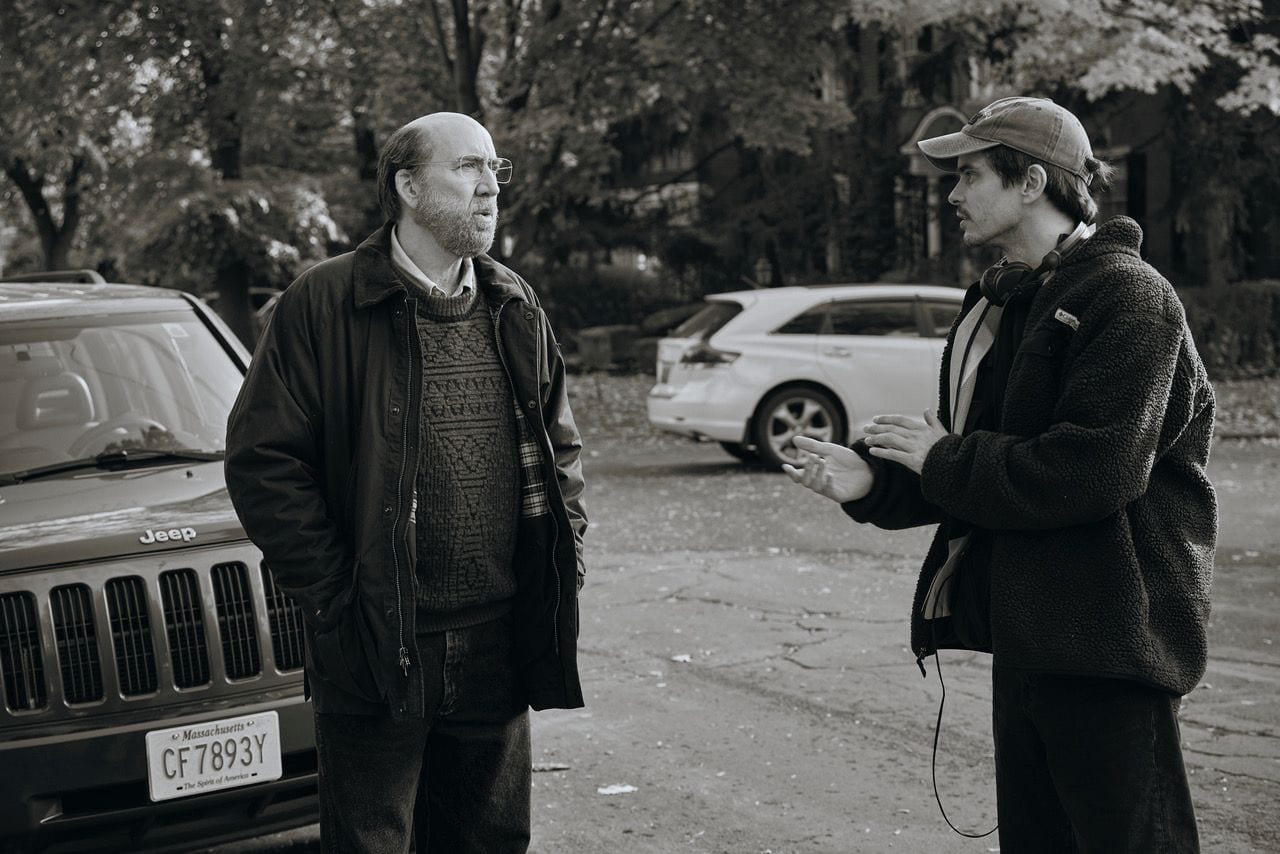
I had written the character with no one in mind. On paper, this guy is unremarkable. He doesn’t stand out, he’s very bland, and he’s socially awkward and sort of a beta male. Here we are casting one of the most recognizable people on the planet and someone who has a lot of natural charisma and energy. The idea of him in this role has this meta layer to it because there’s so much overlap with how the culture has treated him as a mythical icon and what happens with Paul Matthews. But I needed to shave off Nicolas Cage, so that’s why he’s bald in the movie. That’s why he’s distinctly dressed as a suburban dad. It’s also why we made a prosthetic nose, which might be hard to detect, but he has a slightly different nose. All of these details create the sort of uncanny feeling of watching a person that you’ve never seen before.
Cage says he gave you total control of his performance, so I have to ask how you directed some of his line readings. Oftentimes, he’d have a really bonkers and unexpected delivery that would catch me completely off-guard.
It’s an exaggeration to say that I had full control over his performance. He had many inspired choices that he brought to this character. He was able to make a character that on paper is sometimes very mundane and boring feel exhilarating just with little mannerisms, body language, pauses, and ways to read lines. They didn’t go against the vision of the character but just maximized the watchability of this unremarkable character.
One scene I’d love to dig into is the dinner with Paul’s academic rival when he’s recording a voice memo of his planned confrontation, and then that strained playback from his phone becomes the audio we hear as it plays out. How did you come to this concept?
So often I myself can feel extremely motivated to a point of view in a conversation. I think most of us lie in bed sometimes and have full-blown anxiety over something that we did. I wanted that to feel felt all in one moment: the discrepancy between the entitlement and confidence you have in a moment versus your self-hatred later. This became a way to mush those two moments together into one moment, and I felt that was an interesting way to look at the experience of life.
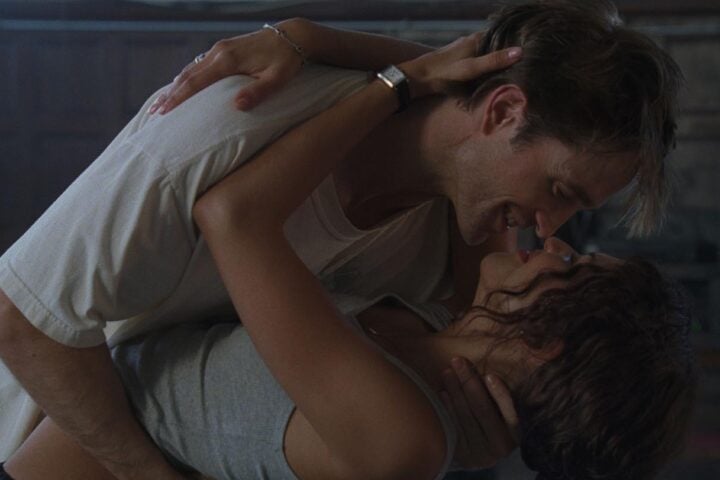
I think that we live inside of our heads more than we do in the present moment. Every moment that we live has some of the past and some of the imagined future shot through it. I think that experience is something that you could express in cinema by way of editing between moments in time and going actually into someone’s head like we do in the movie. You go into dreams—you go into fantasies, even—and the movie lives in the discrepancy between the idea of something and the reality of something. That’s yet again utilized in the sex scene in the middle where there’s huge expectations on one end and the reality looks very different.
Does that discrepancy also extend to the way we live digitally and the way we experience phenomena physically?
We’re more and more pressured into making ourselves personal brands. It’s hard to live up to that personal brand. I think the discrepancy between person and persona is extremely vital and vibrant in the culture right now because we’re curating and branding ourselves. Maybe in ways that we don’t know, it’s damaging our own identity and self-worth. It’s harder to change positions on things because you’ve made yourself a solid, one-idea brand. That’s sort of how we deal with people now. There’s less space for nuance in that way, and we’re contributing to that. I think the movie deals with that in a way, the way that other people’s expectations start having a profound effect on you. Audience capture, I guess.
Since 2001, we've brought you uncompromising, candid takes on the world of film, music, television, video games, theater, and more. Independently owned and operated publications like Slant have been hit hard in recent years, but we’re committed to keeping our content free and accessible—meaning no paywalls or fees.
If you like what we do, please consider subscribing to our Patreon or making a donation.