This seminal Mikio Naruse masterpiece details a period in the life of Tokyo bar hostess Keiko Yashiro (Hideko Takamine) as she ekes out a living and dreams of opening her own business despite the constant challenges of money and men. Three Naruse regulars (Masayuki Mori, Tatsuya Nakadai, and Daisuke Katō) form a masculine triptych of hope for Keiko, promising finances, the comforts of marriage, or the possibility of love, yet each relationship (or lack of one) ends in crushing disappointment.
The drama builds slowly, playing out against the backdrop of a polite Japanese society where few speak their mind, and Naruse’s insistence on focusing on inconsequential everyday behaviors and transactions may initially seem perplexing. Yet it is all prelude to a raw, brilliantly sustained final half-hour where Keiko bares her soul to a lover unwilling to listen, then faces the rejection of a man who loved her too long from afar.
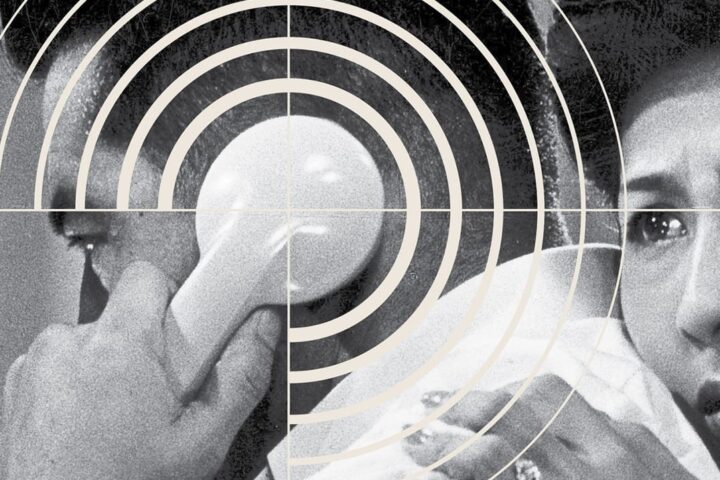
A minimalist piano theme (first played against stark Art Deco-styled opening credits) recurs throughout the film; clearly adherent to the compositional principles of jazz, it parallels the instrumental interplay between Keiko and her suitors, foreshadowing her eventual abandonment and giving voice to the oft-repeated titular action. The final close-up—featuring Keiko smiling in lieu of tears—might be frozen, framed, and subtitled “Lady Sings the Blues.”
Image/Sound
The Criterion Collection presents When a Woman Ascends the Stairs in its original Tohoscope aspect ratio of 2.35:1. A superb, anamorphically enhanced transfer, but it’s marred now and again by image warping, though typically for only a frame or two. I recall seeing these flaws when the film was projected at the Naruse retrospective, so I believe they are inherent to the source material. For the main feature there are two audio selections: a monaural Japanese track and a slightly fuller Dolby Digital 3.0 Japanese track that preserves the Perspecta simulated stereo effects of the original theatrical release.
Extras
Film scholar Donald Richie contributes a master-class feature-length audio commentary. His knowledge of both Japanese cinema and culture is intimidating in its breadth and scope, and he makes for a generous host and guide through Naruse’s masterpiece. His insights into the film’s ginza district milieu-especially in how it quite distinctly differs from the world of geisha-are particularly valuable. A new video interview with Tatsuya Nakadai, who plays the young bar manager in love with Takamine’s character Keiko, features the actor reminiscing about Naruse’s hands-off working methods, while the film’s theatrical trailer shows a fascinatingly tawdry Hollywood influence (“The dizzying nights that she must endure alone!” blare the titles). Also included is a booklet featuring a new essay by Phillip Lopate and reprinted writings by Catherine Russell, Audie Bock, and Hideko Takamine.
Overall
Ascend to the beauties of Mikio Naruse.
Since 2001, we've brought you uncompromising, candid takes on the world of film, music, television, video games, theater, and more. Independently owned and operated publications like Slant have been hit hard in recent years, but we’re committed to keeping our content free and accessible—meaning no paywalls or fees.
If you like what we do, please consider subscribing to our Patreon or making a donation.