For more than 25 years, Lukas Moodysson has approached filmmaking as a constantly moving target, veering from warm-hearted yet bittersweet comedy-dramas to intensely provocative avant-garde films and back again. He followed his first two features, both funny, sentimental, and perceptive portraits of outsiders, with a harrowing examination of European sex trafficking and a brief foray into the avant-garde with his most mainstream and only Hollywood film to date. Even the sunny tunes of Robyn and Abba in Show Me Love and Together find their polar opposites in both the abrasive screeching noises throughout A Hole in My Heart and the lone whispering voice in the otherwise completely silent Container.
Yet for all of Moodysson’s stylistic maneuvering and experimenting with form, his films all have a shared interest in and deep affection for people on the fringes of a society. His first two features are set in insular communities: Show Me Love in high school and Together in a commune. Where Agnes (Rebecka Liljeberg), the queer 16-year-old protagonist of the former film, struggles primarily in isolation, the members of the commune in the latter film navigate their self-imposed alienation from society dialectically as a group. Yet, Eva (Emma Samuelsson), the 15-year-old who goes to stay with her uncle in the commune, along with her mother (Lisa Lindgren) and brother (Sam Kessel) after her parents divorce, closely resembles Agnes, both in her innate moroseness and intense feelings of not belonging or fitting in her surroundings.
Show Me Love and Together each explore various tensions that exist between communities and individuals and the particular role that nonconformity factors into building and bridging divides. For as fleet-footed and funny as they often are, there’s a melancholy lurking beneath the surface, often stemming from an inability or unwillingness to follow the unwritten and unspoken social norms that dictate acceptable behavior in these insular little worlds.
Moodysson’s next film, Lilya 4-Ever, is of a piece with his usual focus on people trying to figure themselves out, in this case a young woman fighting for a sense of worth and belonging in an often callous and cruel world. The offbeat humor that counterbalanced the occasional heavy drama in his earlier films is all but gone here, replaced with an unrelenting bleakness. A large part of this comes from Lilya 4-Ever’s initial setting—a large, rundown apartment block in Estonia—and the film’s eventual shift toward exploring the inner workings of international sex trafficking. Yes, Lilya 4-Ever abounds in agony and despair, which extends to everyone from Lilya (Oksana Akinshina) to her young friend Volodya (Artyom Bogucharskiy), but Moodysson’s aching compassion for the former’s plight and Akinshina’s visceral performance lends the young girl a vibrance and strength that makes her more than just a perpetual victim.
If Lilya 4-Ever’s grimness surprised audiences expecting at least a few of Moodysson’s doses of crowd-pleasing humor, his next two narrative features, the execrable A Hole in My Heart and the intriguing, if misguided, Container, saw the director’s stock plummet in the eyes of all but his most ardent fans. A Hole in My Heart’s grimy DVCAM images certainly fit with its desire to barrage its audience with supposedly shocking images of vomit, piss, and depraved sex, as well as with perpetual sonic dissonance, but Moodysson fails to merge all that audiovisual repulsiveness into any sort of meaningful or cohesive artistic statement. Container is an equally experimental work, with its fragmented black-and-white imagery and a silent soundtrack broken up only by Jena Malone’s voiceover reading of Moodysson’s poetry, but its trans allegory of a woman (Mariha Åberg) trapped in a man’s body (Peter Lorentzon) at least has an emotional potency and thematic coherence that’s completely lacking in A Hole in My Heart.
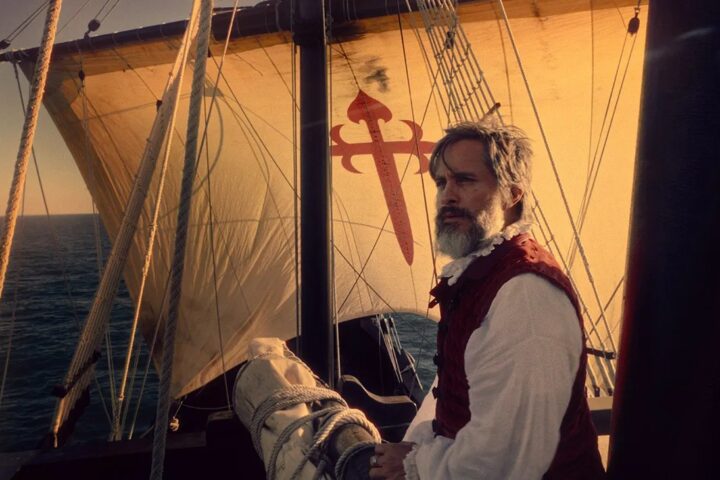
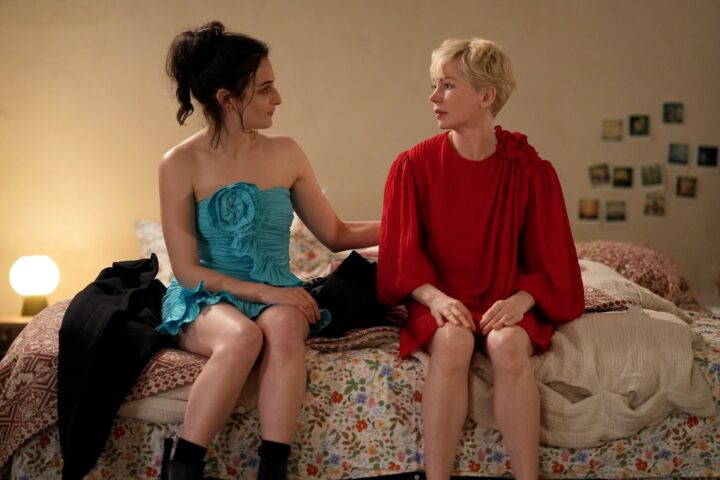
With Mammoth, a film about the human cost of globalization starring Gael García Bernal and Michelle Williams, Moodysson veered in a more mainstream direction and showed that his thematic concerns and penchant for scrupulously painting over his narratives with a nearly invisible varnish of sentimentality were not entirely at odds with more mid-budget filmmaking practices. In Moodysson’s case, that, as well as the film’s lackluster response, was perhaps a blessing in disguise, leading him back to Sweden and the type of intimate, humorous, and compassionate style of filmmaking that marked his first two features.
We Are the Best! fuses together all the best elements of Show Me Love and Together. The teenage girls at its center, played by Mira Barkhammer, Mira Grosin, and Liv LeMoyne, are as rebellious and strong-willed as Show Me Love’s Agnes and as committed to their chosen outsider community, the waning punk scene in early-’80s Sweden, as the misfits in Together. In theory, seeing a director return to a similar mode of filmmaking that they started off with may seem regressive, or at least safe, but We Are the Best! is such a joyous ode to non-conformism and staying true to oneself that it’s hard not to see it as a very welcome return to form for Moodysson.
Image/Sound
Arrow Video’s transfer of Show Me Love is from a 2K restoration, while both Together and Lilya 4-Ever are from 4K restorations. All three of these Blu-rays display a wide range of colors and handle the 16mm grain nicely, retaining soft, film-like textures. The level of detail and the sharpness of the image is a massive improvement for all three films, which in the U.S. have only been available on less than acceptable DVDs from the early to mid-aughts. As with many films shot on early DVCAMs, A Hole in My Heart can only look so good on Blu-ray, but the motion blurring is kept to a minimum, while the color balancing gives the film a more naturalistic, rather than highly digitized, look. Container, which was shot in 16mm and in black and white, looks as fantastic as Moodysson’s earlier film work, while Mammoth and We Are the Best!, both shot on 35mm, are given the most detail-rich transfers, with the latter’s ’80s period setting looking particularly beautiful. The audio impresses across the board, whether in the lush presentation of various pop, electronic, and punk music in various films or the nicely balanced mixes, which feature crisp dialogue and communal ambience filling out the backgrounds.
Extras
Arrow’s stacked box set features a multi-part interview with Lukas Moodysson conducted by film programmer Sarah Lutton. Stretched out over the set’s six discs, this interview covers the entirety of Moodysson’s career, including his shift from poetry to filmmaking, his working methods with various collaborators, and his acute attention to setting and costumes. It’s a fruitful conversation that gives one a great idea of how he approaches his art and what it’s like on one of his film’s sets. There’s also a 90-minute interview with Moodysson at London’s National Film and Television School from 2004 and a Q&A from the 2013 London Film Festival screening of We Are the Best!, both of which find the director a bit reserved and dodgy, though he still offers some insight into his approach to writing and working with actors.
The set is filled with numerous other interviews, including ones with Show Me Love star Alexandra Dahlströmm, script supervisor Malin Fornander, costume designer Denise Östholm, line producer Malte Forssell, cinematographer Ulf Brantås, and editor Michal Leszczylowski. All of them have worked with Moodysson multiple times (Dahlströmm even served as an assistant director on Lilya 4-Ever), and while most attest to Moodysson’s sets being carefree and collaborative, Brantås notably and amusingly discusses the combative relationship he had with Moodysson for the first couple weeks of the Show Me Love shoot.
Two of the most interesting extras shine a light on one specific title in Moodysson’s filmography. The first, a filmed appreciation of Show Me Love featuring Lesbian Cinema After Queer Theory author Clara Bradbury-Rance, manages to provide a pretty thorough overview of New Queer Cinema and Show Me Love’s place within it in just over 20 minutes. Meanwhile, a fascinating interview with Swedish punk historian David Andersson delves into the unique political climate that helped punk music flourish in early-’80s Sweden.
Also included is Moodysson’s 1997 short film Talk and brief featurettes on A Hole in My Heart and Container. Finally, the box set comes with an 82-page bound booklet containing Moodysson’s poem “What Am I Doing Here” and a gorgeous 200-page hardcover book with color stills, press notes, cast and crew interviews, and various essays on all seven films.
Overall
From its handsome packaging and presentation to its tip-top A/V transfers and extras, The Lukas Moodysson Collection is nothing short of momentous, and it’s sure to be remembered as of the most impressive home video releases of 2023.
Since 2001, we've brought you uncompromising, candid takes on the world of film, music, television, video games, theater, and more. Independently owned and operated publications like Slant have been hit hard in recent years, but we’re committed to keeping our content free and accessible—meaning no paywalls or fees.
If you like what we do, please consider subscribing to our Patreon or making a donation.