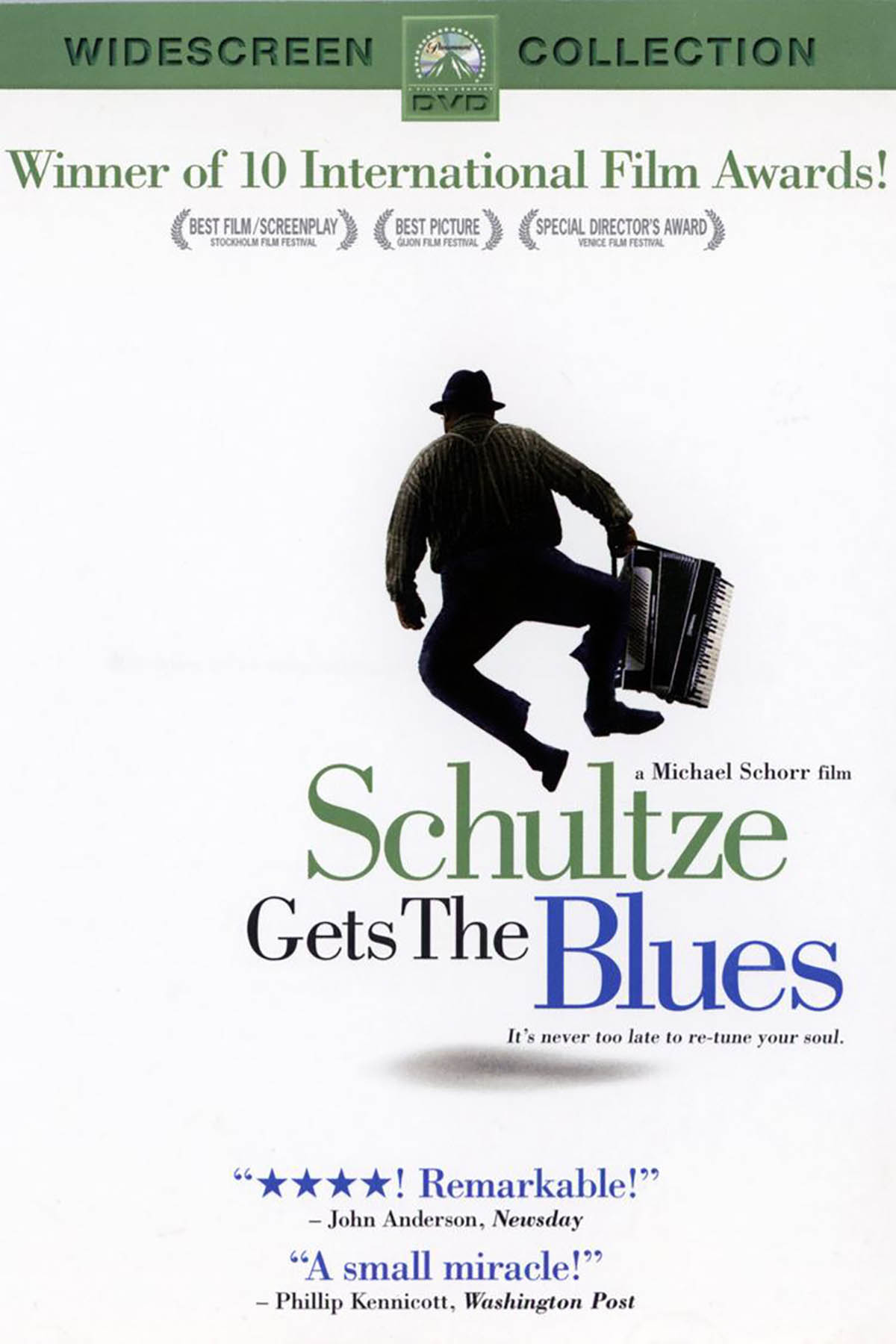
 Schultze (Horst Krause) is a recently retired miner coming to grips with old age and looming death, implied when a radio announcer warns of cancer-causing diesel fumes. This pot-bellied character scarcely calls attention to himself but his supreme sadness and boredom with the world is clearly felt. He plays polka music but longs to strum a different tune. When the flavor of the American South infuses both his cooking and music, he plays a Cajun Zydeco-style tune on his accordion at a convention, but people callously dismiss him for playing “Negro music.” No doubt recognizing the man’s detachment, his friends send him to America as their representative at a music festival, and though he can’t communicate with anyone, he still manages to make friends amid the cypress swamps of Louisiana’s backwater. In short, Schultze Gets the Blues is the film About Schmidt should have been, a sentimental look at a man who goes gently into the night, living life to its fullest until “the furies close at last,” to quote a young man who reads from what sounds like an ancient Greek text (possibly Aeschylus’s Oresteia). Regardless of whether director Michael Schorr intended this quiet gem as a response to Alexander Payne’s condescending indie, it sure feels like one. Though this is only his first film, 40-year-old Schorr looks at the world with the ease of someone who’s studied it for an eternity, evoking Schultz’s trip to the American South as a bittersweet search for spiritual bounty. There’s a soft, pictorial quality to Schorr’s images, but the vibe of the film is unmistakably real. Few films pay this close and considerate attention to the physical and emotional heartache of growing old and every frame of Schultze Gets the Blues is alive with this generosity.
Image/Sound
In spite of the heavy grain and steady but subtle presence of edge enhancement throughout, this is a fine-looking image-a nasty flash of pixelization kicks off chapter seven of the disc but that may be a flaw that’s unique to my DVD. In the sound department, dialogue is clear and the surrounds become particularly enshrouding once Schultze heads to America.
Extras
In German with optional English subtitles, the director commentary track is as serene as the film itself and is most notable for Michael Schorr’s insightful elaboration of his use of still photography and how it fits with the static ethos of Schultze’s world. Rounding out the disc are three theatrical trailers for the film and trailers for Winter Solstice, Mad Hot Ballroom, The Machinist, Enduring Love, and Après Vous.
Overall
There’s no excuse for the hot-diggity-dog pose Schultze is striking on the DVD’s cover, but the film is still not be missed.
Since 2001, we've brought you uncompromising, candid takes on the world of film, music, television, video games, theater, and more. Independently owned and operated publications like Slant have been hit hard in recent years, but we’re committed to keeping our content free and accessible—meaning no paywalls or fees.
If you like what we do, please consider subscribing to our Patreon or making a donation.