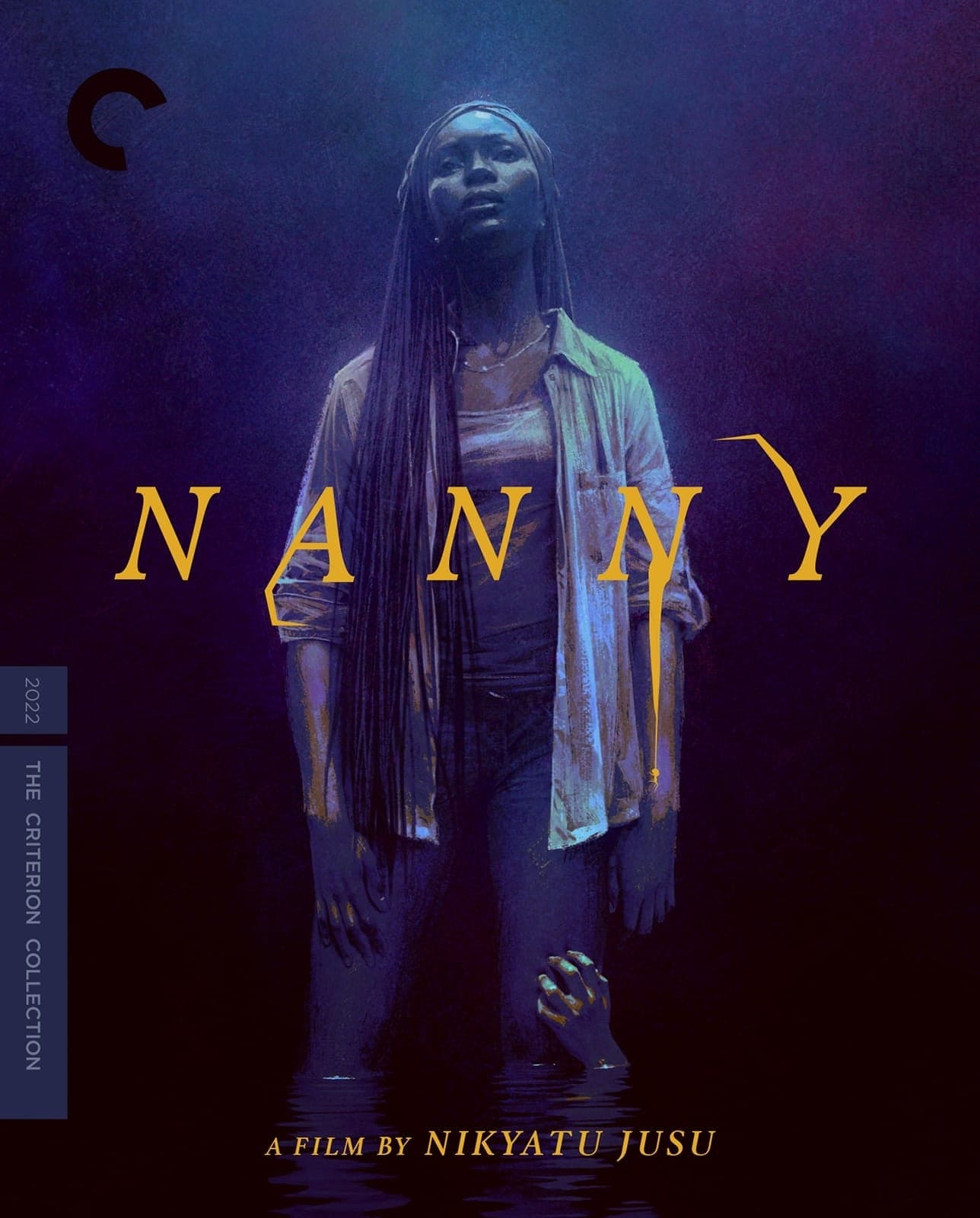
 An anguished update of, and response to, Ousmane Sembène’s 1965 anti-colonialist classic Black Girl, writer-director Nikyatu Jusu’s Nanny grapples with the psychic pain of cultural alienation and familial disconnection. Though it contains elements of supernatural horror—including trickster spiders and murderous mermaids—it’s at heart a deeply felt immigration story, one that finds hope not in the empty promises of the American dream but in the strength and resilience of oppressed peoples.
The film opens on Aisha’s (Anna Diop) first day of work at the luxe Manhattan apartment of a businesswoman, Amy (Michelle Monaghan), who’s hired her to care for her young daughter, Rose (Rose Decker). Aisha, a teacher in her native Senegal, has no trouble caring for the girl, helping her with her French lessons and making food that she’ll actually eat, but she does have issues with Amy, whose festering anxieties make her an increasingly unstable and unreliable boss. Amy’s husband, Adam (Morgan Spector), a globetrotting photographer whose striking images of Black suffering and resistance adorn the walls of his home office, cuts a more sympathetic figure, at least until his shameless philandering becomes obvious.
There’s clearly trouble between Amy and Adam, but Jusu is less interested in the ins and outs of their domestic squabbles than in the financial and psychological burden that their chaotic relationship places on Aisha. She gets shortchanged on overtime pay and baselessly accused of feeding Rose unhealthy food due to the couple’s inability to communicate with one another, manage their household, or pay attention to what’s happening in their daughter’s life.
But the film boldly suggests that Aisha isn’t so different from the people she serves, as she, too, has left her own child, Lamine, to be cared for by another. While this is largely the result of having been forced to flee Senegal by her son’s father, who cut her off for refusing to bend to his will, Aisha evinces little more understanding of the difficult situation of Lamine’s nanny than Rose’s parents are of hers. It’s a lack of empathy that ultimately results in tragedy.
Nanny suggests a globalized network of familial detachment, with each rung of society passing off the duties of raising their children to their social inferiors. Aisha, though, is working to break that cycle by saving up enough money to bring Lamine to America, and she becomes increasingly haunted by her inability to do so, resulting in terrifying visions.

When it flirts with horror, the film is on less steady ground. The inclusion of figures derived from African folklore, such as Anansi the spider and the mermaid spirit Mami Wata, provide a unique ethnographic perspective on horror. But other images, like a snake crawling in Aisha’s bed or a shot in which Aisha looks into a mirror and sees her reflection facing backward, feel almost completely arbitrary. While such scenes are meant to evoke the trauma of Aisha’s dislocation, they suffer from a muddled nature that dulls their impact, often feeling less like manifestations of her tortured psyche than a scattered collection of haunted-house scares.
Jusu, though, shows enormous sensitivity and skill in her handling of what could have been a perfunctory romantic subplot between Aisha and Malik (Sinqua Walls), a charming single father who works as the doorman in Amy and Adam’s building. Diop and Walls share an easy yet profound chemistry that feels remarkably organic. Nanny develops their relationship without resorting to narrative contrivances, and Jusu confidently makes room for the actors’ natural charisma and beauty to radiate from the screen. Such glimmers of happiness provide a welcome counterpoint to the horror-fueled anxiety of the film’s final third.
Jusu inverts elements of Black Girl throughout Nanny; for example, a scene in which Amy imposes a red dress onto Aisha contrasts sharply with the employer’s resentment of Diouana’s stunning wardrobe in Sembène’s classic. But nowhere is the diversion sharper than in the film’s final stretch. For Sembène, suicide becomes an act of revolt against neo-colonialist exploitation, while Jusu ultimately finds a glimmer of hope within the greatest calamity. Contra Sembène, Nanny ultimately proposes that survival is the greatest form of resistance.
Image/Sound
Criterion’s transfer of a new 4K digital master is flawless. Colors are rich and vibrant, with reds, purples, greens, and blues popping even in the darkest of shots and scenes. The contrast is also extremely strong, with the image highly detailed and as sharp as one could hope for on Blu-ray. On the audio front, the 5.1 surround audio nicely handles the wide variety of music used in Nikyatu Jusu’s film, balanced quite well to not overwhelm the dialogue or effects tracks.
Extras
In a new program featuring several of the filmmakers and actors, Jusu discusses how she went about accurately portraying the immigrant community and the importance of casting for chemistry between the Aisha and Malik characters. Cinematographer Rina Yang shares her thoughts about the challenges she faced shooting various skin tones, while actors Anna Diop and Michelle Monaghan praise the complexity of Jusu’s screenplay. The disc is rounded out by Jusu’s 2019 short film “Suicide by Sunlight” and a booklet essay by Angelica Jade Bastien, who astutely examines the various ways the film grapples with anti-Blackness and white entitlement.
Overall
Criterion’s Blu-ray features an impeccable transfer, but the dearth of extras suggests that their newly introduced Janus Contemporaries line will be a better place for releases such as this.
Since 2001, we've brought you uncompromising, candid takes on the world of film, music, television, video games, theater, and more. Independently owned and operated publications like Slant have been hit hard in recent years, but we’re committed to keeping our content free and accessible—meaning no paywalls or fees.
If you like what we do, please consider subscribing to our Patreon or making a donation.