A director with as supple a foundation of cinephilic adoration as Robert Bresson is bound to inspire a lot of Olympian proselytizing—among auteurist converts and heretics alike—about the galactic elemental clarity of his work, spiked with as many buzzwords as possible such as “unforced,” “simple,” “open-ended,” “spiritual,” “philosophical,” “earthy,” “humane.” It’s almost to the point that reading about Bresson you’d imagine that his films are composed of shots of nothing but koi ponds, cala lilies, creamy, hemp-textured canvases, loaves of bread, or whatever else has become shorthand for cinematic transubstantiation. Which is why L’Argent, which is admittedly unforced, open-ended, and humane (and, to throw in one further Bresson cliché to boot, excises any trace of narrative fat and works it to the bone), hits with the effect not so much reflecting a cleansing of the soul, but rather a ransacking.
Based on a Leo Tolstoy novella, the story feeds the notion of fate through a stringent, Rube Goldbergian social machinery that results in the destruction of a fuel truck driver’s livelihood and sanity (or does he actually gain some strange new clarity?) preceding a series of homicides. And it all seems to stem from the innocuous chicanery of two schoolboys and their forged Franc note that the employees of a camera shop try to pass off on the driver, named Yvon Targe (Christian Patey), who later gets nailed by a coffee shop’s waiter. With the same sort of amplification of violence and respect for the laws of chance that brings to mind Shirley Jackson’s “The Lottery,” L’Argent is like Henry: Portrait of a Serial Killer recited in iambic pentameter.
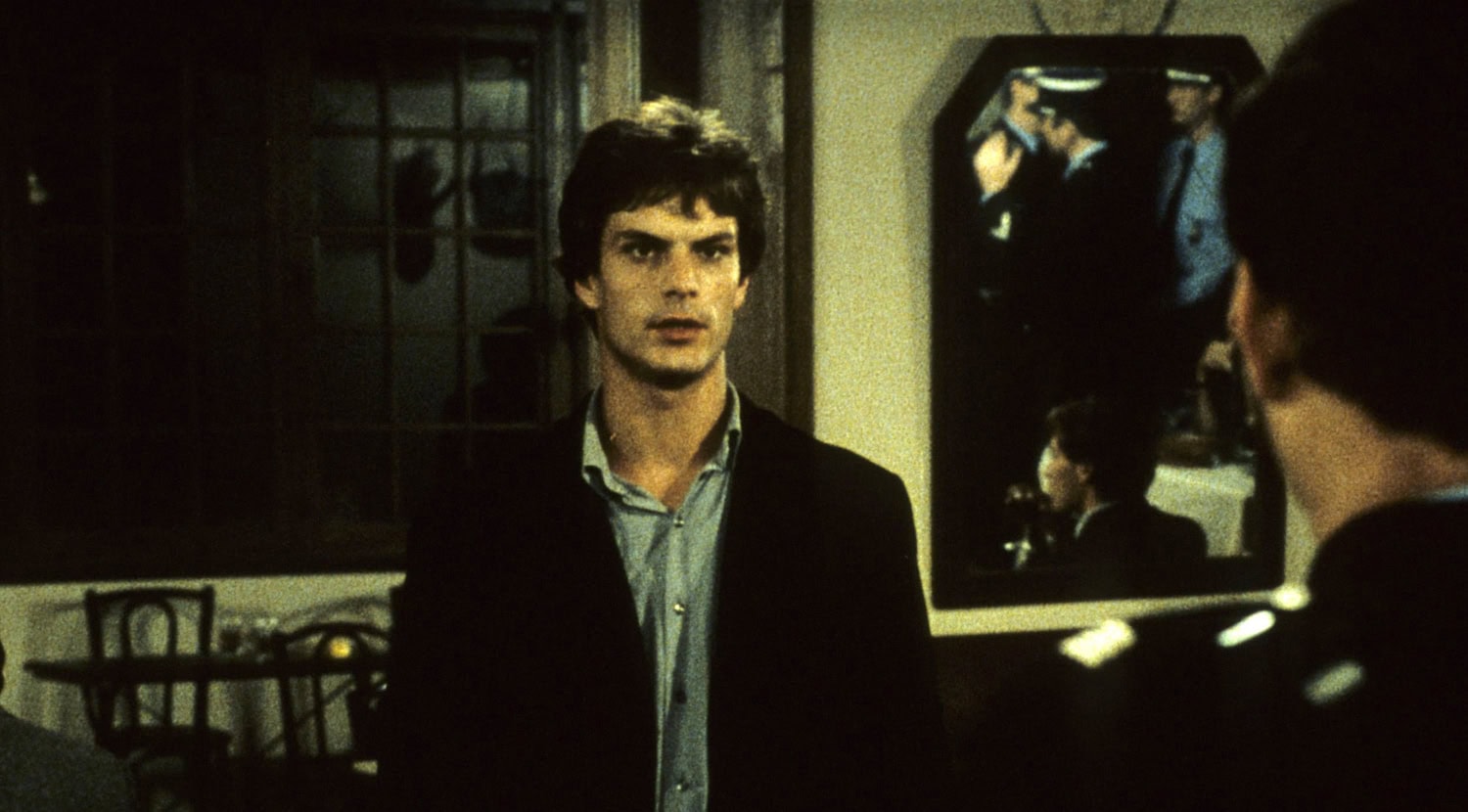
Bresson might be working with a disorienting focus on chosen details, but his narrative momentum and editing rhythms are fleet, never giving any of the characters any time to contemplate an alternate course of action that might alleviate their melancholy. The only character that exhibits the capability to anticipate the flow of circumstances—at least, as my editor points out, up until the film’s justly celebrated penultimate countryside sequence, when “motivation” becomes unnecessary and impure—is Lucien (Vincent Risterucci), the fey, altruistic criminal and camera shop cashier whose lies on the stand in court are what initiate Yvon’s descent. Lucien’s motivations always align with what will end up benefiting him the most at that particular moment in time. In that sense, he’s the diametric opposite of Yvon, the scapegoat of the cosmos. Lucian’s actions seem a mass of moral relativism against Yvon’s clarity. But his self-interest is more overtly formally driven home by how often Bresson’s characters are shown in isolation from one another.
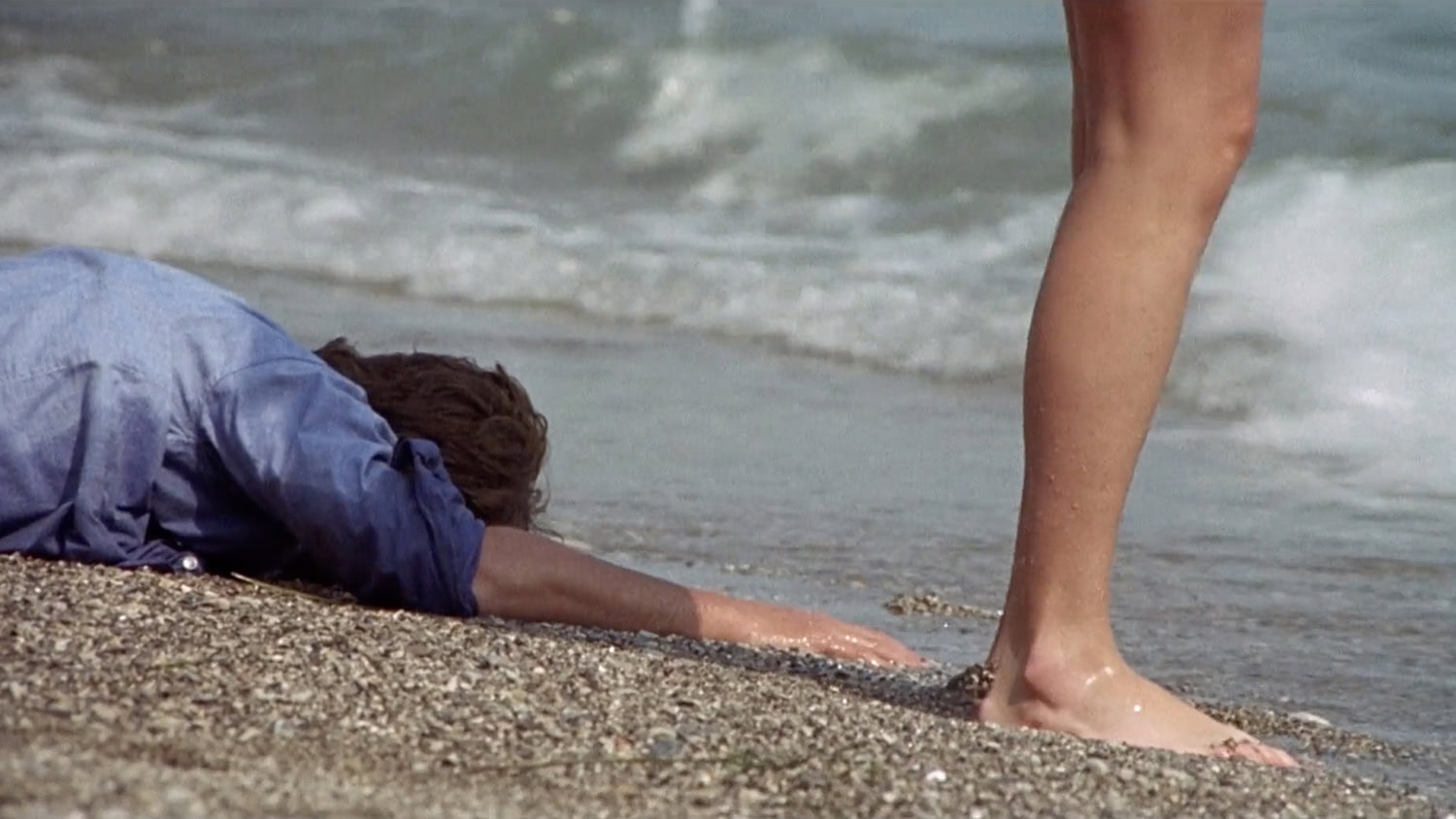
Which brings Yvon to L’Argent’s finale, in which the film seems to posit his massacring of a farmhouse family under similarly relativistic terms. It’s a horrible act, no doubt, but at the same time he’s mercy-killing in nearly every case—a duty-bound housewife, an old drunk ex-pianist, a crippled child—and his return to the jailhouse institution that “reformed” him ostensibly means more refining down the line. Throughout, Bresson’s framing and editing are both razor-sharp and oblique. The actual murders remain off screen, with ellipsis and insert shots of an alarmed family dog paralleling how the depictions of Yvon shoving the coffee shop employee and the country husband slapping his wife’s face dance around any actual on-screen violence. The horrific act becomes such a vivid example of “pure cinema” that we half expect the gathered onlookers of the film’s final “open-ended” shot are paying respect to the aesthetic beauty of Yvon’s crime as they are rubbernecking a police arrest. Ultimately, L’Argent manages to convey coherence between rigid moral dogma and sympathetic multiplicity. It’s mind-blowing.
Since 2001, we've brought you uncompromising, candid takes on the world of film, music, television, video games, theater, and more. Independently owned and operated publications like Slant have been hit hard in recent years, but we’re committed to keeping our content free and accessible—meaning no paywalls or fees.
If you like what we do, please consider subscribing to our Patreon or making a donation.