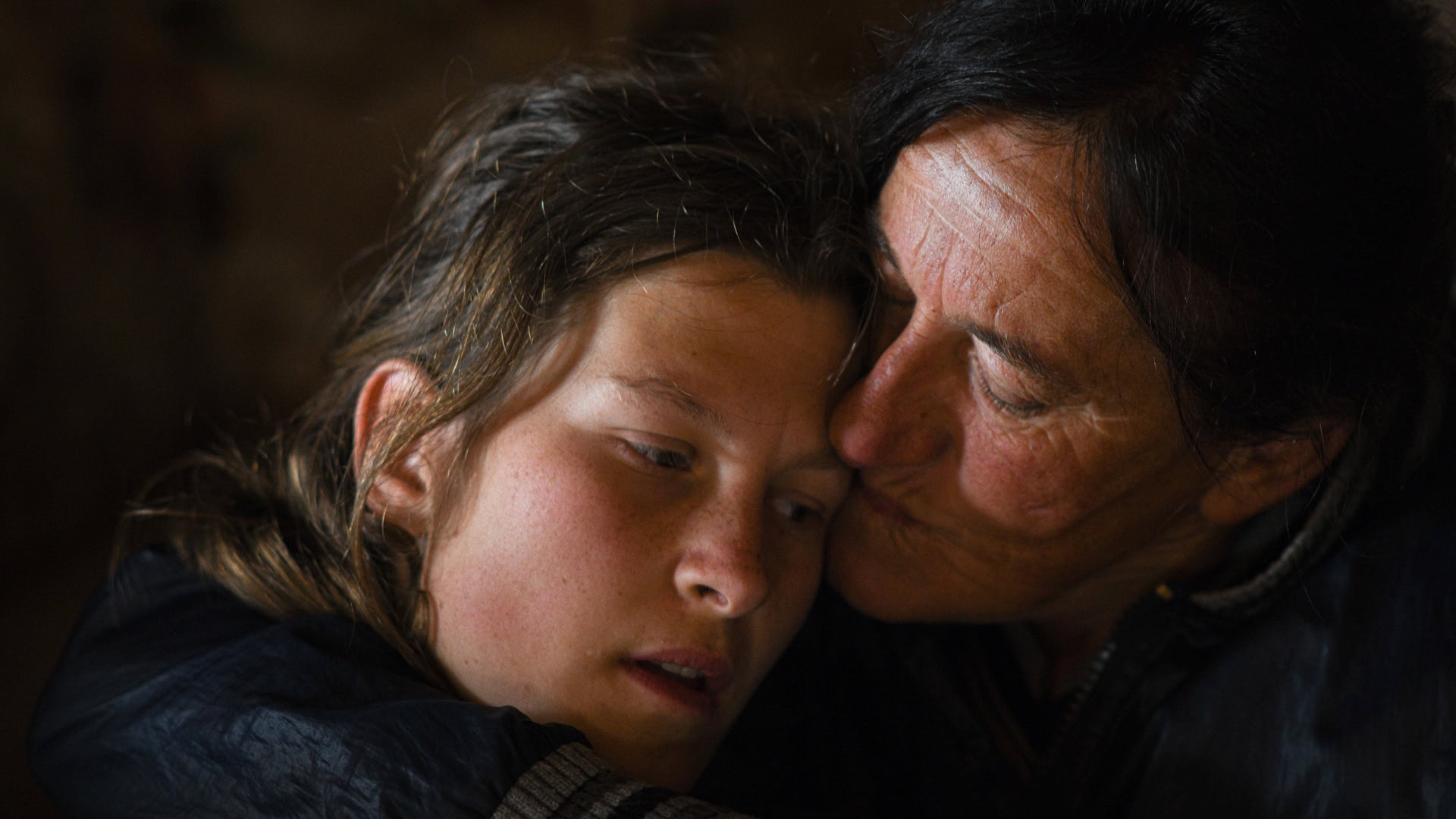
Mileva “Gara” Jovanović is the beating heart of her community of herders and cheesemakers in the remote highlands of Montenegro, as well as the apple of her niece Nada’s eye. Directors Biljana Tutorov and Petar Glomazić don’t address the tragic events that led Gara to become Nada’s guardian, or several other instances of familial trauma, until late into To Hold a Mountain. Until then, the documentary gently unfurls as an intimate portrait of the pair’s loving connection and the taxing labor they engage in to survive and flourish in the harsh environment in which they must often fight to live.
To Hold a Mountain ultimately reveals itself as a paean to female strength and resistance, both to the abusive men who’ve tried to break Gara and other women in her family and the NATO forces determined to transform their ancestral land into a military training ground. But the film stars off on a more micro level, focusing exclusively on Gara’s daily routines. As the camera follows her as she milks cows, herds sheep, makes cheese, rescues her wounded animals, comforts and encourages Nada, and invigorates her neighbors to stand up to the encroaching military, we’re witness to a woman of extraordinary resilience.
Her calloused hands, swollen legs, and weatherworn face speak to a life of hard work and disappointment, yet Gara is a placid presence, as evidenced by the sweetness she exudes in conversations with Nada and her calm implacability in the face of adversity. In one of the rare scenes in which Gara leaves her homestead, to appear on a local TV news show to argue against the military presence, she’s unfazed by the male officer she debates, arguing eloquently and passionately for the protection of the land her family has worked for many years.
As the film begins to probe Gara’s family history, revealing how her sister, Mika, was killed and the reasons behind their mother leaving the family when they were young, we’re made privy to a twisted web of patriarchal violence that extends back generations. Such violence was the norm in this community until recently, and when Gara speaks of protecting Nada from her sister’s killer, soon to be released from prison, or ensuring the land isn’t used for the war games of male leaders, she unassumingly emerges as something of a matriarchal protector of the region.
Throughout, the filmmakers also capture the natural beauty of the region around the Sinjajevina-Durmitor mountain range, with stunning images of verdant pastures and clouds and fog sinking into the high mountain peaks. It’s a land seemingly untouched by the modern world, but the jagged rocks that dot the hills are nothing if not warnings of hidden dangers. That contrast between the beauty and peril inherent in this landscape poetically mirrors the tensions that have defined the life of To Hold a Mountain’s protagonist, whose defense of her homeland is less in honor of her ancestors than in solidarity with the women who continue to persist there.
Since 2001, we've brought you uncompromising, candid takes on the world of film, music, television, video games, theater, and more. Independently owned and operated publications like Slant have been hit hard in recent years, but we’re committed to keeping our content free and accessible—meaning no paywalls or fees.
If you like what we do, please consider subscribing to our Patreon or making a donation.