In Rithy Panh’s Meeting with Pol Pot, three French journalists are invited to meet with Khmer Rouge leader Pol Pot in 1978. Looking to discover the truth, they find themselves made accomplices of an elaborate public relations effort meant to hide the regime’s atrocities from the outside world. Loosely based on Elizabeth Becker’s When the War Was Over, the film is hard-hitting yet illusive, much like the story its characters are hunting.
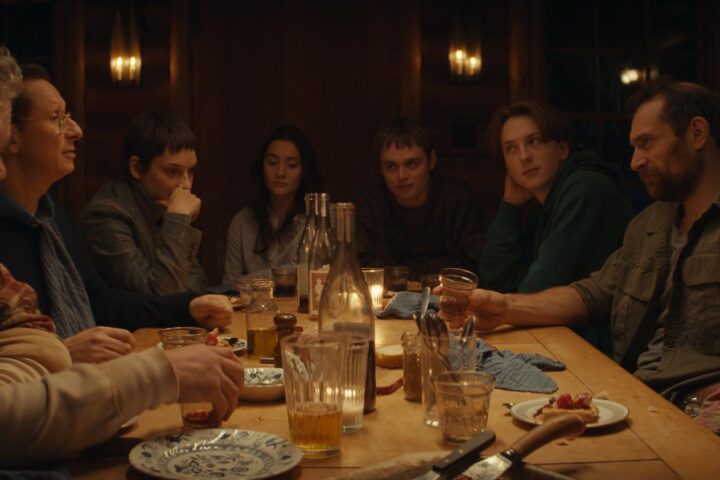
Largely confined to an unused airstrip, the journalists are led through a series of stilted presentations on the magical land of equality now known as “Democratic Kampuchea.” Asking repeatedly when they can interview “Brother #1,” the journalists are instead invited to take pictures of the ascetic quarters where Pol Pot supposedly sleeps. A copy of Jean-Jacques Rousseau’s The Social Contract is ostensibly displayed to impress the French visitors. In response to a question about where the intellectuals have gone, one of the minders airily claims they were “evacuated to the countryside,” a phrase weighted with chilling implications.
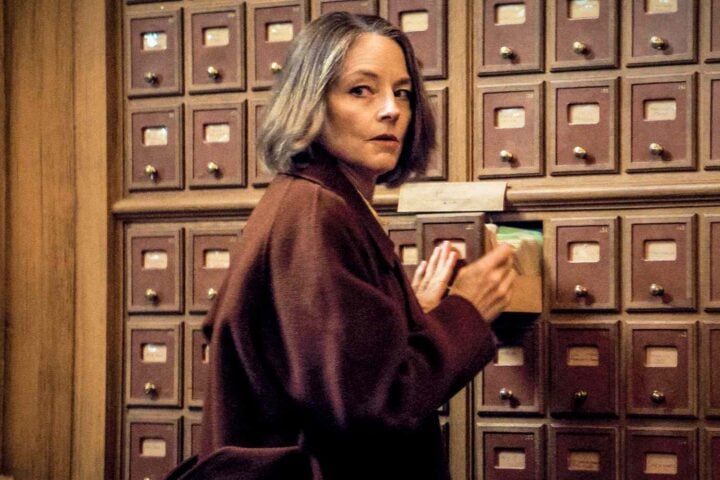
Though the depravity of what the Khmer Rouge agents try to conceal in the film is shocking enough, Panh places almost more focus on the journalists’ contrasting attitudes. Lise (Irène Jacob) and Paul (Cyril Gueï) display a hard-nosed skepticism familiar to most cinematic depictions of reporters, asking questions to get at the truth behind their minders’ rote declarations about the glorious post-revolutionary paradise. By contrast, Alain (Grégoire Colin), who fondly remembers Pol Pot as a fellow communist activist during their student days in Paris, is more credulous and admiring of the scripted narrative the trio is being fed.
Meeting with Pol Pot’s depiction of Alain’s brand of complicity is cutting and at times close to stomach-churning. Like the Western Marxists who decried reports of Soviet abuses as capitalist propaganda, Alain wants so much to believe that the fantasy of his youth has come to pass that he initially refuses to acknowledge the evidence of mass terror that’s plain to see.
Meeting with Pol Pot isn’t a denunciatory or muckraking expose in the style of Agnieszka Holland’s Mr. Jones, which used melodramatic thriller tropes to illustrate how its investigator protagonist uncovered the Ukraine famine of the 1930s. A survivor of the Cambodian genocide who’s made multiple films on the subject, Panh is a fundamentally quieter filmmaker. Meeting with Pol Pot builds steadily, keeping things at a slow boil through hints and suggestions that generate a creeping kind of horror through effective uses of negative space.
Panh shoots some sequences depicting the characters as unmoving miniatures in dioramas while the soundtrack suggests movement and action. This technique, which the filmmaker first used in 2013’s The Missing Picture, would seem to acknowledge the limited effectiveness of recreating scenes meant to shock and destabilize. When one of the journalists, suspicious about the stories of bountiful rice harvests, finally gets out of their Potemkin village, Panh relies on reaction shots and a few archival footage snippets showing skeletal and starving Cambodians to display what the regime was trying to hide. And when Lise, determined to reconnect with the Cambodian friend and translator who she hasn’t heard from for years, escapes from her guards to search Phnom Penh, she finds not an abattoir but an emptied ghost city.
Many of the most striking moments in Meeting with Pol Pot reveal what’s not there instead of what is. People, particularly those Cambodians unlucky enough to say the wrong things to the journalists, go missing without explanation. When the titular meeting finally happens, Pol Pot is shown only in shadow and his face never revealed. A repeated visual is the boarding stairs at the airstrip where the journalists stay but no planes ever seem to land. As a metaphor for promises of paradise that lead to nightmares, the staircase to nowhere is fittingly and refreshingly blunt for a film that more often elides rather than directly confronts tragedy.
Since 2001, we've brought you uncompromising, candid takes on the world of film, music, television, video games, theater, and more. Independently owned and operated publications like Slant have been hit hard in recent years, but we’re committed to keeping our content free and accessible—meaning no paywalls or fees.
If you like what we do, please consider subscribing to our Patreon or making a donation.