With Carment, Benjamin Millepied delivers a thrilling version of Georges Bizet’s 19th-century opera. Not only is the setting changed, but much of the plot is different. Even most of the music has been scrapped, with only a few selected libretto lyrics echoing in the background of scenes, and sung by an unseen choir. By stripping the story back to its most elemental form, Millepied makes it feel mythic, poetic, and captivatingly romantic.
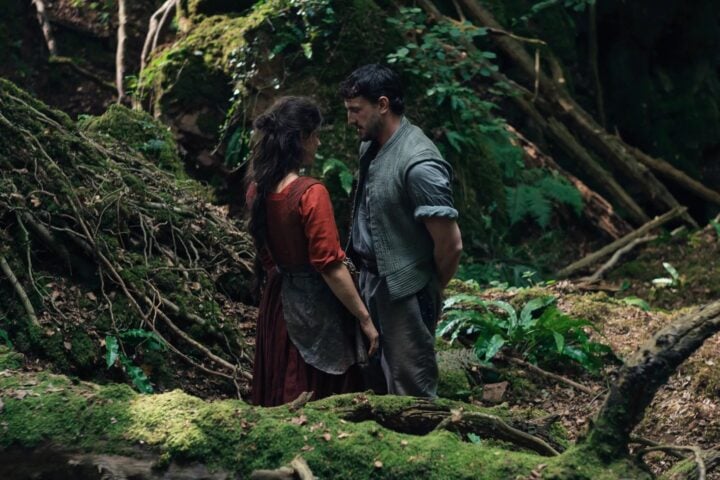
Carmen tells a timeless tale about star-crossed lovers. Aidan (Paul Mescal) has returned to America after two tours in Afghanistan and begrudgingly taken a job with the Border Patrol. Carmen (Melissa Barrera) is fleeing Mexico after her mother is murdered by the cartels. They meet as she’s being smuggled across the border and, after Aidan experiences a flash of conscience that leads to a burst of gunfire, they quickly find themselves on the run together.
Carmen really leans into the physicality of its actors and the stirring strings of Nicholas Britell’s score. It’s not just in the swooning dance sequences that we watch Aidan and Carmen fall in love, but also in their smaller, subtler movements. There’s a sadness to the way that Mescal carries his muscular form, shoulders pulled up high like a boxer trying to dodge a strike. Carmen herself is later described as having “eyes like burning coals” and there’s a ferocity to Barrera’s movements, a sort of elegant defiance, but also a sense of terror. They both seem so lost, so utterly in need of someone to hold on to, that we understand completely how they end up in each other’s arms, even though they exchange only a handful of words across the entire film.
The story receives a jolt of fresh energy right when it needs it with the arrival of Masilda (Rossy de Palma), the owner of the club where Aidan and Carmen seek safe harbor. A beacon of maternal fortitude with a mischievous smile, Masilda grounds the film’s key themes about love and liberation, especially in a moving scene in which she counsels Carmen through her grief.
There are times when the attempts to meld ballet with conventional cinematic storytelling don’t quite work. While gracefully performed and aesthetically pleasing, the dance sequences often don’t feel like a fully integrated part of the story. Captured in wide shots and long takes, usually set in sparse, open spaces, they’re more like stage shows which we’ve briefly broken away from the movie to enjoy rather than a way to deepen our sense of the story or it characters.
But when Millepied’s experiment comes off, the results can be heart-stopping. Jörg Widmer’s cinematography captures the desertscapes in gorgeous wide shots and lends the neon-drenched nightclubs an otherworldly mystique. The film doesn’t lack for woozy atmosphere, drawing us to the baking, breathless heat through which Aidan and Carmen are making their escape.
The final set piece puts a bare-knuckled brawl to a primal, percussive soundtrack and a rasping rap verse from Tracy “The D.O.C” Curry, creating a whirl of sound and fury as two bodies are whipped against each other time and time again in a savage ballet. It’s the type of moment that only musical cinema can deliver, loosing itself from the rules of reality and letting the pure, visceral, emotional impact of image and music hit the viewer right in the chest.
Since 2001, we've brought you uncompromising, candid takes on the world of film, music, television, video games, theater, and more. Independently owned and operated publications like Slant have been hit hard in recent years, but we’re committed to keeping our content free and accessible—meaning no paywalls or fees.
If you like what we do, please consider subscribing to our Patreon or making a donation.