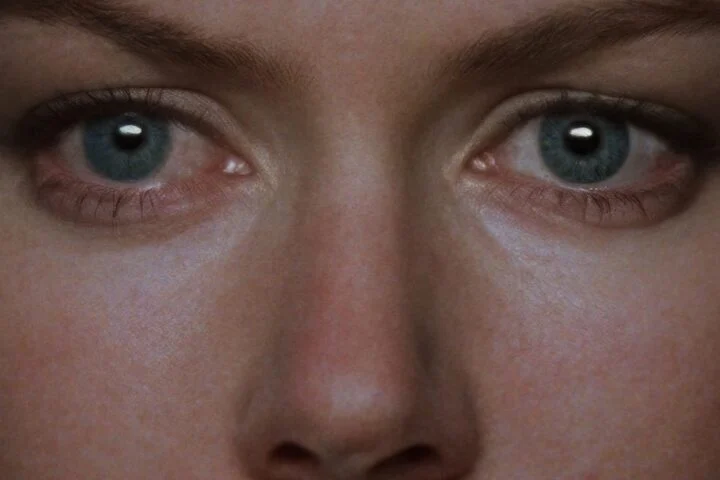
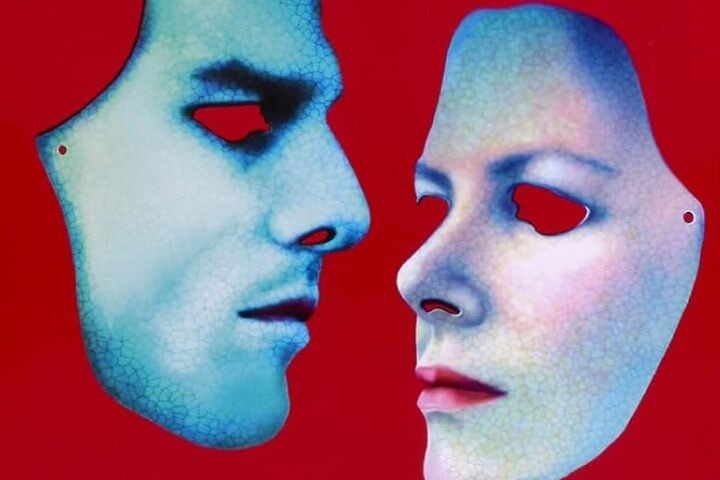
As a writer, Aaron Sorkin has always been stubbornly formulaic, often relying on the same set of recurring narrative structures and pet themes, from an overreliance on flashbacks to a reflexive respect for American institutions. All of those tics are brought to bear on his third directorial effort, Being the Ricardos, which also suffers from the clichés inherent to the biopic genre. Ostensibly covering a week of production of the classic sitcom I Love Lucy while star Lucille Ball (Nicole Kidman) fends off accusations of communist party membership, the film mainly unfurls as a series of cutaway glimpses into Ball’s life leading to this moment, especially her tumultuous relationship with Desi Arnaz (Javier Bardem).
Right out of the gate, Sorkin’s habit of cutting to the past every few minutes hobbles the film, often bluntly supplying information about Ball and Arnaz that can be easily intuited from the actors’ performances. Kidman, in particular, does some of the best work of her career as Ball. Like all Sorkin-penned characters, this film’s version of the sitcom legend is a mouthpiece for his brand of smarmy, know-it-all sarcasm, with little of the real actress’s mastery of physical comedy on display. But the focus here is less comic than dramatic, and Kidman homes in on how Ball’s razor-sharp sense of humor is informed by a great deal of professional and personal anxiety. The pressures of trying to keep the communist story out of the press catalyze Ball’s tensions with her cast and crew and further strain her fraying marriage to Arnaz, all of which is etched into the stony façade that she presents while focusing on the show.
On screen, Ball excelled at playing a childlike klutz, but Being the Ricardos presents her backstage behavior as almost sharklike—an intense effort on her part to keep moving forward with each week’s production no matter the setbacks that arise. In Kidman’s eyes, you sense Ball’s lifetime of struggle to be taken seriously, which is something that Sorkin unnecessarily underlines with extended illustrations of, say, her tempestuous early tryst with Arnaz or how she was galvanized into action by getting fired from RKO for being “too old” to be in movies.

Sorkin has spoken about not caring for I Love Lucy, and his distaste for the show’s broad comedy may explain why so many of these cutaways come when the film starts to turn its attention toward how the show was written, staged, and performed. That’s a shame, because Being the Ricardos is at its best when documenting how Ball’s fears of irrelevance and losing her marriage fueled a perfectionist streak in her work that marked her as TV’s first true auteur.
Jokes that are planned for I Love Lucy episodes are rigorously analyzed by Ball, who calls out logical inconsistencies in their setup, in addition to the characters’ established traits. She exerts such complete control over everything from set blocking to props that it’s a wonder that the directors are even there. That she does this while also working to assuage Desi’s ego by giving him co-credit (on top of monitoring him for signs of infidelity) beautifully illustrates how completely the lines broke down for Ball between the professional and personal.
With another creative voice behind the camera to massage Sorkin’s text and give it an alternate perspective, Being the Ricardos might have leaned more heavily on these scenes to communicate the roiling internal conflicts and deeper meaning of the constant bickering between actors, crew, and producers on the set of I Love Lucy. Instead, Sorkin prioritizes a didactic emphasis on the themes of the story over a more ambivalent reading that trusts the audience to follow along without being dragged by the hand. Ironically, a film that betrays Sorkin’s disinterest in a classic show for its lowest-common-denominator appeal calls attention to the condescending oversimplification of his own methods.
Since 2001, we've brought you uncompromising, candid takes on the world of film, music, television, video games, theater, and more. Independently owned and operated publications like Slant have been hit hard in recent years, but we’re committed to keeping our content free and accessible—meaning no paywalls or fees.
If you like what we do, please consider subscribing to our Patreon or making a donation.