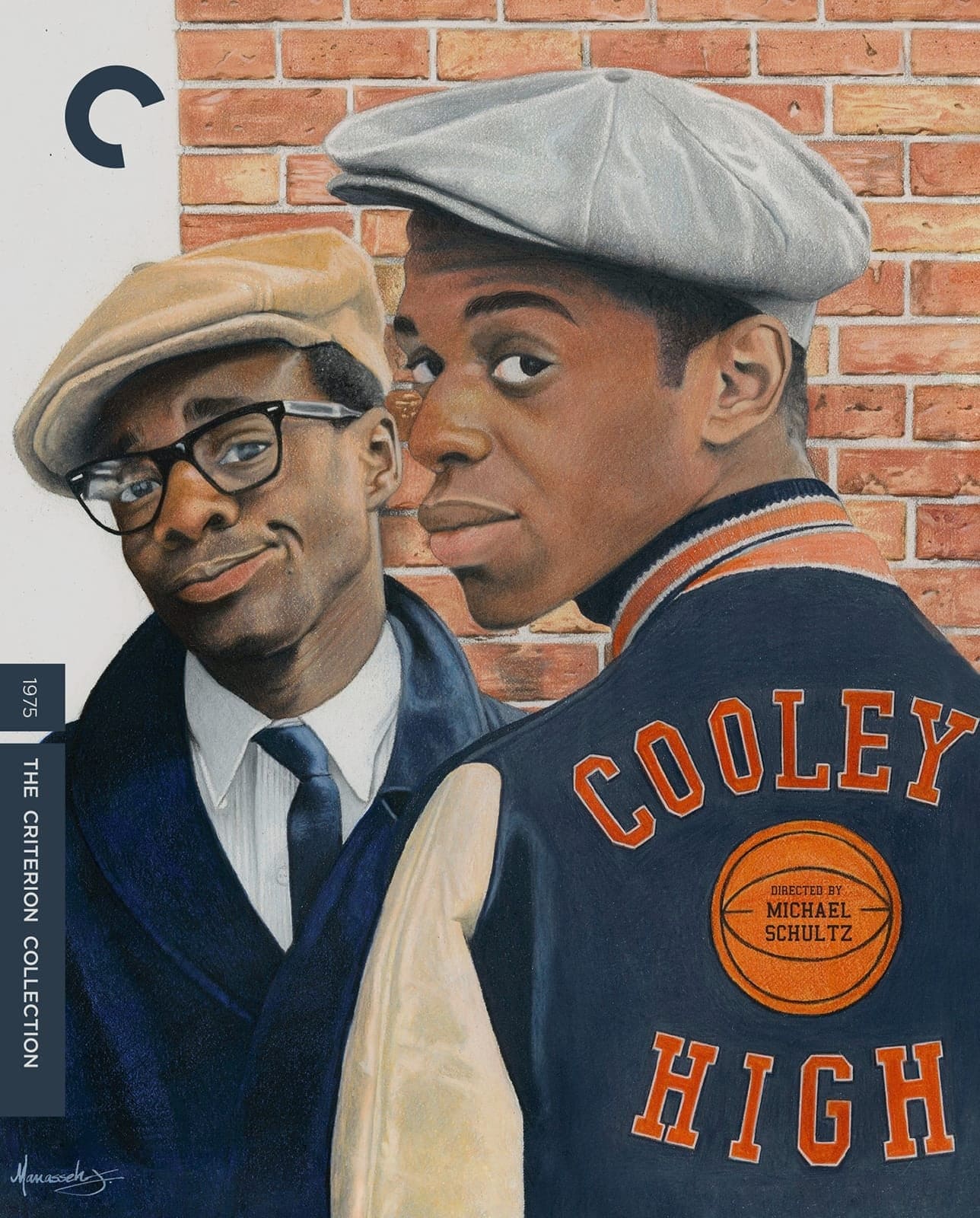
 Michael Schultz’s 1975 film Cooley High is the rare teenage remembrance to consider the role of money in everyday life. There’s a reason for this distinction: The characters here are Black and live in low-income apartments in 1960s-era Chicago (the Cabrini-Green Homes to be exact). They’re not the lily-white and implicitly affluent children of George Lucas’s American Graffiti or the films of John Hughes, the latter of which are set in a very different Chicago. The apartments in Schultz’s film are cramped and worn down, the food is peanut butter and jelly, and Mom works herself to exhaustion to keep the wheels from coming off of the whole domestic enterprise.
That tension exacerbates teenage restlessness, but for Cooley High, these economic and class considerations exist as subtext. One sees the longing in the characters for escape, shared by horny boys and exhausted moms alike. There are no grand speeches designed to make white audiences feel virtuous for seeing this film; voices of longing are sounded instead by an extraordinary soundtrack of Motown songs. Gloriously alive and exuberant, Cooley High doesn’t succumb to self-pity and nihilism, refusing to stereotype its characters as systemic victims. Unlike many a Hollywood film, it understands that poor people don’t consider their poverty all the time—that, like everyone else, they cut-up, entertain themselves, love, cheat, steal, give.
Schultz and screenwriter Eric Monte (who co-created Good Times, which is ostensibly set in the Cabrini-Green Homes) have a heartbreaking awareness of characters ducking and instigating danger as a matter of routine. You see characters losing their innocence unceremoniously, because that’s life. Take a scene where best friends Preach (Glynn Turman) and Cochise (Lawrence Hilton-Jacobs) are trying to get laid. Cochise, a lady’s guy and an athlete with a scholarship on the way, has confidence and swagger, and his girl is up for it. Meanwhile, Preach, a more insular aspiring writer, is having trouble talking his prospective partner into doing the same. Throughout, the negotiations between the boys, between the girls, and between the boys and the girls are established with dizzying clarity in a matter of seconds, and you see before your eyes young people learning sexual politics that will govern them for life. Sleaze, opportunism, and poignancy are all conjured at once without seeming effort.
Cooley High doesn’t have much plot. Like most teenage movies it’s composed of a series of episodes leading toward an epiphany that sends the writer-type on a path toward writing the very movie you’re watching. In the tradition of cinematic epiphanies, the ending here feels rushed and obligatory—a sop to conventionality. It’s the textures that haunt the viewer, the little details that reveal the shape of life. Such as Cochise using paint to fake a nosebleed for a friend so that they can cut class and go to the zoo. Or the exaltation, taken for granted in the moment of course, of getting in and dancing to some of the finest of American pop music. Or that moment when Preach finally gets in bed with a girl he likes, the one he thought was out of his range, which he nearly ruins by saying something very young and very male.
A veteran of theater, Schultz gives his actors time to develop intricate emotional rhythms that lend familiar scenes a patina of profound reality. Cooley High is often grouped together with the Blaxploitation cinema that paved the way for it, but this film isn’t in the same badass vein of many of those titles. Like the films of Charles Burnett, it’s disconcertingly tender.
Schultz maintains such a boisterous, scruffy kind of energy that it would be easy to take Cooley High for granted as a cool hang-out movie—a doodle. That sense of ease is the film’s greatest triumph. It’s a major watershed moment for dramatizing Black life on screen for its very casualness; its sense of these characters as people rather than numbers or symbols. One symbol in Cooley High, though, cannot be forgotten: When a fight breaks out in a movie theater and several characters tumble through the screen, as if announcing their arrival in cinema.
Cooley High is a vibrant, violent, swooningly romantic movie, all at once. Like many films of the New Black Wave of the 1960s and ’70s, it has a sense of swing that has all but vanished from modern American cinema, white or Black. Future Black films, from those of Spike Lee to Robert Townsend to John Singleton to Barry Jenkins, are unimaginable without it.
Image/Sound
The image of this 4K restoration of Cooley High is striking, almost too striking. The vibrant sense of color detail almost feels more modern than Cooley High should feel. To be fair, I’ve never seen the film in theaters, so perhaps this restoration is truer than the drabber presentations that I’ve seen in the past. To be clear, this is a concern only of potential historical inaccuracy, as this image is robust, healthy, and gorgeous on its own terms, with hot colors that telegraph the characters’ passions, as well as a healthy sense of grain structure. The English LPCM monaural mix is unambiguously superb: clean, clear, and sharp as a tack, which is especially evident in the rendering of those wonderful Motown numbers.
Extras
A new interview with Michael Schultz, shot exclusively for Criterion in 2022, offers a detailed portrait of his rise as a young artist and the production of Cooley High. Schultz was offered the film after a theater production caught producer Steve Krantz’s attention, and Schultz worked with screenwriter Eric Monte to steer the script toward a more realistic tone than Krantz had allowed. The story of shooting the film, in the Cabrini-Green projects with the collaboration of gangs, with pros like Glynn Turman and Lawrence Hilton-Jacobs working alongside amateurs, sounds like it could be a movie in itself. Also included is a panel discussion shot in 2019 and hosted by Robert Townsend—featuring Schultz, wife and collaborator Gloria Schultz, Hilton-Jacobs, Garrett Morris, and Jackie Taylor—that focuses on the film’s legacy. A featurette for TCM and liner notes featuring Craigh Barboza’s essay, “Young, Gifted, and Black,” round out a slim but nourishing supplements package.
Overall
The Criterion Collection accords Michael Schultz’s seminal Black teen film a gorgeous transfer, with a few nutritious supplements on the side.
Since 2001, we've brought you uncompromising, candid takes on the world of film, music, television, video games, theater, and more. Independently owned and operated publications like Slant have been hit hard in recent years, but we’re committed to keeping our content free and accessible—meaning no paywalls or fees.
If you like what we do, please consider subscribing to our Patreon or making a donation.