
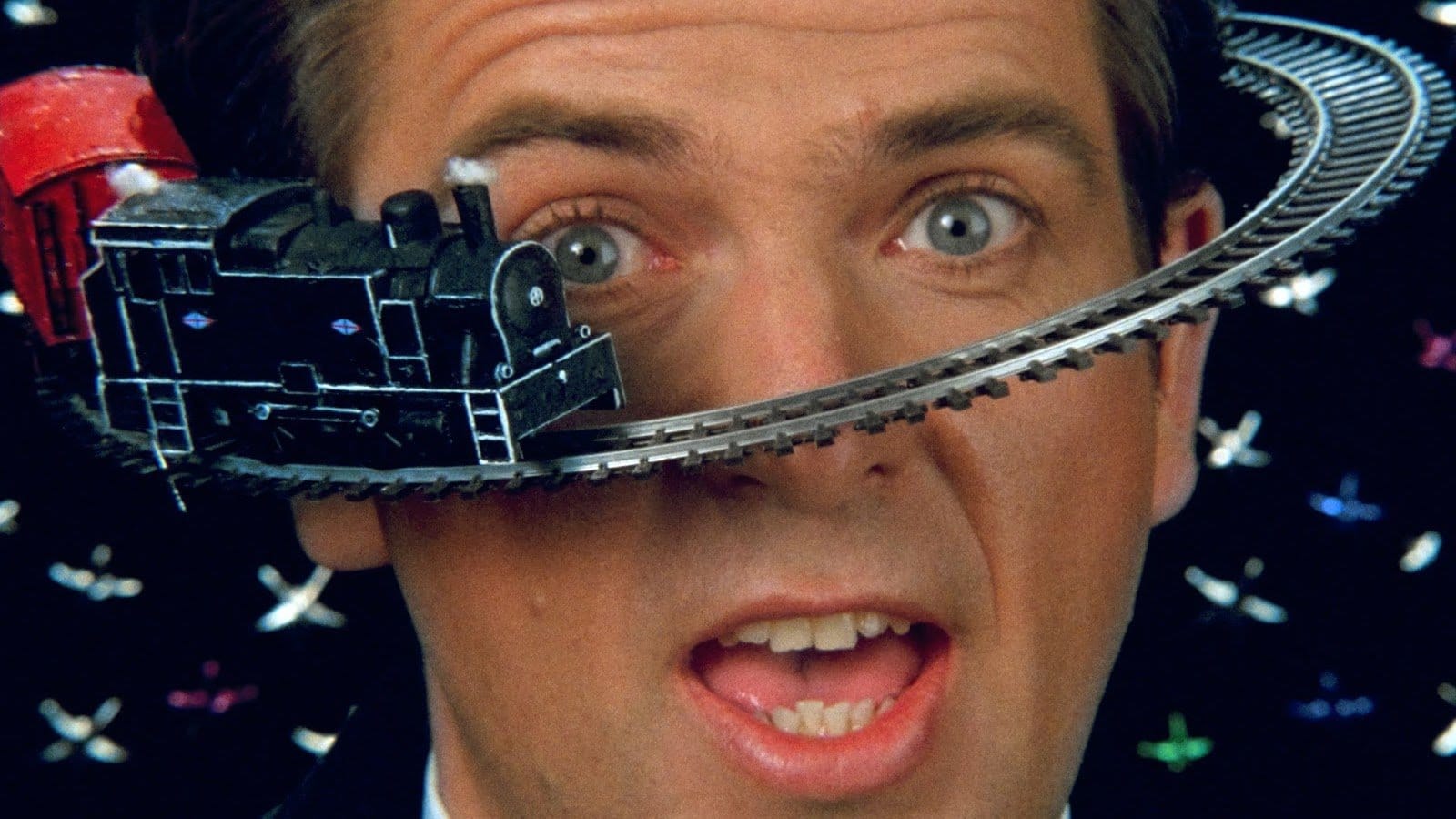
At the time of MTV’s launch in 1981, music videos were primarily just another means for record labels to promote their products. But musicians quickly recognized them as an opportunity to extend their creative visions to a visual medium. Though the two oldest videos on our list, Queen and David Bowie’s “Under Pressure” and Human League’s “Don’t You Want Me,” addressed their respective texts with decidedly different genre approaches, each clearly aimed to do more than sell records.
By the 1990s, label execs were pouring millions of dollars into clips for MTV, and the ingenuity and experimentation of this period is reflected in the fact that videos from the decade comprise a full third of our list of the greatest music videos of all time. As MTV moved increasingly toward more lucrative block programming in the 21st century, effectively abandoning music videos altogether, the medium began to wane in popularity, if not quality. But thanks in large part to the advent of YouTube, relative newcomers such as Lana Del Rey and Danny Brown have harnessed the power of video in ways akin to their predecessors.
In addition to Brown, pioneers of the medium like Michael Jackson, R.E.M., the White Stripes, Radiohead, Nirvana, and Smashing Pumpkins all appear twice on our list. It’s their female counterparts, however, who dominate. Two of the most groundbreaking and enduring visual artists in pop history, Madonna and Björk, lead the way with four videos apiece. Beyoncé likewise racks up four titles, which includes collaborations with Jay-Z and Lady Gaga, while Janet Jackson rounds out the top tier with three clips.
Behind the camera, Michel Gondry brings his singular directing style to a whopping nine videos on our list, with David Fincher, Mark Romanek, and Spike Jonze tying for second with four each. Proving that MTV wasn’t just a pop-star generator, all four directors went on to become acclaimed Hollywood filmmakers, occasionally dipping their toes back in the format that they helped elevate and define. Sal Cinquemani
Editor’s Note: Our original list, published on June 30, 2003, has been archived exclusively on Patreon.
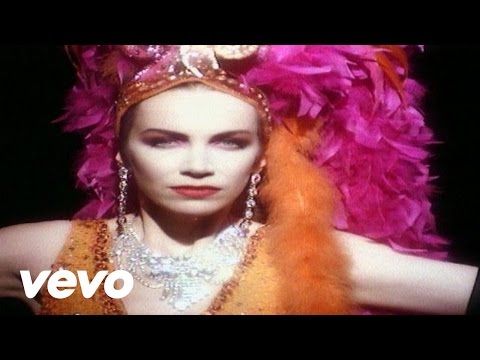
100. Annie Lennox, “Why” (Director: Sophie Muller)
The no-frills video for Annie Lennox’s first post-Eurythmics solo effort presented the image-driven singer, simply and delicately, echoing the solemn sentiments of the song and building gradually with it. In the clip, a bereft Lennox sits before a mirror and seemingly contemplates the complexities of life and love with aching sincerity. Like a painter, she slowly applies her makeup and redesigns herself as a diva, one brushstroke at a time. Directed by longtime associate Sophie Muller, the video strikes an arresting balance between the feminine and powerful. Cinquemani
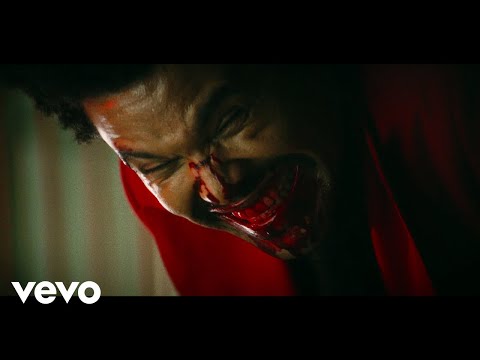
99. The Weeknd, “Blinding Lights” (Director: Anton Tammi)
The dizzying video for the Weeknd’s “Blinding Lights” pulls out all the viral-clip stops: an exhilarating running sequence, a slowed-down hallucinatory interlude, luxury cars, bloody makeup effects, a giddy Abel Tesfaye dancing like no one’s watching—enough bells and whistles for the entire Top 40 but rendered with cinematic elegance by director Anton Tammi. The clip’s story progresses as if Tesfaye’s blustering persona in Uncut Gems inherited the anarchic sensibilities of Joaquin Phoenix’s Joker, with the singer on a reckless rampage through Las Vegas. It’s a menacing, indulgent romp that delivers an intoxicating dose of wish fulfillment. Eric Mason

98. Grimes, “Oblivion” (Directors: Grimes and Emily Kai Bock)
Part of Claire Boucher’s charm is her inherent lonerism. It’s easy to imagine her writing and recording in some dank, dark basement, alone but for a litany of stuffed animals, dated twee trinkets, and other odd miscellany surrounding her laptop studio. “Oblivion” plays on that impression—and the capriciousness of Grimes’s music—by thrusting a girlish, headphone-donned Boucher into the public, male-dominated arena of various sporting events. Caught between varying levels of camaraderie and disconnect with passersby, Boucher is both humanized and alienated as she dances to the beat of her own drumpad. Kevin Liedel

97. Cibo Matto, “Sugar Water” (Director: Michel Gondry)
Director Michel Gondry evoked the concept of a “visual palindrome” via his split-screen narrative for Cibo Matto’s “Sugar Water” video. Within their respective frames, Hatori Miho and Honda Yuka rise out of bed and take sugar water showers. The women exchange a threatening note between frames before a black cat enters the picture and prophesies a vehicular accident. In four short minutes, Gondry both contemplates a cosmic relationship between cause and effect and the existential connection between Hatori and Honda themselves. Ed Gonzalez

96. Vince Staples, “Fun!” (Director: Calmatic)
The video for Vince Staples’s 2018 track “Fun!” is both an astute condemnation of racial tourism and a (perhaps unintentional) auto-critique of hip-hop’s exportation of the black experience to middle America. It’s also a bleak commentary on the ways technology—in this case, satellite mapping—has simultaneously united and divided the human race. Cinquemani
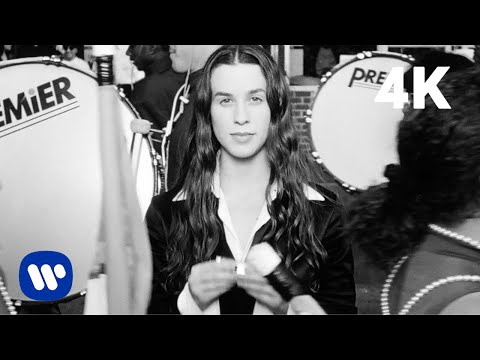
95. Alanis Morissette, “Hand in My Pocket” (Director: Mark Koh)
Mark Kohr’s best music video is this underrated clip for Alanis Morissette’s “Hand in My Pocket.” Based on the singer’s purported fascination with observing people in crowds, the video casts her as the chauffeur of a local parade. The languid black-and-white photography, Kohr’s cynical direction, Morissette’s possessed “taxi cab” facial tick, and off-kilter lip-syncing manage to add to the strange, if not elusive, scent of subversion. Gonzalez
94. Lorde, “Royals” (Director: Joel Kefali)
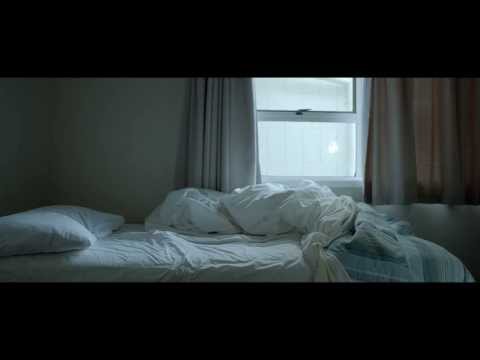
Though additional footage of New Zealand pop singer Lorde was added to the U.S. edit of “Royals” for American consumption, her absence for most of the original international version speaks to both the 16-year-old’s “postcode” shame and her friends’ suburban-teen ennui. Cinquemani
93. Tom Petty & the Heartbreakers, “Don’t Come Around Here No More” (Director: Jeff Stein)
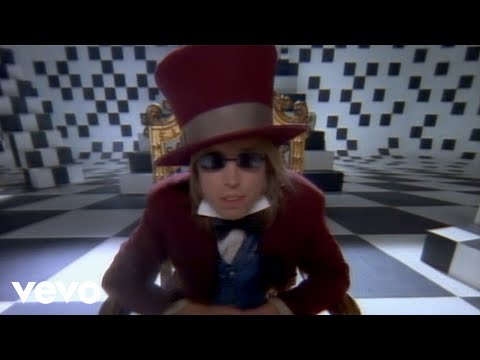
Only in a Tom Petty video can Alice trip her way through Wonderland. A naïve Alice downs psychedelic shrooms courtesy of a hookah-smoking caterpillar. As the crazed Mad Hatter, Petty fucks with her high. The clip was released in 1985, and its stunning art direction was remarkably ahead of its time. Here, it’s a virtual threat to Alice’s confused sense of perspective. When the munchies kick in, Alice herself is downright edible. Gonzalez
92. Kanye West, “Flashing Lights” (Directors: Spike Jonze and Kanye West)
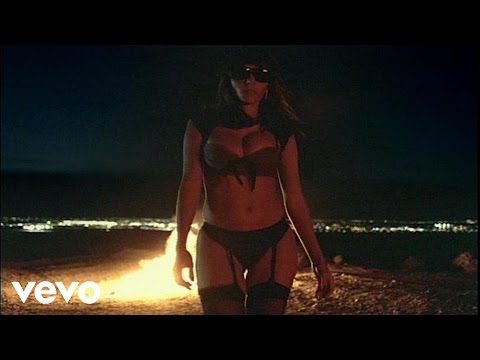
“Flashing Lights” suggests a willing attempt on Spike Jonze’s part to play in Quentin Tarantino’s sandbox. In a glorious, slow-motion tracking shot, a buxom woman strips to her lingerie, bludgeons her captive to death with a shovel, and burns the evidence. His fetishized violence is also shot better than anything Q.T. has done. (Watch as a double bill with Beyoncé’s “Diva,” which puts everything into delirious post-feminist context.) Paul Schrodt

91. FKA twigs, “Cellophane” (Director: Andrew Thomas Huang)
The voyeuristic introduction to FKA twigs’s “Cellophane” is, perhaps, symbolic of the public scrutiny that the singer endured in the wake of her split with Robert Pattinson. Her graceful flight up and down a stripper pole is vulnerable and wounded, far from the sensuality typically associated with the dance form. She abandons her performance, climbing the pole to a heavenly realm that opens up above her, where she contemplates a mechanical, insect-like creature that bears her face. Director Andrew Thomas Huang interweaves shots of twigs’s pole dancing and of her falling helplessly as she comes to grips with her deepest insecurities. twigs is covered head to foot in the brown clay that breaks her fall, as if she were settling in her insecurities rather than running away from them. Sophia Ordaz

90. A$AP Rocky featuring Moby, “A$AP Forever” (Director: Dexter Navy)
The camera is the star of “A$AP Forever”: whirling in dizzy circles above A$AP Rocky’s head and pulling in and out of a seemingly endless series of TV monitors, street signs, smartphone screens, and other images within images. In the final sequence, the camera moves one last time into Rocky’s eyeball, revealing a reflected image of the rapper rotating in an anti-gravity chamber. Also, Moby is there. What it all means is anyone’s guess, but the trippy effect is a perfect complement to the strain of 21st-century psychedelia in Rocky’s music. Zachary Hoskins

89. Die Antwoord, “Baby’s on Fire” (Directors: Ninja and Terence Neale)
Die Antwoord’s Yo-Landi Vi$$er is a modern-day Carrie White in this pastel-colored visual feast, only her oppressor isn’t a Christian fundamentalist mother or a bunch of abusive classmates, but her sexist, hypocrite brother (played by the South African group’s other vocalist, Ninja, who co-directed the video). And while Yo-Landi’s revenge isn’t as preternaturally fiery as Carrie’s, it’s every bit as sweet. Cinquemani
88. The White Stripes, “Fell in Love with a Girl” (Director: Michel Gondry)
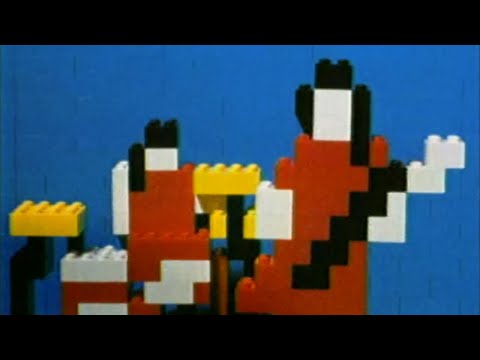
It isn’t just that the animation in “Fell in Love with a Girl” makes for a jaw-dropping stunt (particularly impressive to those of us who were never able to get their Lego constructions to turn out quite right), but it’s that the use of Legos is an inspired choice of medium, in that their primary colors and sharp lines find a contemporary analogue for the De Stijl art movement that’s influenced the White Stripes’s image and aesthetic from the very start. It’s a triumph of form meets function in every sense. Jonathan Keefe
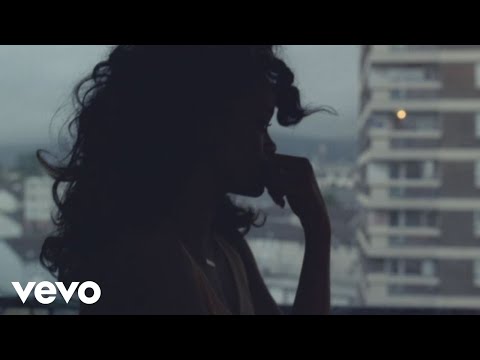
87. Rihanna, “We Found Love” (Director: Melina Matsoukas)
Calvin Harris’s Ibiza beats are enhanced by a series of striking, hazily filtered Technicolor images of his Barbadian muse and her fictional boy toy frolicking in a bathtub, popping pills, smoking rainbows, and vomiting streamers. Melina Matsoukas’s video projects (literally and figuratively) the fleeting rush of both young love and drugs—and the often fatal cocktail that results when the two are combined. Cinquemani
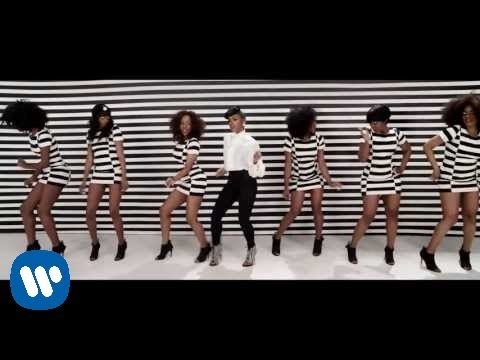
86. Janelle Monaé featuring Erykah Badu, “Q.U.E.E.N.” (Director: Alan Ferguson)
Despite a seemingly playful plotline involving ’60s girl group-inspired rebels breaking into a living museum to free their notorious time-traveling leader and her dangerous accomplice (played by Erykah Badu), the futuristic, sci-fi visuals of “Q.U.E.E.N.” teem with political purpose. The video’s expertly crafted edits and jump cuts make it impossible to turn away from Monaé’s nearly minute-long closing sermon on racial and economic inequality and, most importantly, the virtues of “getting down.” Kyle Fowle
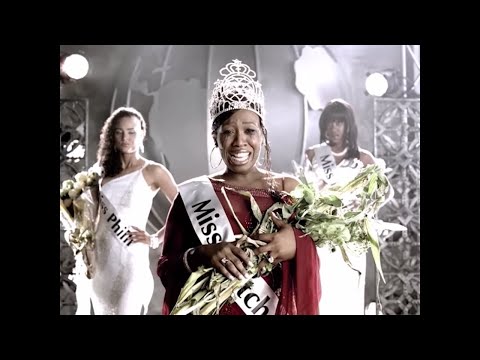
85. Missy Elliott, “Pass That Dutch” (Director: Dave Meyers)
Missy Elliott is one of the most innovative artists of the video era, but most of her outlandish, effects-laden visuals haven’t aged quite as well as 2003’s “Pass That Dutch.” Directed by frequent collaborator Dave Meyers, the clip satirizes the image of African Americans as slaves, political militants, and sitcom caricatures, threading its commentary about the black experience through three different songs. In the first segment, Missy laments how fame has laid waste to her fellow hip-hop icons, while later she’s depicted as a tearful beauty pageant winner, paraded before a cheering audience of white Barbie dolls. Of course, it’s all executed with humor and invention—and blink-and-you’ll-miss-them visual nods to Missy’s singular rhymes. Cinquemani
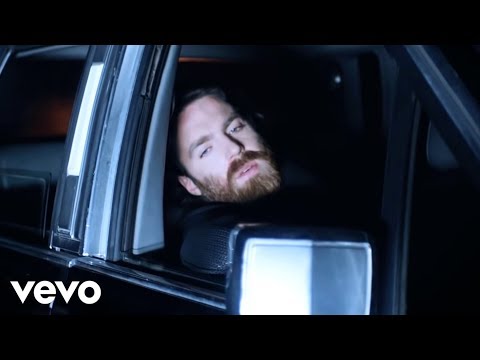
84. Chet Faker, “Gold” (Director: Hiro Murai)
In my perfect world, it’s this frontal-axis music video, and not Pharrell Williams’s “Happy,” that has a 24-hour version. And instead of passing the baton like “Happy” does, the full day’s worth of “Gold” features only April Corley, Candice Heiden, and Appleusa McGlynn. As it is, their fierce midnight rollerskating excursion seems to emerge from some deep subconscious personal need to see Xanadu mashed up with Lost Highway. Elsewhere, Chet Faker covered “No Diggity,” but this trio’s seductive talent is no doubt. Eric Henderson
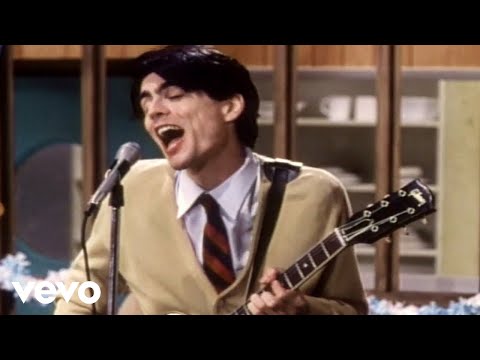
83. Weezer, “Buddy Holly” (Director: Spike Jonze)
Spike Jonze’s clip for Weezer’s “Buddy Holly” initially appears smug and superfluous, with Weezer performing on the original Arnold’s Drive-In set and cutting between images of the band and vintage Happy Days footage. The marriage of old-school and new-school footage is ultimately less remarkable than Jonze’s suggestion that it’s all about the Fonz. When Henry Winkler enters frame, he dances for the crowd and Weezer is soon forgotten, so much so that it’s as if they never existed. In the end, “Buddy Holly” becomes a riveting paean to nostalgia itself. Gonzalez
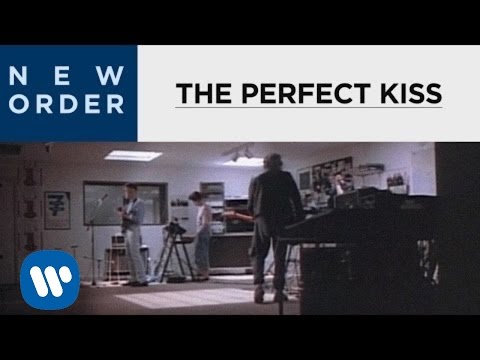
82. New Order, “The Perfect Kiss” (Director: Jonathan Demme)
Jonathan Demme’s video for New Order’s “The Perfect Kiss” is a calculated act of disarmament. Its no-frills approach to observing the boys of New Order performing the song is simple only on the surface. Yes, it’s a means of delighting in all the micro details that makes a song come to life, but the video’s masterstroke is that it was performed live. So, in the end, it’s a celebration not only of every riff and synth that makes the song a classic, but of the doubts and nervous energy that musicians wrestle with throughout the creative process. Gonzalez

81. Goldfrapp, “Annabel” (Director: Lisa Gunning)
Part of a larger film designed to accompany Goldfrapp’s 2013 album Tales of Us, the Tomboy-esque “Annabel” is a dreamy folk tale inspired by Kathleen Winter’s novel of the same name about an intersex youth forced to take on the identity of a boy in the 1960s. The video patiently and gorgeously captures the isolation and fantasies of its androgynous title character, blurring fantasy and reality as hazily as the clip’s black-and-white cinematography. Cinquemani
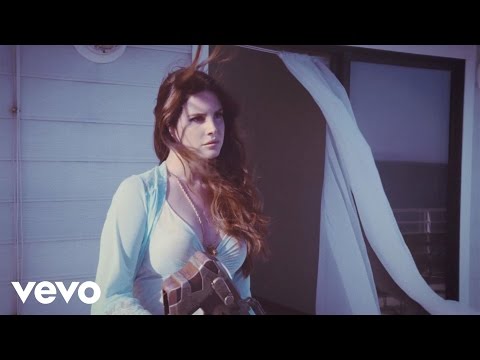
80. Lana Del Rey, “High by the Beach” (Director: Jake Nava)
“The truth is I never bought into your bullshit when you would pay tribute to me,” Lana Del Rey sings on “High by the Beach.” The lead single from her third album, Honeymoon, is a love song of sorts, but it doubles as a rebuke to a fickle press, represented in the Jake Nava-directed video by a paparazzo stalking Del Rey at a Malibu rental. The way she toys with the man, by cavorting in front an open window in a sheer nightgown one moment and wallowing in her ennui while evading the black chopper hovering just outside in the next, speaks to her ambivalence to her fame. When the shutterbug is out of sight, she runs down to the beach, grabs a guitar case hidden between the rocks, pulls out a grenade launcher, takes aim at her tabloid tormentor, and blows him—not to mention the myriad anti-media screeds that came before this one—away. Cinquemani
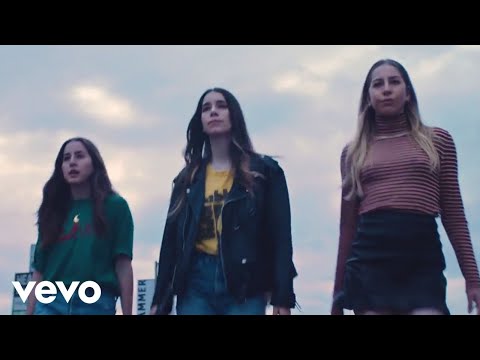
79. HAIM, “Want You Back” (Director: Jake Schreier)
In the single-take video for their single “Want You Back,” the Haim sisters make Ventura Boulevard their runway, strutting in time to the beat of the song and endearingly acting out their respective parts (a solitary kick drum here, an isolated backing vocal there—the little moments you might not have even noticed until now) like ardent fans pantomiming their favorite pop song on the radio. Cinquemani
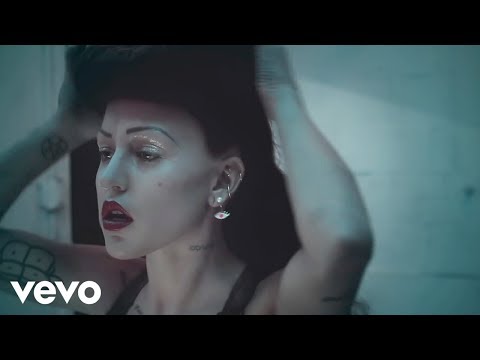
78. Brooke Candy, “Opulence” (Director: Steven Klein)
A jumping-off point for Brooke Candy’s song “Opulence” is a famous line from Paris Is Burning about owning everything, and its video begins tellingly with an incredible reference to Sam Fuller’s The Naked Kiss. Given director Steven Klein’s past work with Madonna and Lady Gaga, and the unmistakable references to the former’s Erotica period (like the Queen of Pop, Brooke is on a collision course to destroy beauty—and not just her own), the video is unmistakable as a simulacrum of a pop star rising. Or Lucifer, if the YouTube commentator who (not unfairly) calls the imagery a form of “trauma-based mind control.” Which is the point, as the subject here is the allure of fame and how its acquisition precipitates the splintering of the self. Gonzalez
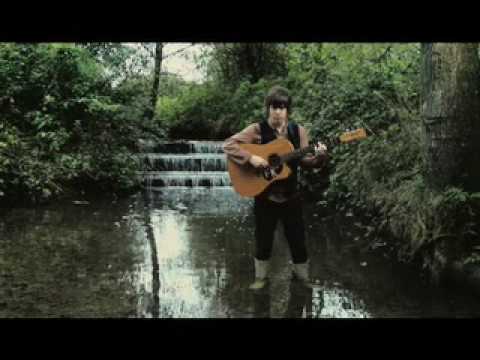
77. Fionn Regan, “Be Good or Be Gone” (Director: Si & Ad)
Hard to believe anyone in this day and age can still be thrilled by the concept of synchronized sound and image, but Fionn Regan’s unplugged video coasts gently on this fundamental concept. By simply playing his song in myriad different settings and splicing the footage together, preserving the natural audio instead of syncing it up to a studio track, Regan’s video becomes a moving study on the acoustics of acoustic. Henderson
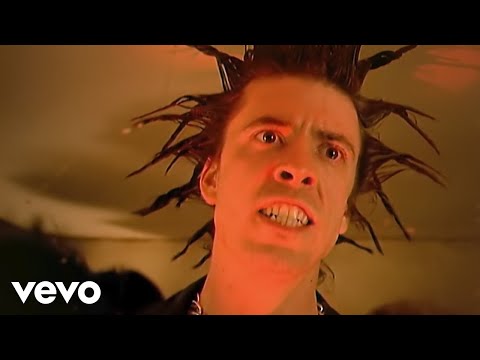
76. Foo Fighters, “Everlong” (Director: Michel Gondry)
Magritte meets Lynch in this surprisingly intimate paean to lucid dreaming. Inside their happy suburban home, a husband (Dave Grohl) and wife (Taylor Hawkins in drag) communicate via dreams. Grohl is Sid Vicious at a lame costume party, while Pat Smear and Nate Mendel are the bouncers hot on his tail. The thugs access the couple’s shared consciousness, kidnapping the wife and hiding her inside a remote cabin in the woods. Water imagery and opening doorways heighten Grohl’s penetration anxiety. A ringing phone figures prominently in and out of sleep and serves to clue Grohl in to the power of dreams over reality. Or is it the other way around?Gonzalez

75. Tyler, the Creator, “Yonkers” (Director: Tyler, the Creator)
With typical I-don’t-give-a-shit-ness, Tyler makes himself the target of this particular litany of gripes, essentially a series of paradoxes so Joycean in their density they could stand to have their own set of Cliffs Notes. Take this black-and-white clip as an expression of how Tyler sees himself in constant war with himself, or as a wry, perverse acknowledgement on his part that the best, maybe only, way of making sense of his sick rhymes is by overdosing on bug juice. Gonzalez

74. Young Thug, “Wyclef Jean” (Director: Pomp&Clout)
Even if it all had gone as planned, “Wyclef Jean” would have been a hilarious deconstruction of rap clichés. But the whole point is that it didn’t, as Young Thug, the video’s star and conceptualist, blew off the shoot, leaving his “co-director” Ryan Staake to scramble to pick up the pieces. The result is a meta-narrative in which Staake, via intertitles and inventive editing, attempts to “explain how this video fell apart.” Yet the real brilliance of “Wyclef Jean” is the way Thug’s absence defines the video. We hear a recording of his voice explaining the concept, and we’re told that he appeared on set, then refused to leave his car and eventually drove away. The only time we see him on camera is in a few seconds of separately shot footage, most of which he spends eating Cheetos rather than rapping. Staake’s narration comes across as piqued, painting the rapper as an irresponsible diva, but in the end Young Thug comes out looking more like a mastermind provocateur. Either way, “Wyclef Jean” is as punk as John Lydon refusing to lip synch on American Bandstand. Hoskins
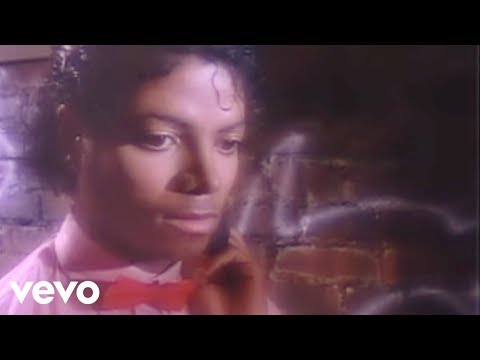
73. Michael Jackson, “Billie Jean” (Director: Steve Barron)
In this legendary video for “Billie Jean,” Michael Jackson plays an urban Dorothy who walks on down the road and challenges an ex-fling’s restraining order—or something to that effect. In a 1999 interview with MTV, Jackson could barely remember who directed the clip though he did reveal that the best part of the video was entirely his idea. Director Steve Barron didn’t want any dancing in the video, but what he didn’t know then was that to prevent Michael Jackson from dancing would be akin to silencing the artist’s voice. Gonzalez

72. Danny Brown, “Grown Up” (Director: Greg Brunkalla)
Danny Brown’s playful reflection on growing up hinges on a key line from the song’s hook: “Whoever thought I’d be the greatest growing up” By having a shorty lip-sync the lyrics to his song, Brown makes banal experience—riding bikes through broke-down streets, getting hauled by Moms to the store in a laundry cart, causing trouble in school—seem extraordinary. In short, the building blocks of greatness. Gonzalez
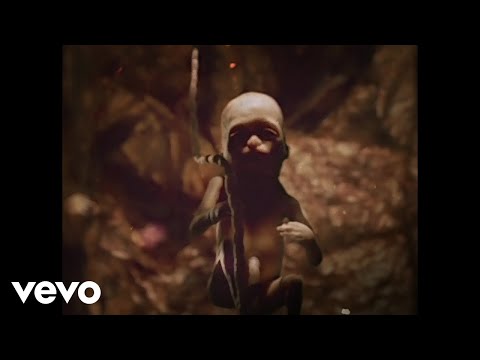
71. Massive Attack, “Teardrop” (Director: Walter Stern)
Massive Attack’s “Teardrop” was met with an equally minimal and gorgeous video clip courtesy of Walter Stern. The Bristol group’s thud-and-clack percussion provides the heartbeat of a lip-synching fetus in utero. Particles float through the amniotic fluid as the unborn child responds subtly to light and sound, patiently waiting for the moment it will emerge from the womb, perhaps as soon as the simple yet beautiful “Teardrop” ends. Cinquemani

70. DJ Shadow featuring Run the Jewels, “Nobody Speak” (Director: Sam Pilling)
It’s funny, yes, to behold the dissonance that Run the Jewels’s rage bombs spill from the mouths of well-dressed politicos. That’s the source of the video’s humor, but another dissonance explains its genius: how politics is a highly tribal business, and how El-P and Killer Mike’s straight talk is something that most politicians, but especially one former U.S. president, are incapable of because they’re too busy stroking their own egos. Gonzalez

69. Smashing Pumpkins, “1979” (Directors: Jonathan Dayton and Valerie Faris)
Directors Jonathan Dayton and Valerie Faris pay tribute to the tedium of suburban life in their video for Smashing Pumpkins’s “1979.” Dayon and Faris’s use of the fish-eye lens has an uncanny way of evoking the drunkenness and free-spiritedness of the video’s subjects. Like a surrogate chaperon, Billy Corgan tails a group of angst-ridden middle-class teens as they experience the joys of house parties, toilet-papering the neighborhood, pool-hopping, and extra-large slurpies. Suburban teen boredom never tasted so sweet. Gonzalez

68. Scarface, “On My Block” (Director: Marc Klasfeld)
A baby is born on a front lawn and we’re taken on a tour of several decades on the South side of Houston, through the civil rights movement, block parties, poverty, gang violence, and police brutality. Hip-hop was Brad Jordan a.k.a. Scarface’s meal ticket out of this ghetto, but he returns to witness the cycle of violence, life, and love continue through another generation. Cinquemani

67. Bronski Beat, “Smalltown Boy” (Director: Bernard Rose)
Still among the most daring music videos of all time, the ultra-realist “Smalltown Boy” depicts a brutal gay bashing in provincial Britain. Bronski Beat’s Jimmy Somerville makes a pass at a man he presumes to be gay at a local pool. Later that day, his object of affection bashes him in a dingy alley. Forced to come out to his parents, a rejected Somerville runs away from home on a train to nowhere. Bernard Rose’s direction hauntingly evokes Somerville’s overwhelming sense of loss and devastation. Gonzalez
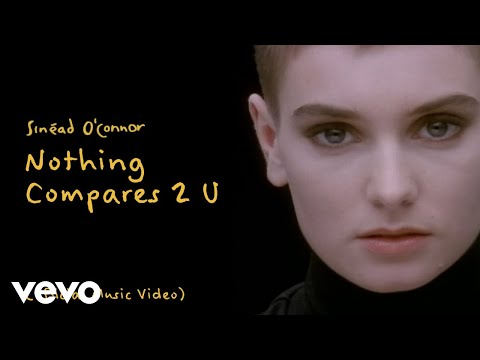
66. Sinéad O’Connor, “Nothing Compares 2 U” (Director: John Maybury)
In stark contrast to the often excessive videos of its time period, Sinéad O’Connor and director John Maybury’s absolutely mesmerizing clip for 1990’s “Nothing Compares 2 U” proclaimed O’Connor as an iconoclast to be reckoned with. Moody images of O’Connor walking through a paganistic, gargoyle-filled park are offset with close-ups of the singer’s porcelain face against a black background, naked in her emotions. And yes, that’s a real tear. Gonzalez
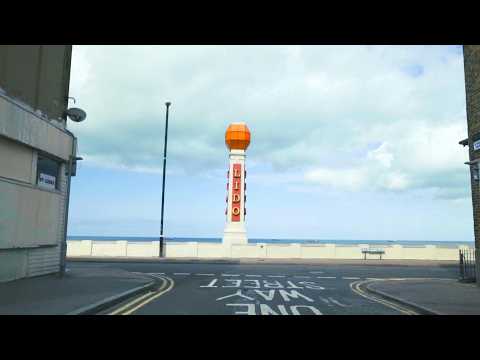
65. Bicep, “Glue” (Director: Joe Wilson)
This is one for the motherfucking club heads of yesteryear, to leave them misty-eyed for those long-gone temples where the rave was the occasion for an act of near-spiritual communion. The video assembles images of the places where these sites once existed, of some of the roads that took you there, with text-on-screen remembrances from revelers who worshipped at the altar of the DJ. These missives, about days being off one’s box, laughing with friends, and coming down in ways like never before, suggest messages in a bottle: “It’s so hard to describe the feeling/25,000 people one with each other/No hassle/Just pure ecstasy.” Somehow, almost miraculously, the video captures the fullness of that sense of feeling by way of visions of places long abandoned by pleasure. Gonzalez

64. Janet Jackson, “The Pleasure Principle” (Dominic Sena)
The origins of the tiresome music video subgenre in which an individual dances alone in a warehouse or hotel or field can be traced as far back as Kate Bush’s “Wuthering Heights.” But it’s Dominic Sena’s “The Pleasure Principle,” which introduced a newly svelte Janet Jackson to the world in 1987, that earns a spot on our list for its resourceful use of both its space and subject. The previous hits from the singer’s breakthrough album, Control, established Janet as a star in her own right, but with “The Pleasure Principle,” she aligned herself, as a dancer and pop icon, with her big brother Michael—and did so with little more than a wooden chair, a mic stand, and some shadows and light. Cinquemani

63. OutKast, “B.O.B.” (Director: Dave Meyers)
Twenty-some-odd years of hip-hop video clichés are creepily distilled into this apocalyptic foot-stomper, in which the streets are green, the sidewalks yellow, the grass purple, the beats insanely propulsive, the message soulful. Where are André 3000 and Big Boi off to in such a panic? A titty bar, perhaps, given the mood inside the souped-up cars, but this subversive vision essentially boils down to a celebration of community, like a Tyler Perried version of 28 Days Later, in which blacks young and old are united in their desire to get to church, where rumps shake as emphatically as arms reach for the heavens. The hunger of sexual and spiritual worship has never been so provocatively conflated. Gonzalez

62. Nirvana, “Heart-Shaped Box” (Director: Anton Corjbin)
Nirvana’s “Heart-Shaped Box” is as ripe with allusions as it is oversaturated with color (the video was shot in black and white and then computer-colorized). Directed by Anton Corjbin, the clip features surrealistic images including a winged, gluttonous woman reaching for plastic fetuses hanging from a tree and an emaciated Jesus with a Victorian beard and Santa hat climbing onto a cross. While the song makes vague references to cancer, umbilical cords, and meat-eating orchids, the video entangles faith and sickness with the clarity of a man who’s damn close to giving up his eternal search. Gonzalez

61. Tori Amos, “Spark” (Director: James Brown)
“‘Spark’ is about a girl having a really bad day,” Tori Amos says in the “Tori Stories” promotional booklet which accompanied her 1998 album From the Choirgirl Hotel. But the video is much more than that. Amos’s musical images are potent and rarely sufficiently enhanced by the music video format, but “Spark” is a rare exception, serving as a visual metaphor for the singer’s recent miscarriage. Amos plays a blindfolded kidnap victim who squirms her way out of her captor’s car trunk and must trust her instincts to guide her through a dense forest. Her character tiptoes her way toward a river’s edge, submerging—and subsequently unshackling—herself beneath the murky, amniotic waters. Of the two supposed “angels” who drive by slowly and subsequently abandon her, Amos says quite matter-of-factly, “When the wolf is at your door, there is no insurance.” Cinquemani
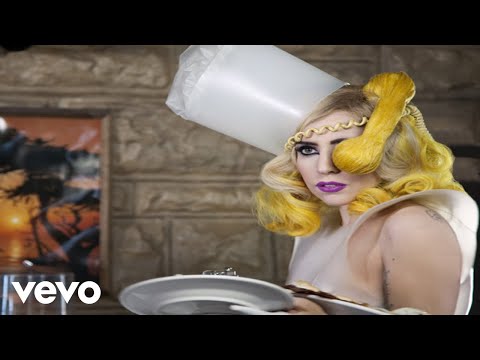
60. Lady Gaga featuring Beyoncé, “Telephone” (Director: Jonas Åkerlund)
“Telephone” is full of obvious nods to Quentin Tarantino: the self-conscious dialogue laden with knowing winks to the audience; the fascination with the muddy waters of exploitation, of which the women-in-prison film is a genre favorite; and of course, the infamous Kill Bill Pussy Wagon. The video flirts with the edges of coherence, crossing the line a few times. It’s full of random references (including nods to sci-fi works like Dune), product placement, and interesting but strange visual tics like Gaga displaying her thoughts in German right before she commits murder. Gaga starts off in prison, behind bars and bound by chains, before escaping to the expansive freedom of the desert. And the pair’s act of mass murder? It’s about seizing control: of their work, their art, and whatever piece of the culture they can claim as their own. Oscar Moralde

59. Mariah Carey, “The Roof” (Directors: Mariah Carey and Diane Martel)
The video for “The Roof,” a standout track from Mariah Carey’s 1997 album Butterfly, tells the sophisticated tale of a sexy rooftop encounter and finds the singer at her least artificial. With Boomboxes, break dancers, blow pops, and snug Sergio Valentes abound, the video effectively transplants Carey to an NYC rooftop circa 1983. Submerged—and ultimately soaked—in her fleeting moment of sexual liberation, Carey displays a stark innocence and authentic vulnerability that had been missing from much of her previous work. Shot in a seedy hotel room and a dark limousine, the gritty images did plenty to redeem the singer of her bubblegum pop past. When Carey rises through the limo’s sunroof and relishes the warm November rain, she’s not drunk on the bubbly but on the memory of past delights. Cinquemani
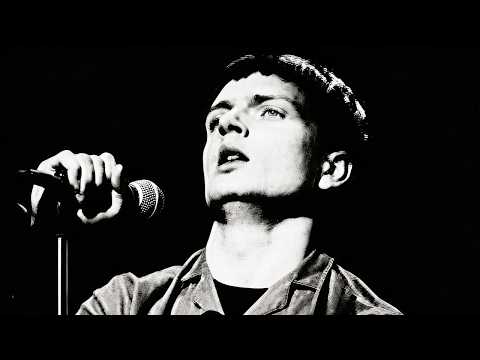
58. Joy Division, “Atmosphere” (Director: Anton Corbijn)
This video directed by Anton Corbijn, who photographed Joy Division throughout their brief career and later directed the Ian Curtis biopic Control, was produced on the occasion of the single’s re-release in 1988, and it hauntingly meets it at its dirge-like level. The song quakes with a sense of finality, and the video’s monochrome images feel as if they nervously reside in a liminal wasteland, its little people walking to and fro as they hold images of the band but never quite in unison. Until the end, that is, walking in silence and leaving us with the haunted assurance that Ian Curtis found some kind of peace in death. Gonzalez

57. Fiona Apple, “Hot Knife” (Director: Paul Thomas Anderson)
Fiona Apple reunited with former beau Paul Thomas Anderson for the video for the infectious “Hot Knife,” a standout cut from the singer-songwriter’s The Idler Wheel. The video, which was Anderson’s first in 11 years, is a decidedly minimalist affair, mixing color and black-and-white shots that, by the end of the clip, are presented side by side in multiple split-screen like, well, pats of butter sliced by a hot knife. Cinquemani
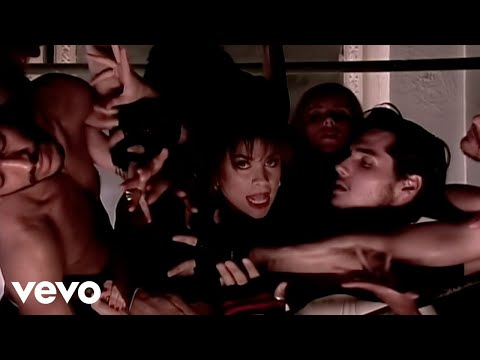
56. Paula Abdul, “Cold Hearted” (Director: David Fincher)
A group of record executives arrive at a rehearsal hall where Paula Abdul is waiting to audition her new music video concept. The execs sit and watch in horror as Abdul and her troupe of dancers (who appear as if they’ve been plucked right off New York’s dingy city streets) pull the shades and unveil their racy creation. Inspired by the dance sequence “Aerotica” from Bob Fosse’s All That Jazz and directed by David Fincher, “Cold Hearted,” along with Janet Jackson’s “Rhythm Nation” and Madonna’s “Vogue,” practically defined the “dance” video template of MTV’s heyday. Cinquemani
55. Lucas, “Lucas with the Lid Off” (Director: Michel Gondry)
No music video director has ever called as much attention to the process of filmmaking than Michel Gondry does with “Lucas with the Lid Off.” In the video, Lucas plays a recording artist supervising his own creative process and subsequent success. Though the entire video was shot in one long take, the action presented does not transpire in real time. A series of numbered frames indicates where Gondry’s camera will need to stop before recording the next movement in the video’s action. More importantly, though, these stoppage points evoke passages in time and call attention to the very nature of the recording process. This rigorous, head-trippy experiment evokes the human mind’s own subjective ability to perceive and edit the world around it with as little as a blink of an eye. Gonzalez
54. Prodigy, “Smack My Bitch Up” (Director: Jonas Åkerlund)
Prodigy’s controversial 1997 video follows its antagonist on a path of destruction as the character boozes, snorts, shoves, molests, pukes, and fucks her—yes, her—way through the night. Challenging stereotypes and audience expectations with a twist worthy of M. Night Shyamalan, “Smack My Bitch Up” offers enough social substance to excuse its gimmick. Cinquemani
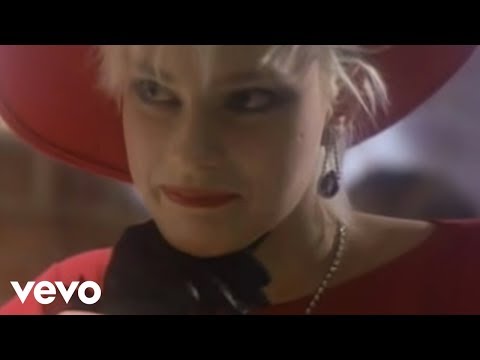
53. ‘Til Tuesday, “Voices Carry” (Director: D.J. Webster)
Wall Street scumbag and East Village chick clash in D.J. Webster’s clip for ‘Til Tuesday’s “Voices Carry.” The band’s lead singer, Aimee Mann, appears as a musician dating a violent Reaganite who demands that she change her outré look for his benefit. A stinging indictment of ’80s greed culture, “Voices Carry” ends on a literal and figurative high note. At the opera, Mann defies cultured society and shakes off the shackles of her Barbie Doll enslavement with one liberating howl. This anti-American Psycho also uses spoken dialogue to interrupt the video’s musical groove when Mann’s boyfriend demands, “Do something for me!” Gonzalez

52. The White Stripes, “The Hardest Button to Button” (Director: Michel Gondry)
Michel Gondry’s videos are often reducible to mathematical equations, a metaphor for his complicated filmmaking process. In the White Stripes’s “The Hardest Button to Button,” the drum sets and amps multiply in sync with the song’s bassline. Filmed in New York City with a digital camera, it looks like a dirt-cheap student art project, which is part of its infectious charm. Schrodt

51. The Cars, “You Might Think” (Director: Jeff Stein)
Decades after videos for Herbie Hancock’s “Rockit” and Dire Straits’s “Money for Nothing” supposedly broke all sorts of new ground (one because it featured headless robots, the other because it lazily took us inside a digital factory and made one infamous shout-out to MTV), “You Might Think” is among a small number of ’80s relics that have truly stood the test of time. This colorful clip is a mélange of corny yet innocent visual puns, goofy sight gags, and cutout digital effects. In just over three minutes, director Jeff Stein brings to mind both Michael Snow and Andy Warhol’s negotiated personal conflict via a postmodern reality. Because of its underlying romantic spirit, “You Might Think” is more liberating than Snow’s Wavelength (not to mention *corpus callosum) and less preening than anything Warhol ever produced. In the name of love, Ric Ocasek repeatedly presents and repackages himself as a desperate romantic figure. Gonzalez

50. Danny Brown, “Ain’t It Funny” (Director: Jonah Hill)
It’s tempting, at first glance, to dismiss the concept for “Ain’t It Funny” as hackneyed and banal: Introduce Detroit hip-hop wildman Danny Brown into a lily-white, Growing Pains-via-Too Many Cooks ’80s sitcom family and watch as hilarity ensues. Once the jokey opening credits are over, however, it becomes clear that Brown and director Jonah Hill are doing more than just taking cheap shots at old trash-culture clichés. “I’m fucked up and everyone thinks it’s a joke,” says Uncle Danny between swigs of his 40-ounce; “I have a serious problem,” he declares to the camera like a beloved TV character delivering his catchphrase. By the end of the video, Brown is lying on the soundstage floor bleeding out while the studio audience leaps to their feet in applause. “Ain’t It Funny” may not be subtle, but its dramatization of the ways pop culture encourages and exploits self-destruction—especially in African American entertainers—is damning and incisive. Hoskins
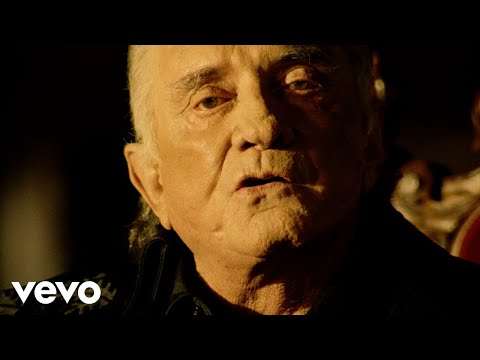
49. Johnny Cash, “Hurt” (Director: Mark Romanek)
Country music videos have a tradition of literal-mindedness that rarely involves them in any discussion of the music video as a legitimate art form, but Johnny Cash has rarely adhered to the conventions of country music. The vulnerability and frailty Cash puts on naked display throughout his video for “Hurt” transforms his somber, melancholy Nine Inch Nails cover into an evocative meditation on mortality that found the Man in Black exploring his iconic image literally into his last days. Keefe

48. “Paranoid Android” (Director: Magnus Carlsson)
Radiohead commissioned Swedish animator Magnus Carlsson for this bizarre and somewhat graphic video, which sees the titular protagonist of Carlsson’s series Robin encountering various unsavory or unearthly characters, including a prostitute in a tree, a deranged businessman, and an angel flying a helicopter. Cinquemani
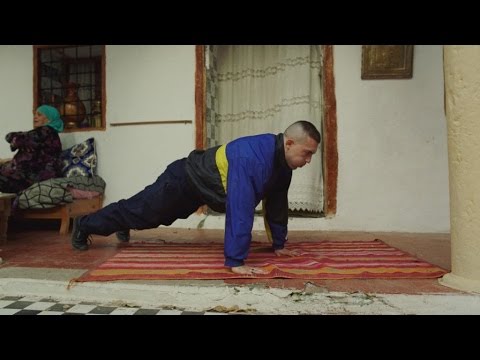
47. The Blaze, “Territory” (Director: The Blaze)
The opening of the Blaze’s poignant video for “Territory” parallels the trail of water churned by a ship that takes a man to Algiers with the tears that roil on the man’s face upon his homecoming. From there, the video proceeds as a symphony of movement, intimate grace notes that attest to how our memories are so often tied to our proximity to the people and places we love. Inside a medina, the man repeatedly jabs the air in perfect lockstep with the track’s synths. Throughout, the intensity of the beat is likened to the desperation of desire and the intensity of the bond between men, a story of kinship that’s subsequently passed on to the younger generation during an act of soul-giving playtime that sees the man surreally charged with the animating spirit that is home and tradition. Gonzalez
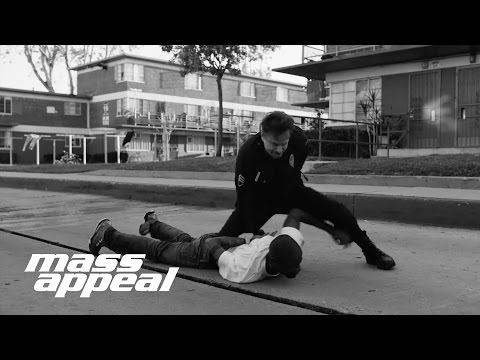
46. Run the Jewels, “Close Your Eyes (And Count to Fuck)” (Director: AG Rojas)
Truthful, direct, impossible to misinterpret. Run the Jewels’s roaring “Close Your Eyes (And Count to Fuck)” is granted a stark counterpoint, as a white cop and a black youth struggle in a seemingly unwinnable battle pitched somewhere between DashCam video, the cover of Time magazine’s May 11, 2015 issue, and Dr. Seuss’s metaphorical butter battle. Killer Mike’s furious “We killin’ them for freedom ‘cause they tortured us for boredom” plays out in grim real time as the dueling figureheads wear each other down. In the video’s pointed punchline, it seems that neither side fully knows why they’re out for blood. But only one side represents the system that knows damn well why they are. Henderson
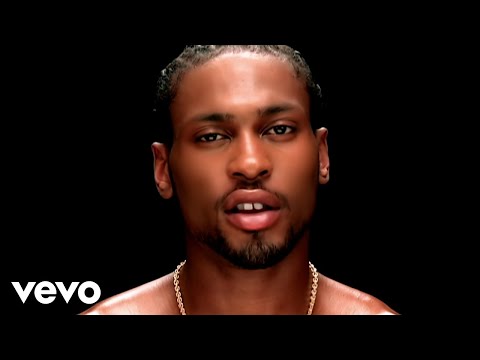
45. D’Angelo, “Untitled (How Does It Feel)” (Director: Paul Hunter)
Not unlike Fiona Apple’s “Criminal,” the video for D’Angelo’s “Untitled (How Does It Feel)” made its star an unwitting sex icon. It’s also aesthetically liberating—an unabashed attempt to inverse MTV’s erotic gaze, turning it on a ripped black man. The single, continuous shot travels up and down the contours of D’Angelo’s body, doing for the artist what he does for his music: stripping it bare. Schrodt
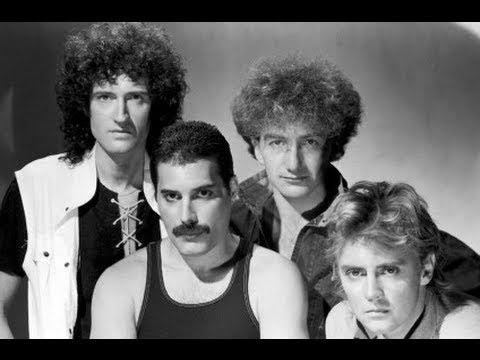
44. Queen and David Bowie, “Under Pressure” (Directors: David Mallet and Andy Morahan)
A symphony of images cued to Queen and David Bowie’s now-classic anthem “Under Pressure.” This socially conscious slideshow is pieced together entirely from silent film and documentary stock footage. Stinging yet hopeful, the clip celebrates the pressure-cooker mentality of a culture willing to wage war against political machines. This is propaganda worthy of Sergei Eisenstein, the unofficial father of the music video and whose Battleship Potemkin is a main source of inspiration here. Gonzalez
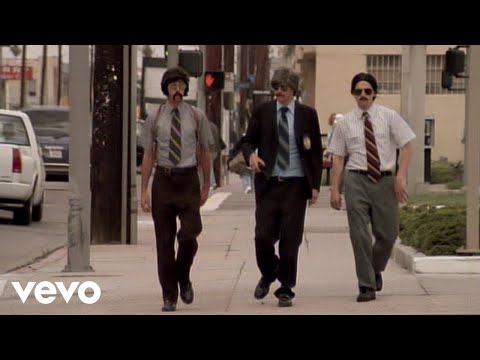
43. Beastie Boys, “Sabotage” (Director: Spike Jonze)
They cut the middle man and deliver the sweaty goods. The difference between the floppy cop antics of “Sabotage” and the similarly puckish costume partying of “Ch-Check It Out” is the difference between living and breathing old-school flava and simply providing a taxonomy of retro signposts. Of course, the Beasties can do both pretty well. Henderson
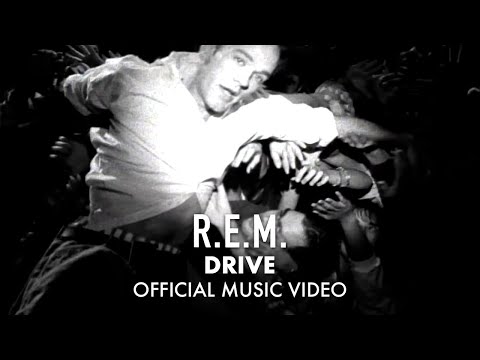
42. R.E.M., “Drive” (Director: Peter Care)
Placing his absolute trust in the audience, Michael Stipe allows hungry hands to carry his weight across a sea of people in the video for R.E.M.’s 1992 song “Drive.” Streams of light and water seemingly flow from outstretched hands and bopping heads, while Peter Care’s gorgeous black-and-white photography mirrors the song’s mechanical eroticism. This is Zen and the Art of Moshing. Gonzalez
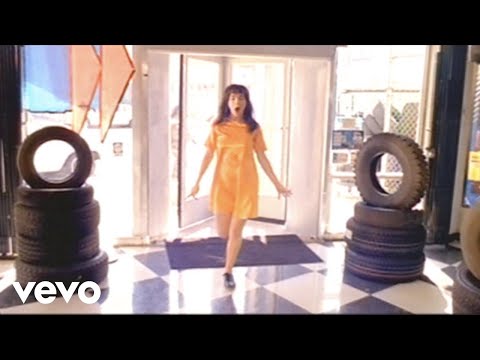
41. Björk, “It’s Oh So Quiet” (Director: Spike Jonze)
This figuratively and literally weightless lark pays homage to the spring-loaded energy of the best movie musicals. In the video, Björk’s personality is as vibrant as director Spike Jonze’s color palette and awe-inspiring as the seamless editing between moments. Jonze admits to being influenced by Jacques Demy’s The Umbrellas of Cherbourg, the 1964 Cannes Palm d’Or winner starring Catherine Deneuve, with whom Björk would co-star in another Palm d’Or winner, Dancer in the Dark, a few years later. Cinquemani
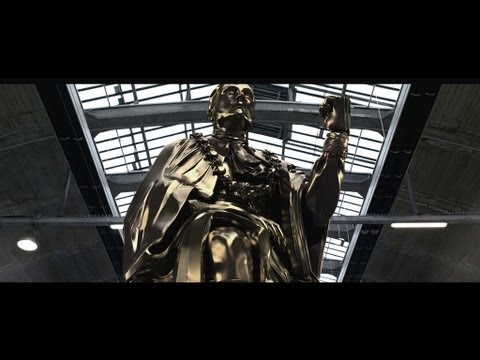
40. Gesaffelstein, “Pursuit” (Director: Fleur & Manu)
With equal amounts fascination and repulsion, this gorgeously constructed whatsit perpetually pulls away from a series of ostentatious tableaus that evoke aristocratic authority, surveillance, sex, and military might. Fittingly, no expense seems to have been spared in the desire to convey humankind’s pursuit of power since time immemorial. Gonzalez
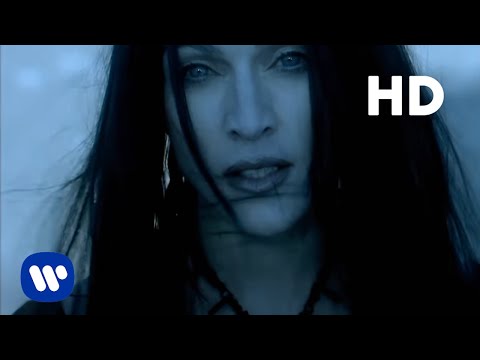
39. Madonna, “Frozen” (Director: Chris Cunningham)
Just as she sought to imbue electronica with heart on 1998’s Ray of Light, Madonna lent director Chris Cunningham’s stark, icy visual style a sense of humanity—and reportedly reined in his penchant for special effects—in the first video from the album. As a siren lost in an unidentified desert landscape, Madonna morphs into a flock of ravens, floats in the air like a specter, dances with herself in triplicate, and summons a cosmic storm with the twirl of her Henna-covered hand. The overriding theme of “Frozen,” however, is self-imposed isolation, and the video’s simplicity keys into Madonna’s straightforward but resonant refrain: “You’re frozen when your heart’s not open.” But it’s another lyric—“You only see what your eyes want to see”—that highlights the clip’s inherent ambiguity: Its hypnotic effect is not unlike succumbing to one’s own psychological paralysis. Cinquemani
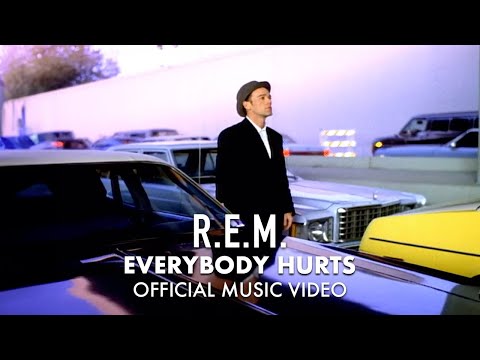
38. R.E.M., “Everybody Hurts” (Director: Jake Scott)
For 1992’s “Everybody Hurts,” director Jake Scott prominently borrowed key themes and images from Joel Schumacher’s Falling Down and Federico Fellini’s epic 8 1/2, the Italian auteur’s own chronicle of directorial self-indulgence. The video’s subtitles convey the disaffection of people trapped in a Los Angeles traffic jam before Stipe emerges from his car and spiritually cleanses them with his song, ushering them into the next world like a queer messiah. Cinquemani

37. Flying Lotus featuring Kendrick Lamar, “Never Catch Me” (Director: Hiro Murai)
Released on the eve of a urgent cultural American moment that, while certainly enriching its pedagogic potential, nonetheless can’t help but detract from the video’s central life-affirming message, director Hiro Murai’s “Never Catch Me” distills Flying Lotus and Kendrick Lamar’s ruminations on mortality into one single, potent visual metaphor—pop culture’s most cathartically powerful funeral sequence since Imitation of Life. The finality of death, especially those taken before their time, stings those left behind enough that being haunted by their life spirit comes as a sweet reward. Henderson
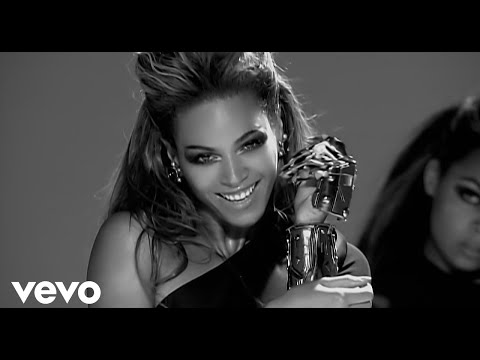
36. Beyoncé, “Single Ladies (Put a Ring on It)” (Director: Jake Nava)
Sure, it served as Ground Zero for viral YouTube imitations. But if on-point choreography and hotness were the only qualifying factors here, “Single Ladies (Put a Ring on It)” would only be running a close second to this among distaff trio production numbers. What makes Beyoncé’s Three Leotards one for the ages is the fact that there’s actually a fourth dancer running rings around everyone: the flawlessly pirouetting camera. “Single Ladies” is Max Ophüls funkily reincarnated. Henderson

35. Daft Punk, “Around the World” (Director: Michel Gondry)
A group of Cold War aliens, ’50s-style swimmers, skeletons, mummified women, and statuesque ravers circle each other on stage in this demented clip for Daft Punk’s “Around the World.” Director Michel Gondry keeps things simple: via a series of effortless zooms and overheads timed to the circular choreography, he evokes dance music’s appeal as an ageless global phenomenon. Gonzalez
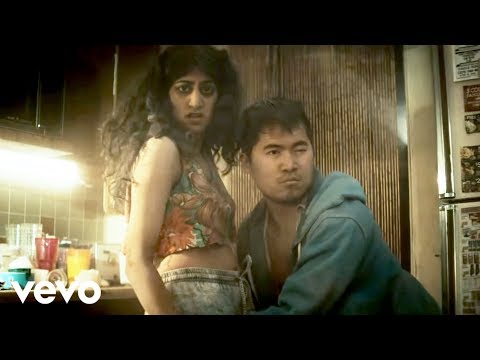
34. DJ Snake & Lil Jon, “Turn Down for What” (Director: Daniels)
There’s a reason why it’s called “gettin’ ugly” on the dance floor. Like Chris Cunningham chasing Adderall cookies with a Red Bull reduction, “Turn Down for What” inflates the breasts, spooks the horses, and blasts grindy hedonism into satiric abstraction. Insofar as a breakin’ boner with a blast radius of at least 200 yards can be said to be an “abstraction.” Say, is that choreography in your pocket? Henderson

33. M.I.A., “Borders” (Director: M.I.A.)
With its soft, flattering cinematography and dazzling, kaleidoscopic set pieces, M.I.A.’s video for her pointedly titled single “Borders” risks turning the life-or-death plight of refugees into a fashion runway for her decidedly understated duds: A jersey she sports reads, “fly pirates,” and at one point she literally walks on water. But the image of the artist as the fearless leader of an army of émigrés, trudging forward across land and water, is a simple, potent, and timely one. M.I.A. has often used her early life as a political refugee to highlight and subvert common perceptions of the immigrant experience but perhaps never as bluntly, accessibly or, yes, beautifully as she does here. Cinquemani
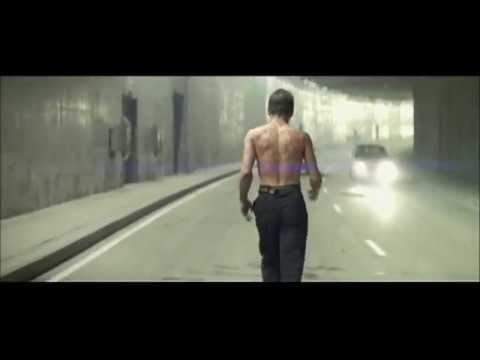
32. U.N.K.L.E., “Rabbit in Your Headlight” (Director: Jonathan Glazer)
Jonathan Glazer’s films and videos demand a suspension of disbelief, but there’s an unmistakable poetry in their implausibility. The director’s work is predicated on an unnerving sense of circular logic—which is to say, what comes around goes around. In Glazer’s ominous clip for U.N.K.L.E.’s “Rabbit in Your Headlights,” a mumbling, incoherent man (played by Denis Lavant) stumbles through a traffic tunnel while cars dodge and occasionally hit him. Seemingly empowered by the cruel motorists who repeatedly crash into him, the man fabulously and instantaneously allows his body to transform itself into a powerful machine that subsequently lashes back at his enemy. Gonzalez

31. Sigur Rós, “Viðrar vel til loftárása” (Director: Arni & Kinski)
Sigur Rós’s longing masterpiece is the zero-gravity tone poem of adolescent gender identity Billy Elliot only pretended to be. With languorous, De Palma-worthy slow-motion visuals and an insistent sensitivity about not only two schoolyard boyfriends, but the community that will likely choose not to suffer their burgeoning love, “Viðrar vel til loftárása” stands shoulder with the absolute best feature-length queer coming-of-age films of its time. Henderson
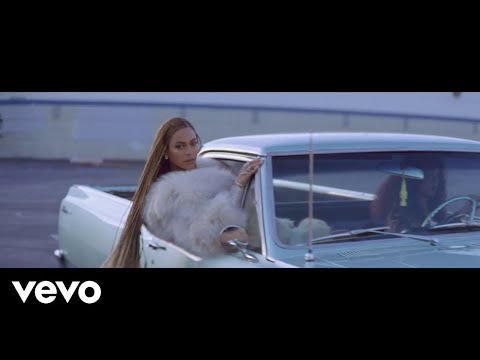
30. Beyoncé, “Formation” (Director: Melina Matsoukas)
Beyoncé is many things, but subtle isn’t one of them. “Stop shooting us,” reads graffiti on a wall in the music video for 2016’s “Formation,” intercut with scenes of a boy in a black hoodie facing off against a line of riot police with nothing but his dance moves. But the clip, directed by Melina Matsoukas, is much more than simply an audio-visual manifestation of the Black Lives Matter movement. Doubling as a tribute to New Orleans, the video opens with a pointed shot of Beyoncé standing atop a New Orleans Police Department car submerged in floodwater, and it dips even further back into our country’s racially charged history to ask, via a fake newspaper titled The Truth, “What is the real legacy of Dr. Martin Luther King Jr. and why was a revolutionary recast as an acceptable Negro leader?” Cinquemani

29. The Chemical Brothers, “Star Guitar” (Director: Michel Gondry)
The Chemical Brothers’s “Star Guitar” offers only raw undulating sensation, and Michel Gondry responds accordingly, with a bullet train trip through a countryside enchanted by landscape choreography. With each beat, each synth effect, each dynamic shift, Gondry’s window-gazing camera picks up a new bit of beat-wise serendipity. The entire world appears to be humming along. Henderson

28. The Human League, “Don’t You Want Me” (Director: Steve Barron)
A brunette being pursued by a gun-toting thug rides a sleek automobile along a twisty highway and ends up inside a hillside mansion. This isn’t Mulholland Drive, but rather Steve Barron’s film-within-a-film-within-a-video for the Human League’s “Don’t You Want Me,” the band’s classic ode to love gone bad. This heady video explores the band’s sticky on-set romances and pent-up hostilities with nary a hint of self-indulgence. Barron’s camera constantly unravels a new layer beneath the collection of stone-faced glances and suggests that nothing can ever be taken at face value. Gonzalez

27. Is Tropical, “The Greeks” (Director: Megaforce)
Satirical commentary on society’s obsession with gratuitous violence, or child exploitation in the form of reverse infantilism? Either way, French collective Megaforce’s clip for Is Tropicals’s “The Greeks” is hilarious, horrifying, and explosive, a celebration of the imaginations of boys who only slow down for a rotisserie chicken and some mashed potatoes. Cinquemani

26. Chris Isaak, “Wicked Game” (Director: Herb Ritts)
If Chris Isaak’s sex appeal is a force stronger than a tropical monsoon, his decision to enlist the dearly departed Herb Ritts to direct his video for “Wicked Game” was a match made in the most powerful erogenous zone imaginable. Ritts’s clips for Madonna, Janet Jackson, and Mariah Carey pale in comparison to this libidinal ode to Isaak’s stinging sense of loss for Helena Christensen’s sand princess. Curiously, it’s the sensitive clash of Isaak’s conservative masculinity and Ritt’s signature homoerotic gaze that makes “Wicked Game” more akin to a Bruce Weber creation. This is the definitive picture-perfect postcard of a sexy paradise lost. Gonzalez
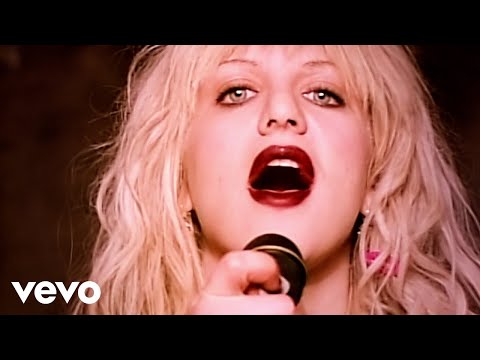
25. Hole, “Violet” (Directors: Mark Seigler and Fred Woodward)
Imagine a group of gentlemen from the Moulin Rouge era enjoying a night on the town inside your daughter’s favorite music box. Striving for the same vintage look that made Nine Inch Nails’s “Closer” video a hit one year earlier, photographer Mark Seliger and designer Fred Woodward evoked a bygone era of prostitution with madam Courtney Love as a wailer of female pain. The clip’s jaw-dropping visuals are trumped only by Love’s ability to turn make-up smearing into an art form. Gonzalez
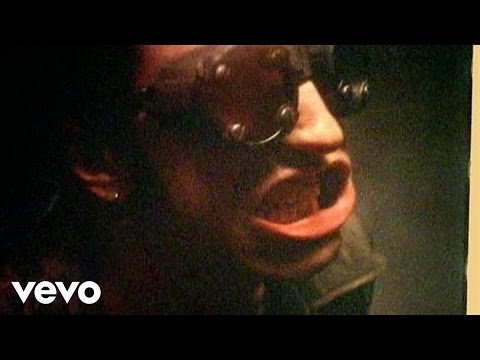
24. Nine Inch Nails, “Closer” (Director: Mark Romanek)
Inspired by the photography of the cadaver-lovin’ Joel-Peter Witkin, Mark Romanek’s video for Nine Inch Nails’s “Closer” features illusory images of 19th-century laboratory daguerreotypes. The clip’s controversial content led to clever editing, including silent film-style title cards which read “scene missing.” (You can watch the original director’s cut on YouTube.) Shot with vintage cameras and antiqued film stock, “Closer” brilliantly juxtaposes the dreamlike past with modern-day fears and phobias including, perhaps, censorship itself. Gonzalez

23. Janet Jackson, “Rhythm Nation” (Director: Dominic Sena)
Culled from a long-form video which told a morality tale of two shoeshine boys who discover the Rhythm Nation (the mini-musical also included “Miss You Much” and “The Knowledge”), the unity-themed “Rhythm Nation” clip stands on its own as one of the most intricately and powerfully choreographed music videos of all time. The solidarity of Janet Jackson’s multi-racial Rhythm Nation dancers is evoked with hyper-synchronized movements while their individuality is expressed via their separate, distinct dances. Cinquemani

22. Madonna, “Open Your Heart” (Director: Jean-Baptiste Mondino)
The Consumption of the Female Body and the Male Gaze. Professor: Madonna Louise Veronica Ciccone. Hours: Fridays and Saturdays from 12 a.m. to 4 a.m. Materials needed: (1) shirt, (1) tie, (2) wigs (colors optional), and (3) boxes of Kleenex. Gonzalez

21. Björk, “All Is Full of Love” (Director: Chris Cunningham)
Chris Cunningham’s clip for 1999’s “All Is Full of Love” was the perfect pre-millennial precursor to our current gadget-assisted culture of self-love. When it was released, it looked cool and seemed to stress the importance of loving yourself. Now it scans as a terrifying and sealed-off nightmare wherein you find out that you’re the only person who will ever love you. Henderson
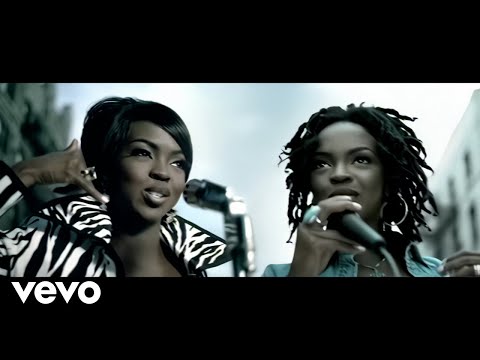
20. Lauryn Hill, “Doo Wop (That Thing)” (Director: Big TV!)
Before Ms. Lauryn Hill voluntarily faded into relative obscurity, she produced one of the most socially and spiritually provocative albums of all time with 1998’s The Miseducation of Lauryn Hill. In the video for the album’s first single, “Doo Wop (That Thing),” British directing team Andy Delaney and Monty Whitebloom (a.k.a. Big TV!) used split-screen imaging to evoke a city’s undying affection for the sound of its culture. As the video’s cross-generational chanteuse, Hill revitalizes doo-wop and acknowledges its influence on modern R&B. “Doo Wop (That Thing)” isn’t so much about blackness itself as it is about the pride that keeps that blackness alive. Gonzalez

19. Pearl Jam, “Jeremy” (Director: Mark Pellington)
Pearl Jam’s “Jeremy” was a more direct, sober sibling of Nirvana’s “Smells Like Teen Spirit,” but the video smacks with equally potent, if not more indelible, imagery. Pitting science versus emotion and nature versus nurture, the clip all but discards theories of “environmental stress” and “hereditary factors” for violence and places explicit blame on society and, specifically, Jeremy’s parents, presented here theatrically and abstractly (via giant photographs of a man’s suit and a woman’s dress) as the gluttonous Adam and Eve of parenting. Cinquemani

18. Janet Jackson featuring Q-Tip and Joni Mitchell, “Got ‘Til It’s Gone” (Director: Mark Romanek)
Set in post-apartheid South Africa, Janet Jackson’s “Got ‘Til It’s Gone” is a celebration of the music and rhythms that helped sustain black culture under the weight of segregation. Inspired by the work of Malian photographer Malick Sidibé, the video conspicuously places black bodies in white spaces, as Janet performs for a joyous crowd in a previously “Europeans only” club. At one point, on a vintage television screen, we see a brief shot of a white woman marveling at an indigenous woman’s braids. Though the clip was the winner of VH1’s “Most Stylish Video” award in 1997, the fashions and haircuts depicted in the video aren’t merely expressions of personal style—they’re revolutionary. To paraphrase Joni Mitchell, freedom is something you don’t know you’ve got until it’s gone. Cinquemani
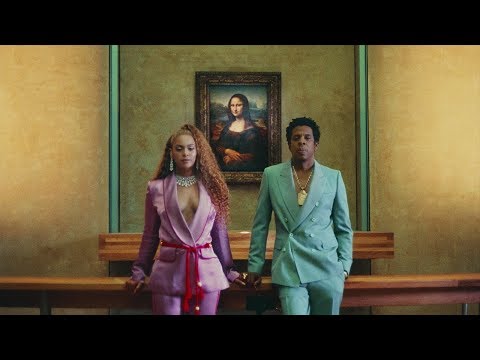
17. The Carters, “Apeshit” (Director: Ricky Saiz)
The Carters’s Everything Is Love may not have achieved the same cultural ubiquity as Beyoncé’s Lemonade or Jay-Z’s 4:44, but it spawned one of the artists’ most powerful videos. In “Apeshit,” the power couple performs in a vacant Louvre, commandeering the world’s most famous museum without breaking a sweat. It’s a radical testament to their influence as artists, business people, and political players, as well as a bold statement about the overlooked primacy of blackness in the Western canon. Pryor Stroud
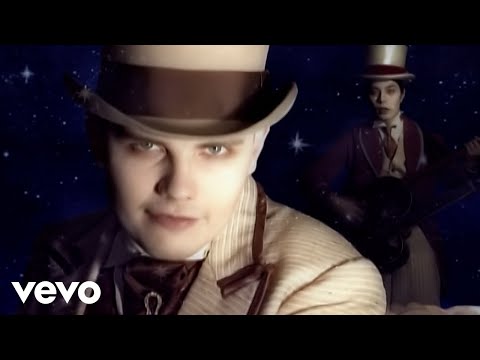
16. Smashing Pumpkins, “Tonight, Tonight” (Directors: Jonathan Dayton and Valerie Faris)
Inspired by the novels of Jules Verne and early Lumiere films, illusionist George Méliès dazzled the world with the release of 1902’s A Trip to the Moon. Though his mini-epics are less structurally and thematically groundbreaking than many of D.W. Griffith’s early works, his ravishing tableaus forever changed the way audiences looked at and experienced cinema. More so than any other music video, “Tonight, Tonight” displays an unmistakable love for the possibilities of cinema. Jonathan Dayton and Valerie Faris used period clothing, theater props, and old-school “special effects” to replicate the look and feel of A Trip to the Moon. This time, though, the journey is in color. Like the smiling moon from Méliès’s film, Billy Corgan and company become not unlike celestial bodies alive with the joys of creation. Gonzalez
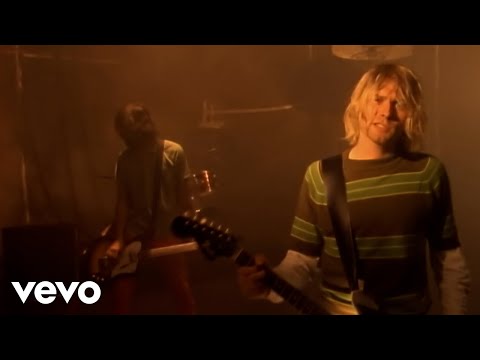
15. Nirvana, “Smells Like Teen Spirit” (Director: Samuel Bayer)
Like every aspect of the band’s all-too-brief creative output, the worth of Nirvana’s “Smells Like Teen Spirit” was arguably elevated in the wake of Kurt Cobain’s death. In retrospect, however, the clip’s twisted pep rally images (anarchist cheerleaders, dancing custodians) have become signposts of the grunge era. Cobain, as always, seems both apathetic and lightly buzzed, the anointed saint of early ’90s teen angst. Cinquemani
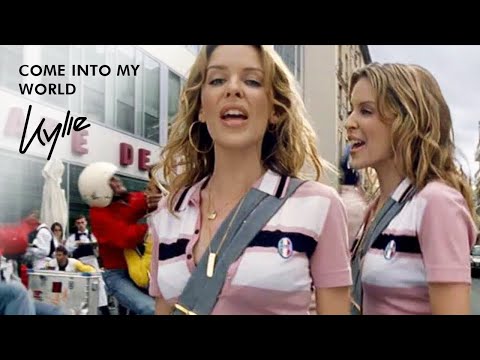
14. Kylie Minogue, “Come into My World” (Director: Michel Gondry)
Ballsily referencing Zbigniew Rybczynski’s Oscar-winning masterpiece Tango, Michel Gondry’s clip for Kylie Minogue’s “Come into My World” is an invitation to existential discourse, a remarkable deconstruction of artistic identity and technique. The choreographic precision of the clip is dazzling, with Kylie multiplying on screen in unison as one more buttery, Minnie Moused version of herself springs forth from her being on the song’s seductive chorus. As in Rybczynski’s innovative short film, the subject is the negotiation of space but also a consideration of how the self is refracted through media. Gonzalez
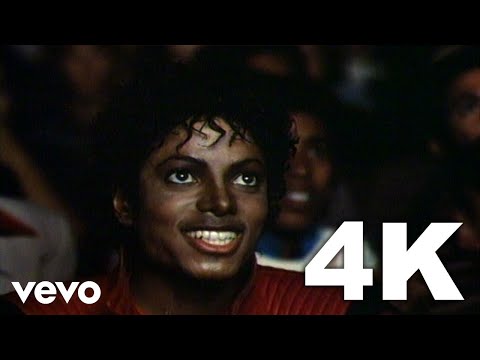
13. Michael Jackson, “Thriller” (Director: John Landis)
Never before had a music video, a largely artless marketing tool up until that point, employed plot, costume, and cinematography so expansively as Michael Jackson’s “Thriller.” Despite its ghoulish subject matter, the 1983 short film possesses an innocence not unlike that of its famous star. Black actors are transplanted into a typically white 1950s setting for the video’s opening film-within-a-film. As Jackson and his reluctant date exit the theater and take a detour through a graveyard, they awaken a troupe of pelvic-thrusting zombies, who, along with Mike, launch into one of the most exhilarating pieces of choreography (courtesy of Michael Peters and Jackson himself) in music video history. Cinquemani

12. Björk, “Bachelorette” (Director: Michel Gondry)
Destiny plucks Björk from the obscurity of her forest home and her success story is exploited and re-exploited to where reality is no longer discernible from its aesthetic representation. With each staged adaptation of Björk’s bestselling book, My Story, we move further and further away from the truth of the forest nymph’s origins, so much so that it becomes someone else’s story. These reproductions turn on themselves, falling into an existential vortex that ushers in Björk’s return to nature. Björk cries, “I’m a fountain of blood in the shape of a girl!” Destiny rewrites itself and words disintegrate, as does the flesh. Gonzalez
11. MS MR, “Hurricane”
They say every image you’ve ever seen is subliminally catalogued in your brain forever, like a super-computer storing files until they’re called up again for recognition. “Welcome to the inner workings of my mind,” the anonymous female half of MS MR sings on the duo’s debut single, “Hurricane,” as an exhilarating montage of every pop culture image she’s absorbed in her life speeds by in a collage of memories, like time snowballing faster and faster until it reaches an old movie title card that reads, “The End.” Cinquemani

10. Peter Gabriel, “Sledgehammer” (Director: Stephen R. Rosen)
Peter Gabriel and director Stephen R. Johnson teamed up with the Brothers Quay and Nick Park in an effort to make a video that Gabriel called “a bit groundbreaking.” Clearly meeting their lofty goal, 1986’s “Sledgehammer” paved a stop-motion, claymation path for many of the other videos on this list. Decades later, the video’s crafty visual pretenses are nothing short of a marvel to behold. Cinquemani
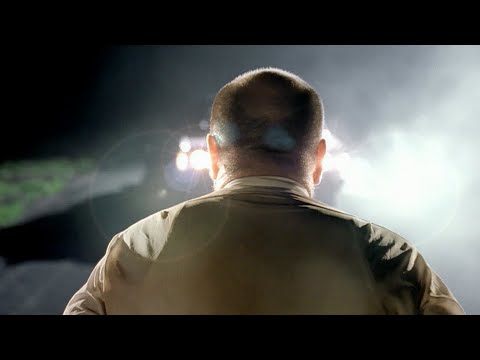
9. Radiohead, “Karma Police” (Director: Jonathan Glazer)
Director Jonathan Glazer claims that this creepy revenge clip, in which a car slowly follows a man running down a desolate road only to have the tables turned thanks to a chance gasoline leak, was inspired by a bad dream. His remarkable use of point of view implicates the spectator in the video’s action, but it’s the spooky way with which he fashions a Möbius strip from karmic irony that makes “Karma Police” Radiohead’s finest contribution to the music video medium. Cinquemani
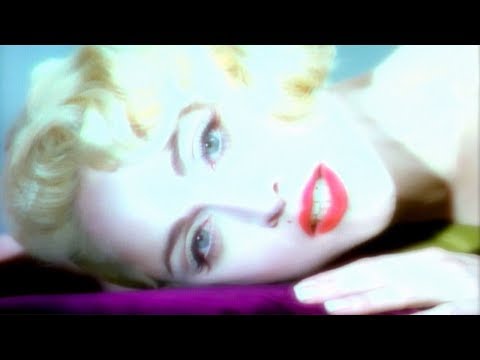
8. Madonna, “Express Yourself” (Director: David Fincher)
“Express Yourself” is the embodiment of queer chic, a bombastic masterpiece that heralds Madonna’s uncanny ability to use her consumer-driven image to code her feminist politics. Something this inspired by Fritz Lang’s Metropolis is not without theoretical implications. Here, Madonna plays the high priestess of a futuristic wage-slave community who celebrates the power of her repressed mechanism via self-love. The clip’s infinite metaphors are intricate and delirious without ever being pedantic. While Madonna looks for a way to vicariously penetrate the slave kingdom below her secret tower, sexual frustration begets physical aggression. Director David Fincher evokes the glamour and exoticism of male-on-male competition via the slave community’s constant flexing and cockfighting. Inside her postmodern living quarters, the five-foot-three Madonna towers above the crowd, slithers under her dining room table, and asserts her feminine wile. “Express Yourself” is as conceptually audacious as Metropolis because it celebrates both the power of the female sex and its ability to cripple the machine that dehumanizes it. Gonzalez

7. Jay-Z, “99 Problems” (Director: Mark Romanek)
Mark Romanek’s best music videos are montages of found socio-cultural artifacts, like a black boy’s head jutting from behind his father’s penniless pockets in Janet Jackson’s “Got ‘Til It’s Gone,” suspending a community’s images of itself in time. For “99 Problems,” Jay-Z collaborated with Romanek on a video shot near the Bed-Stuy housing projects where the rapper grew up, and for each man, it seems like the work he was born to make. Jay-Z is hassled by cops who want to look inside his trunk, a day-in-the-hard-knock-life that he narrates while walking along the Brooklyn Bridge, intercut with a rapid-fire succession of scenes from the neighborhood: drooling fight dogs, prisoners being hosed down, motorcyclists doing wheelies in slow-motion. In the end, Jay-Z is shot full of bullet holes as a group of hoochie mamas soap up their bare legs, a bold critique of hip-hop culture, but Romanek’s ecstatic black-and-white images are ultimately life-affirming—a record of street life as it’s really lived. Schrodt

6. The Verve, “Bitter Sweet Symphony” (Director: Walter Stern)
Life sucks, especially when the government milks you dry and doesn’t so much as give you a wider sidewalk for your troubles. Walter Stern’s video for the Verve’s “Bitter Sweet Symphony” begins on a fascinating note. Disenchanted that life has reduced him to an emotional zombie, frontman Richard Ashcroft chooses to move only to the beat of his own drum. One may ask, “Who’s to say that they’re not bumping into him?” Which is precisely the point of the video. Ashcroft’s subjective reality declares that the world should move for him and not the other way around. This is his passive response. Both the song and video pessimistically acknowledge humanity’s smallness and oppression. But it’s not until the track’s hopeful bridge, precisely when Ashcroft stares at his reflection on a car window, that he’s forced to acknowledge his responsibility to the world around him and his disenchantment turns into something entirely more hopeful. Gonzalez

5. George Michael, “Freedom 90” (Director: David Fincher)
One of the first superstars to shun his image-driven fame, George Michael refused to appear in any of the videos from his second solo album, Listen Without Prejudice. The irony-laced “Freedom 90,” directed by David Fincher, features a bevy of top models—including Cindy Crawford, Linda Evangelista, and Naomi Campbell—lip-synching to Michael’s pointed words. The video, like the album, was intended to be an artistic rebirth for the former Wham! singer, as the jukebox from “Faith” and his trademark leather jacket and guitar are ceremoniously burned and destroyed by video’s end. Michael would go on to employ models for his videos many times throughout his career, but “Freedom” was the only one to utilize more than their blank expressions. The video dug beneath surface façades and blurred the lines of gender and image while pushing the music video form as a whole. Cinquemani
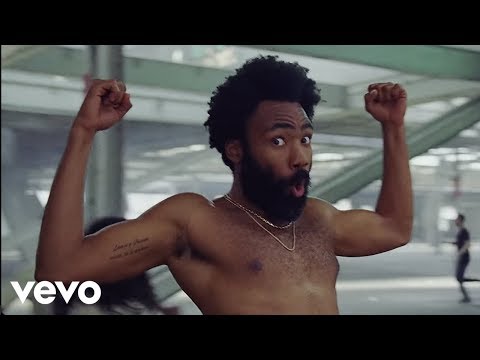
4. Childish Gambino, “This Is America” (Director: Hiro Murai)
Directed by Hiro Murai, Donald Glover’s principal collaborator on FX’s Atlanta, “This Is America” shares with many of that show’s best episodes a knack for getting under viewers’ skins, presenting highly charged images with just enough ambiguity to encourage social media reactions of the “WTF did I just watch” variety. But the video remains an astounding artistic achievement. In a series of long shots cleverly disguised as one uninterrupted take, Glover pulls dances and faces from the intertwined traditions of pop culture and minstrelsy, seamlessly juxtaposed with eruptions of sudden, graphic gun violence. In both extremes, it’s impossible to take your eyes off of him—which is, of course, the point. Like the never-ending train wreck that is American history itself, “This is America” offers entertainment and grotesquerie in equal measure. Hoskins

3. Björk, “Big Time Sensuality” (Director: Stéphane Sednaoui)
Björk’s often high-concept videos sometimes fall short of the rich and intense imagery that her songs conjure all on their own. So it’s no surprise that, like “It’s Oh So Quiet,” the Icelandic singer’s best video is as simple as they come. The celebratory “Big Time Sensuality,” from 1993’s Debut, finds Björk cavorting playfully on the back of an 18-wheeler driving through Manhattan. Her famous childlike disposition is on unbridled display here as she makes New York her own personal playground. Cinquemani
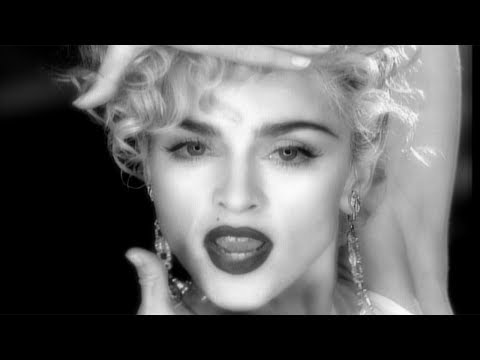
2. Madonna, “Vogue” (Director: David Fincher)
Look closely when that butler brushes off the bannister. Nope, no dust there; the finger pulls clean. Those who objected to Madonna’s co-opting two vibrant New York scenes—ball culture and the house underground—had every reason to cast any available aspersions once the music video for “Vogue” hit the airwaves. Directed with diamond-cut precision by David Fincher long before he became the fussiest of the A-list auteurs, the already plush song became a plummy fantasia of Old Hollywood luxury, and an actualization of the sort of glamour Paris Is Burning’s drag queens and dance-floor ninjas openly longed for. And it came with a steep price tag. “It makes no difference if you’re black or white,” goes the familiar refrain, but it’s unclear whether Madonna realized to what extent the clip’s flawless, monochromatic cinematography would underline the point. To some, the video (like New York’s ball scene) represented the ultimate democratization of beauty. To others, a presumptuously preemptive eradication of the racial question entirely. Henderson
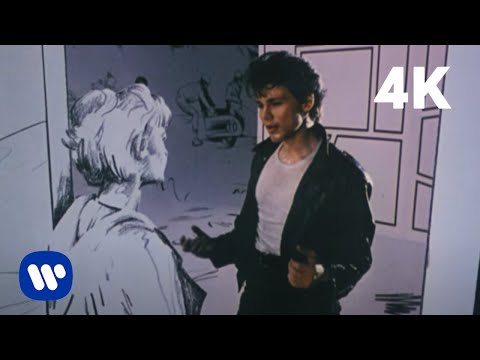
1. A-Ha, “Take on Me” (Director: Steve Barron)
Thanks in large part to its groundbreaking use of rotoscopic technology, Steve Barron’s video for A-Ha’s 1985 hit “Take on Me” is thoroughly immersive, mixing live action with hand-drawn animation and seamlessly incorporating each of the Norwegian band’s members. One of the most gripping narrative videos of all time, “Take on Me” revolves around a teenage girl who’s literally drawn into a newspaper comic strip and falls head over heels for its protagonist. When a disgruntled diner waitress tosses the seemingly discarded paper in a bin, the pages get pressed together, barriers are broken, and characters from other stories come crashing into the couple’s idyllic black-and-white world. The dramatic conclusion finds the hero in a collision course between fantasy and reality. Four decades later, the video remains a breathtaking depiction of wish fulfillment—and a testament to the power, proficiency, and poignancy of the medium itself. Cinquemani
Since 2001, we've brought you uncompromising, candid takes on the world of film, music, television, video games, theater, and more. Independently owned and operated publications like Slant have been hit hard in recent years, but we’re committed to keeping our content free and accessible—meaning no paywalls or fees.
If you like what we do, please consider subscribing to our Patreon or making a donation.


Very good list. Muhch better than other I saw. As an REM fan, I would prefer Imitation of Life. It’s simple genius.
it was/is on the old list
C’mon. No Slave to the Rhythm? That’s ridiculous.
rem beastie boysthat bjork robot one the rest garbage . pathetic list
The King of music videos, Michael Jackson, has no videos in the top 10? 🫤 Remember the Time, Smooth Criminal and Scream didn’t make the list? 🤦🏿♂️ BS. And Prince had NO videos on this list? 😞Rest of the list was ok, but the order was 😳.
Not having a single Tool video on here is… something.
Michael Gondry obviously wrote this list. No other explanation.