Given Sundance’s kneejerk tradition of rewarding films that focus on America’s down and out, there was reason to approach Debra Granik’s Winter’s Bone with trepidation, especially given that past winners at the festival have included manipulative visions such as Precious: Based on the Novel Push By Sapphire and Frozen River. But for those who’ve seen Down to the Bone, it probably won’t come as a surprise that Winter’s Bone further highlights Granik’s very distinct sensitivity and intelligence as a filmmaker—an aesthetic and moral sensibility that never hinges on exploiting the lives of her subjects or condescending to her audiences by appealing to our prejudices or soliciting our guilt.
The film’s succinct, well-paced plot avoids narrative convention and cheap sentimentality, moving with the same conviction that possesses Ozark woods native Ree Dolly (Jennifer Lawrence). Much like the Dardennes, Granick allows her story’s meaning to derive subtly from a steady, near-inconspicuous accumulation of nuances from the life of its main character, but unlike another Sundance champ, Lance Hammer’s something-blue-something-borrowed-nothing-new Ballast, Granik’s style isn’t actually indebted to the master filmmakers behind The Son and L’Enfant. The filmmaker off-handedly observes the film’s seemingly brutal and unforgiving environment where others might have fixated on it, treating the poverty that grips Ree and her family not as a fetish but as a mere fact of life.
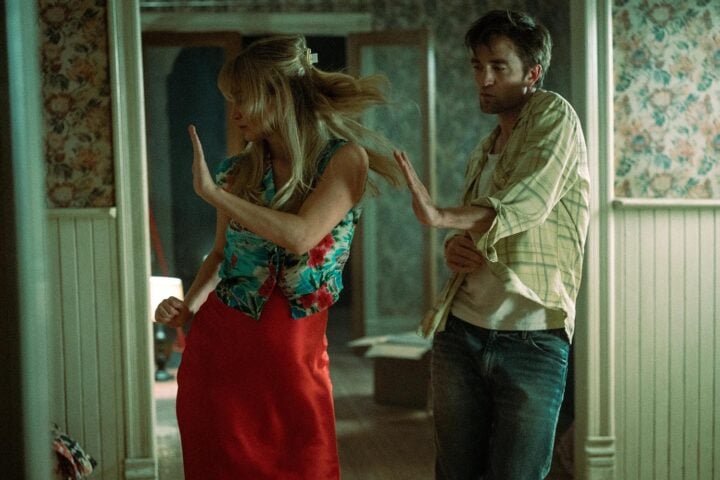
The story is practically Odyssean. Ree learns that her absent, recently imprisoned father put their house up for his bail bond before subsequently vanishing, and unless she can prove that the man is dead, she and her siblings, as well as their silent, obviously traumatized mother, will be homeless. Making her way from home to home, asking but never begging for help from an interconnected network of dirt-poor neighbors (some friends, some family, many just strangers) with ties to the production of crystal meth in the region, you get a very strong sense—and quickly too—of a community that can be dangerous to anyone who doesn’t abide by certain unspoken rules. Danger hangs thick in the air, and it feels as hard and winter-beaten as the film’s near-monochromatic color palette.
There’s plenty of violence in Winter’s Bone, yet it’s almost never seen. In a shot that echoes one from the original Texas Chainsaw Massacre, in which Leatherface violently shuts the metal door to the room where he will butcher his first victim, Ree is pulled into a barn to receive a brutal beating the audience isn’t allowed to witness. This is one way Granik reveals that she isn’t some guttersnipe. Her concern is not hurt as it’s inflicted on people so much as it already exists and festers in people’s souls and how it morphs the landscape of the human face. In the way Ree skulks through her glum environment, looking for the help that no one will seemingly give her, Granik makes one feel the danger that taunts people in this region of our world.
The filmmaker can sometimes lay on the menace thick, mostly through Dickon Hinchliffe’s sinister score, and in ways that feel counterintuitive to the matter-of-fact way Ree’s life is revealed to the audience, but Winter’s Bone is never less than notable for the restraint it shows in places where other films would have indulged contrivance. Though unmistakably bleak, what’s remarkable about the story is that nothing about Ree’s life is presented to us for our tongue-clucking benefit. For all the hardship that afflicts the girl, the story still makes room for glimpses of how people celebrate their lives—through singing, drinking, card-playing—and take care of their own, while making clear that Ree doesn’t want anything more out of life than to protect her family and keep what she already has.
Unlike the patronizingly written Frozen River, which stresses, again and again, the poverty that plagues Melissa Leo’s main character, Winter’s Bone casually and unpretentiously observes the daily habits of its characters. In the way Ree’s little sister throws herself onto her brother in order to wake him up, in the way her uncle threatens his wife (“I already said shut up once with my mouth”), and in the way Ree cook potatoes and shows her siblings how to use a rifle, you get a very real feel for how people relate to—care and abuse—one another. These are not characters conceived as conceits, hoping for our validation by way of their learning to transcend poverty or figuring out how to live with others (usually non-whites), but real people simply trying to get by and be left alone, and with their dignity intact.
Since 2001, we've brought you uncompromising, candid takes on the world of film, music, television, video games, theater, and more. Independently owned and operated publications like Slant have been hit hard in recent years, but we’re committed to keeping our content free and accessible—meaning no paywalls or fees.
If you like what we do, please consider subscribing to our Patreon or making a donation.