There’s a scene in Paul Verhoeven’s Elle in which Michèle (Isabelle Huppert), the CEO of a video-game company, discovers that a certain male employee is responsible for creating a clip in which her face is PhotoShopped onto a woman being violated by a tentacle monster. Faced with any number of paths for punishment, Michèle looks him in the eyes and says: “Take out your dick.” As in Basic Instinct or Black Book, Verhoeven finds ways to cap scenes with tense moments of “who’s the victim here”? through reversals of sexual power that undercut masculine pride.
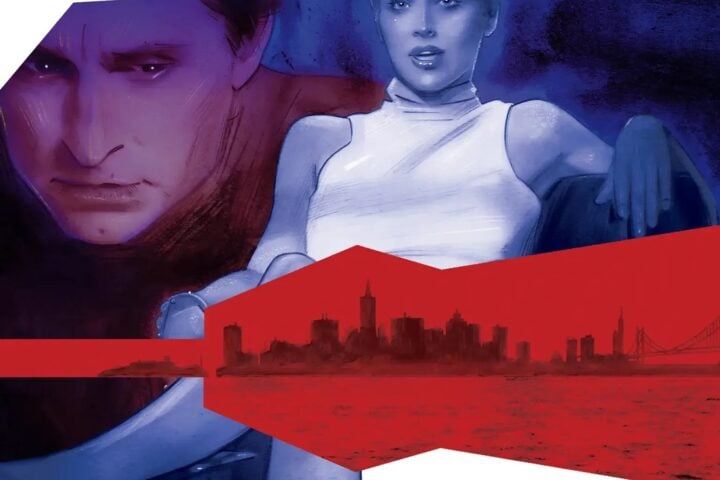
The scene distills Verhoeven’s aesthetics into microcosm; women are agents of power who use their sexuality as weapons against male oppressors, yet they can also actually be murderers in the same breath. If Elle plays, at times, more straightforward than some of Verhoeven’s other work, it’s because the film deploys genre kicks as only one dimension of its impressive formal and thematic spectrum. At once an almost Buñuelian satire of the bourgeoisie and a Chabrolian thriller of manners, Elle is ultimately all Verhoeven in its play with the limits of sexual delight and its irreconcilable contradictions.
I spoke with Verhoeven about Elle’s story element, how he now views the reception of his films during the 1990s, and why he quickly decided to let Isabelle Huppert do just about whatever she wanted to during production.
Looking back, I think Starship Troopers was the first genre film I had ever seen that upended all of my conceptions about war movies. It, along with your other Hollywood films in particular, has undoubtedly had a significant impact on how I approach art. Have you had younger people say similar things about your films, in terms of influence?
Sometimes there are younger directors, especially more in Europe than [the U.S.] that tell me that. In France there have been several, as well as in Holland. They tell me, basically, that my movies were important to them. Sure, that happens. But not, let’s say, every day. In general, you don’t meet so many other directors in your life anyhow, except at film festivals where everyone is complimentary to one another. You have to take all of that with a grain of salt, perhaps. But the films have generated a certain apprehension, and the people a sympathy, for the movies I make.
There has been a renaissance of writings about your films, specifically from the ’90s, over the past several years. Do these newly offered perceptions align with what you perceive the films to be yourself?
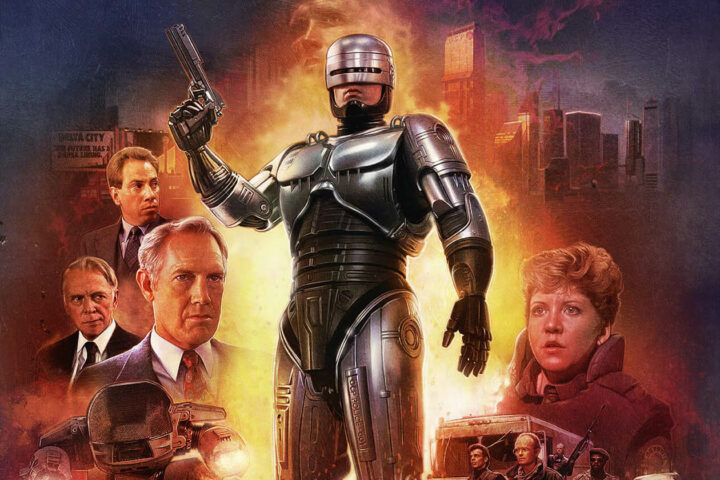
Absolutely. If you look at Starship Troopers, it was bashed in many reviews for being a so-called neo-fascistic or neo-Nazi movie. Not just by the critics, but also in editorials. There was a big misunderstanding about Starship Troopers at that time because somehow they didn’t really look at the movie, or were so disturbed and distracted that they didn’t see, of course, that it was an attack on fascism. Ed Neumeier and I were fighting the militaristic, fascistic elements of [Robert A.] Heinlein’s book. I think we were fundamentally misunderstood by a lot of people. But it’s so on the nose, of course, when you see Neil Patrick Harris coming out in a Nazi SS uniform and saying, “Well, we had to sacrifice a lot of people and, by the way, we might have to sacrifice you and your group also.” [laughs]
So, it’s clear we’re talking about fascism. I mean, how can you misinterpret this kind of blatant, black leather coat that he’s wearing there? It seemed to be so obvious to me. As is Johnny Rico and his entire group not being aware of their situation. They are naïve and believe in a fascist utopia, while the context of the movies, especially the newsreels and all of that, continuously confront the idea that these people are heroes, but they’re also caught up in a neo-fascist dream. It was clear to me and I couldn’t understand at that time how people didn’t see that. But that’s what happens.
With Showgirls, the attack on Vegas, for example, which was already in Joe Esterhas’s script, was that everything is bottom line and that sexuality is only another thing that you can sell for the highest price. That also was, let’s say, not seen. I always felt [the critics] were so distracted by the naked breasts that they couldn’t see the rest of the movie.
There’s an antagonism to your work that comes from within genre films, rather than the more noticeable commentary of a prestige or art film. Do think that is, in part, why it has been difficult for some critics to comprehend these films?
Sure, because that’s not a very American way of expressing yourself. They don’t like the idea that you don’t say exactly what your criticisms are, that you don’t put all of your criticisms on the front page, that there’s a subversive, underneath current that you feel and is expressed in a metaphorical way. It was so unusual. If you look at, say, Star Wars, then of course everything is straight, isn’t it? There is no double meaning. What you see is what you get—and that’s fine. That was what [George] Lucas did and he did it in a great way. But we did something different. We were using this genre to express political ideas and our ideas about the United States. It’s very unusual in the American grammar and language of film to take that road. Perhaps that’s a more European way. It was me looking at the United States with admiration and, at the same time, cynicism and doubt.
Before Elle was shown at Cannes, there seemed to be a general anticipation that the film would be an erotic thriller à la Basic Instinct, but it really isn’t that at all. Did you approach making this film more from the broader template of a thriller to tell a certain story or did you start with the themes of the film and build around that?
I would say the latter, but then I cannot take complete credit for that, because a lot of that was, of course, given in the novel. The novel is written in a partially cryptic way as to what happened to her, like we do in the movie, and then basically there’s this mystery, this question: Is this rapist someone she’s mistreated at her work, or is he someone else? These kinds of thriller elements were clearly in the novel. But they were really counterpointed by all of the relationships that Michèle has with her father, her mother, her son, her lover, her ex-husband, etc. The novel has two feet, let’s say. One would be the thriller element that was continuously mentioned by Philippe Djian, the writer, and sometimes moved to the foreground as she tries to figure out who this rapist is. But there were also all these social interactions of the different characters. So, it was me reading the novel and realizing two different elements and that I shouldn’t give priority to either of them. That the social interactions I offer have nothing to do with the rape. Even a lot of the people around her never hear about that rape. Including her son, who never finds out she was raped. But the idea that the two levels should alternate, that’s all me and [screenwriter] David Birke looking at the novel, reading the novel, analyzing the novel, and thinking Dijan had been right from the very beginning in doing it this way. We didn’t want to fall into any genre.
At what point did you get the idea to open the film on the face of a cat? Was that in the script or did you find that in post-production?
That was in the first draft, but we discussed it. In the book there’s a cat, also named Marty, in fact, and there’s mention of the cat having seen it, though not in the beginning. After a couple of pages, you understand that the cat was there. I was thinking about it and I felt it would be very interesting to start with the cat. I don’t know why. It felt innovative to me or more cryptic, perhaps, so that you wouldn’t read immediately what was happening and that you would slowly start to realize that there was a rape. But I don’t think I have an answer if you ask me, “Why did you put that at the beginning?” It was more intuition.
Well, cat memes have been a hot Internet commodity for years. A cat now immediately connotes “cute.” Of course, you’re immediately smashing that association by having the cat witness a rape. A similar juxtaposition happens later, when a video-game clip is used as a weapon against Michèle, as a form of sexual harassment in the workplace, but developing these games is also the way in which Michèle makes her living. Do you seek out these sorts of ironies in the writing process?
No, but there’s a certain pleasure in putting these things next to each other or opposite to each other. An element of freedom, of saying something without making clear exactly what you say. As for the video games, that’s certainly not in the book. In the book, she’s the CEO of a collective of writers that she supervises with her partner. They supervise writers that work for film and television. And so, the discussions are always about characters and plotting. That’s where she’s working, but we felt that it wasn’t very visual.
My youngest daughter made the proposal: “Why don’t you make her CEO of a video-game company?” I immediately thought it was a good idea. I felt that it was boing to have a group of writers sitting around a table talking about screenplays you don’t know about. It would be very non-filmic. After we made that decision, we slowly adapted the video-game aspect as a counterpoint to the main narrative. But that was part of the pleasure. Now that we had this video game, we asked: “What’s it going to be about?” We came to the conclusion that we wanted it to be about an attack on a woman. In fact, the attack itself isn’t sexual. The tentacle goes into her head, not into her vagina or ass as the porno version of it later develops into. Getting a tentacle in your head…that’s a little like Starship Troopers, no? [laughs] So, you feel that these elements come from somewhere, but you’re not sure exactly where, aside from wanting to have fun with it.
With Isabelle Huppert at the center of the film, I’m reminded of the great performances you’ve gotten from actors in previous films. For example, I think Arnold Schwarzenegger’s performance in Total Recall is the best, most complete work he’s ever done. Can you talk about how the experience differs when working with Schwarzenegger versus working with Huppert, who’s obviously a more trained, virtuoso actor?
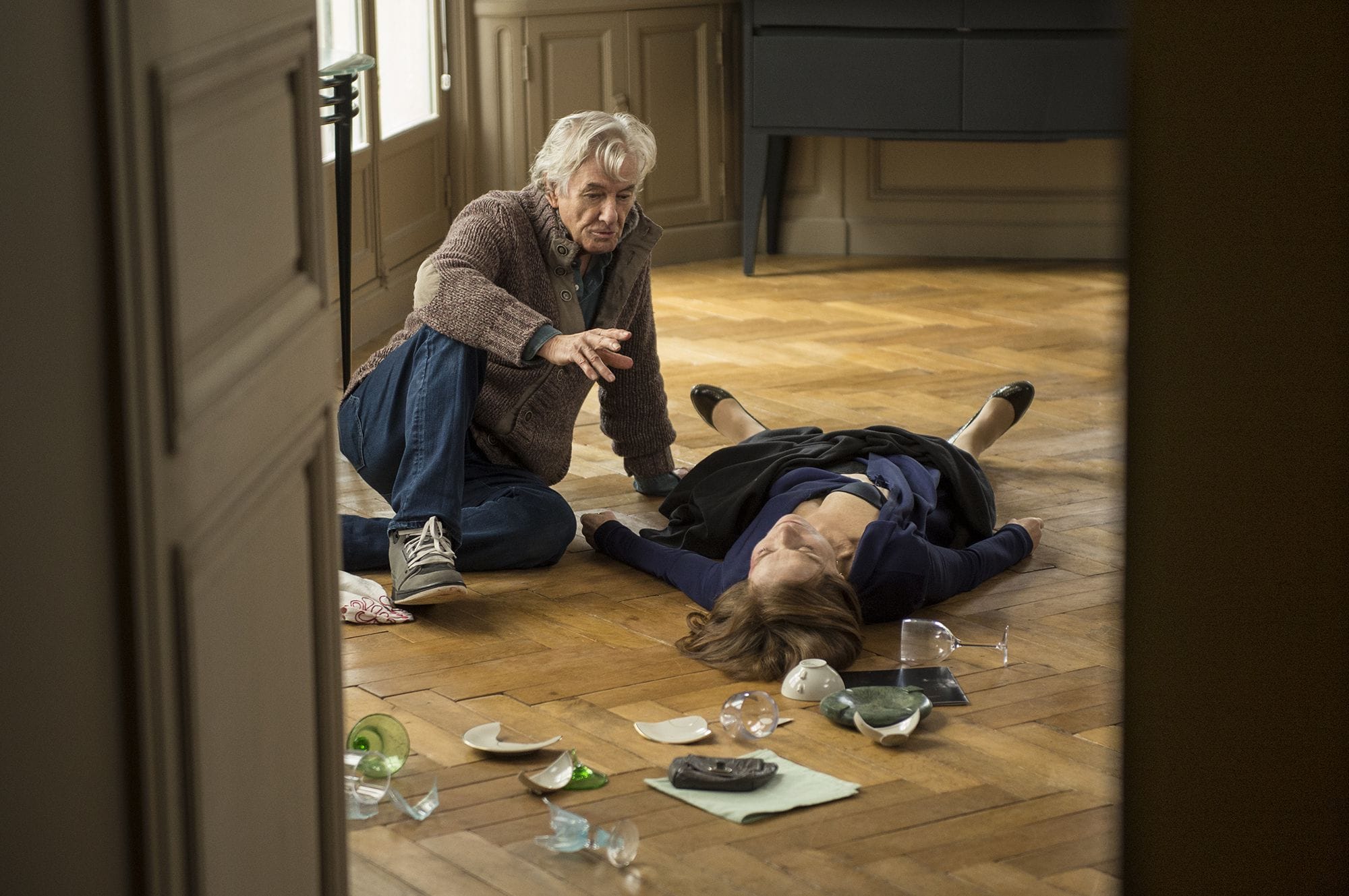
With Arnold, and with Elizabeth Berkeley and Sharon Stone, I was talking a lot to them. “Do this, don’t do that, look at the video.” With Arnold, very simple and very easy. There was a lot of talk in the way we shot. Line readings, explaining the situation continuously, where we are in the script—all that stuff that a director normally should do. With Isabelle Huppert, I learned very fast that I should trust her in everything that she did. We discussed a lot about costumes, makeup, etc. We discussed the choreography of scenes, but we never discussed character psychology or anything. I let her go. I let her go even if she continued scenes way beyond the point where it was supposed to stop. She would go on and on, and I let her go, and I used it all in the movie. What she did was better than was in the book, the script, in my head, and I accepted it immediately. Her intuition and talent is of such a high level. I realized she knew more as a woman about how this woman would feel than I.
Since 2001, we've brought you uncompromising, candid takes on the world of film, music, television, video games, theater, and more. Independently owned and operated publications like Slant have been hit hard in recent years, but we’re committed to keeping our content free and accessible—meaning no paywalls or fees.
If you like what we do, please consider subscribing to our Patreon or making a donation.