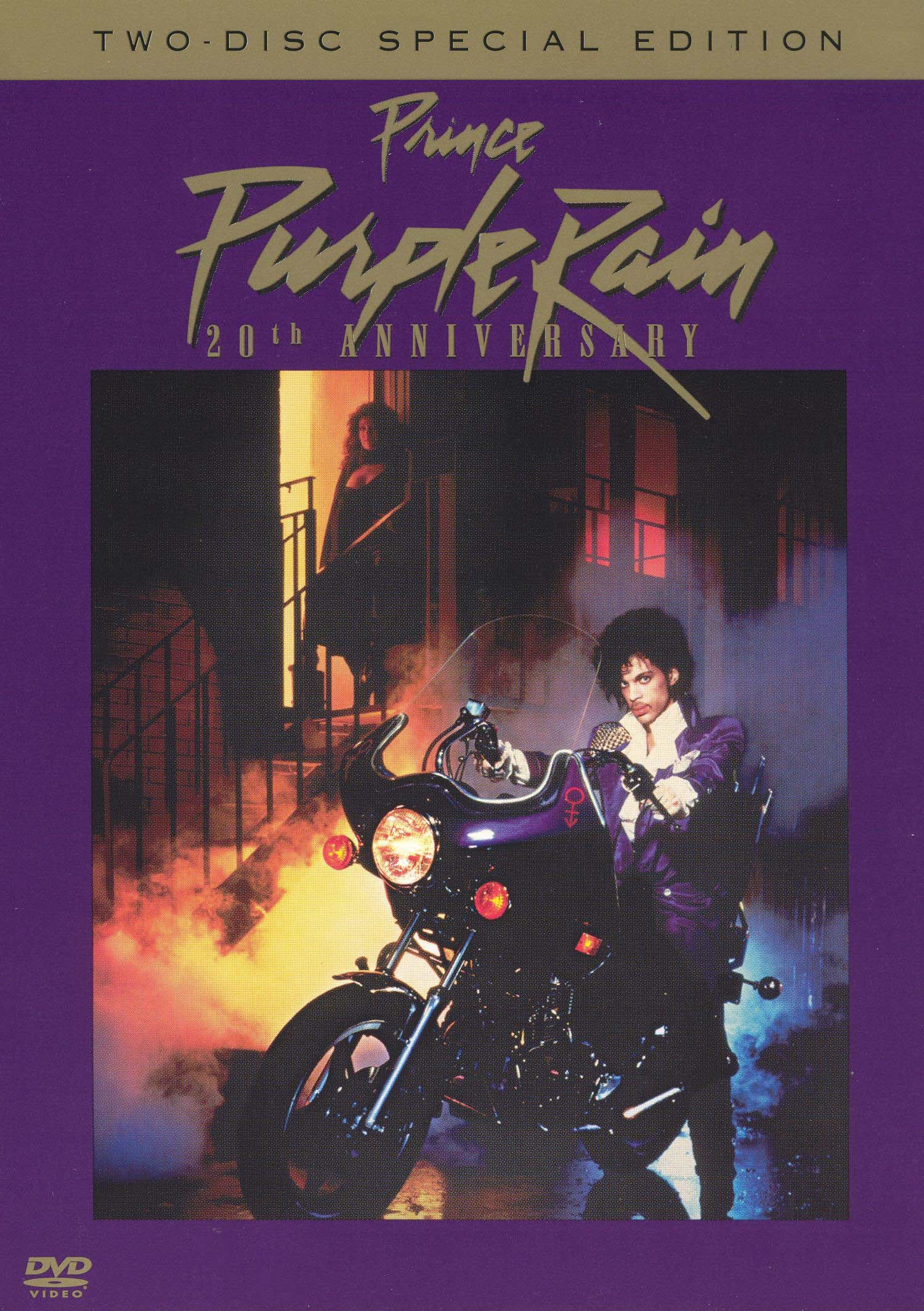
 If it wasn’t for Purple Rain, no one east of Madison would have ever heard of Lake Minnetonka and First Avenue wouldn’t have turned into a Minneapolis tourist trap. Well, at least for the duration of the mid ’80s. Sad to say, revisionism has cast Purple Rain as falling short of Prince’s other cinematic efforts in qualities both genuine and illicit. As a collection of electrifying concert clips, it pales when compared to his 1987 documentary portrait of his classic Sign o’ the Times tour. (It also has an ever-so-slightly superior soundtrack, but who would dare decide between the two, especially when the earlier LP has Prince’s single finest moment: the rapturous “Beautiful Ones”?). On the other side of the coin, Under the Cherry Moon has all the overtly campy, “bad movies we love” audaciousness.
Purple Rain’s soundtrack album has more or less eclipsed the film in pop-culture history books. But anyone who’d dismiss it out of turn must be blind to how Albert Magnoli’s uncomplicated scenario (i.e., Prince’s idealized life story) harnesses the most elemental archetypes of the success-story narrative framework and, more importantly, stands well clear out of the way of Prince (dubbed “The Kid” in the film) when the time comes for him to prove his talent. Like the best musicals of the golden age, Prince’s tunes serve as the means by which his emotionally stifled character is allowed the opportunity to express his true feelings.
Given that throughout the course of the film his life is clouded by jeers from his mainstage competition Morris Day, the threat of mutiny from his backing band the Revolution because he won’t perform the titular ballad written by Wendy and Lisa, and domestic turmoil between his parents, his dark onstage expressions (the outraged sex taunt “Darling Nikki”) are in danger of killing his fragile business relationship with First Ave’s owner. The film is obvious, and conflict is merely prelude to (Prince and) the Resolution, but Magnoli’s professional, downright neorealistic approach to filming the concert clips almost disguises how audacious a structural conceit is the film’s climax: nearly a half-hour of musical numbers that render the solipsism of Prince’s vanity project entirely justifiable. The color purple signifies royalty, Morris.
Image/Sound
The twentieth anniversary remaster of Purple Rain is an improvement in at least one arena: it’s no longer pan-and-scan. The film was apparently shot in less than two weeks, and the fly-by-night cinematography is preserved here in grainy glory. Aside from a few stage light cues (the yellow burst toward the end of “Beautiful Ones”), the colors are disappointingly muted overall. The 5.1 sound mix isn’t flawless (what is going on during the string denouement of “Purple Rain”?!), but it soars during the club-rocking numbers. Truth be told, does anyone even listen to what’s going on outside of them?
Extras
Considering that Prince was predictably reticent to contribute to this two-disc set, Warner Home Video has managed to present an extremely well-rounded collection of features. (Besides, is there anyone watching the film who’s not already familiar with Prince’s role in the project?) First up is the commentary by director Magnoli, producer Robert Cavallo, and DP Donald E. Thorin. Their track will probably lose a significant portion of the Prince fanhead demographic, as they spend as much time talking about focus pulls, film school and studio head squabbles as they do about their leading man. At the very least, they clear up why Minneapolis’s skyline looks suspiciously like Los Angeles’s. Also included on the first disc are the trailers for Purple Rain, Under the Cherry Moon, and Graffiti Bridge. The second disc isn’t exactly overflowing with material, but it’s all diverting. There are three documentaries, one over a half-hour long, two under. They cover the film’s history from a more pop-cultural perspective and include interviews from Wendy and Lisa, Jimmy Jam and Terry Lewis, filmmakers and First Ave employees. (But whoever came up with the title “Riffs, Ruffles and a Revolution” should be slapped.) Also included is the gaffe-laden live MTV special on the occasion of the film’s premiere. Little Richard shows up at one point and the jokes right themselves. The bow on top is a collection of all the music videos connected with the film. For such an electrifying stage performer, Prince never seemed to really get the hang of music video art, and probably the most entertaining clip in the line-up is Apollonia 6’s “Sex Shooter.”
Overall
“You have to purify yourself in the waters of Lake Minnetonka.”
Since 2001, we've brought you uncompromising, candid takes on the world of film, music, television, video games, theater, and more. Independently owned and operated publications like Slant have been hit hard in recent years, but we’re committed to keeping our content free and accessible—meaning no paywalls or fees.
If you like what we do, please consider subscribing to our Patreon or making a donation.